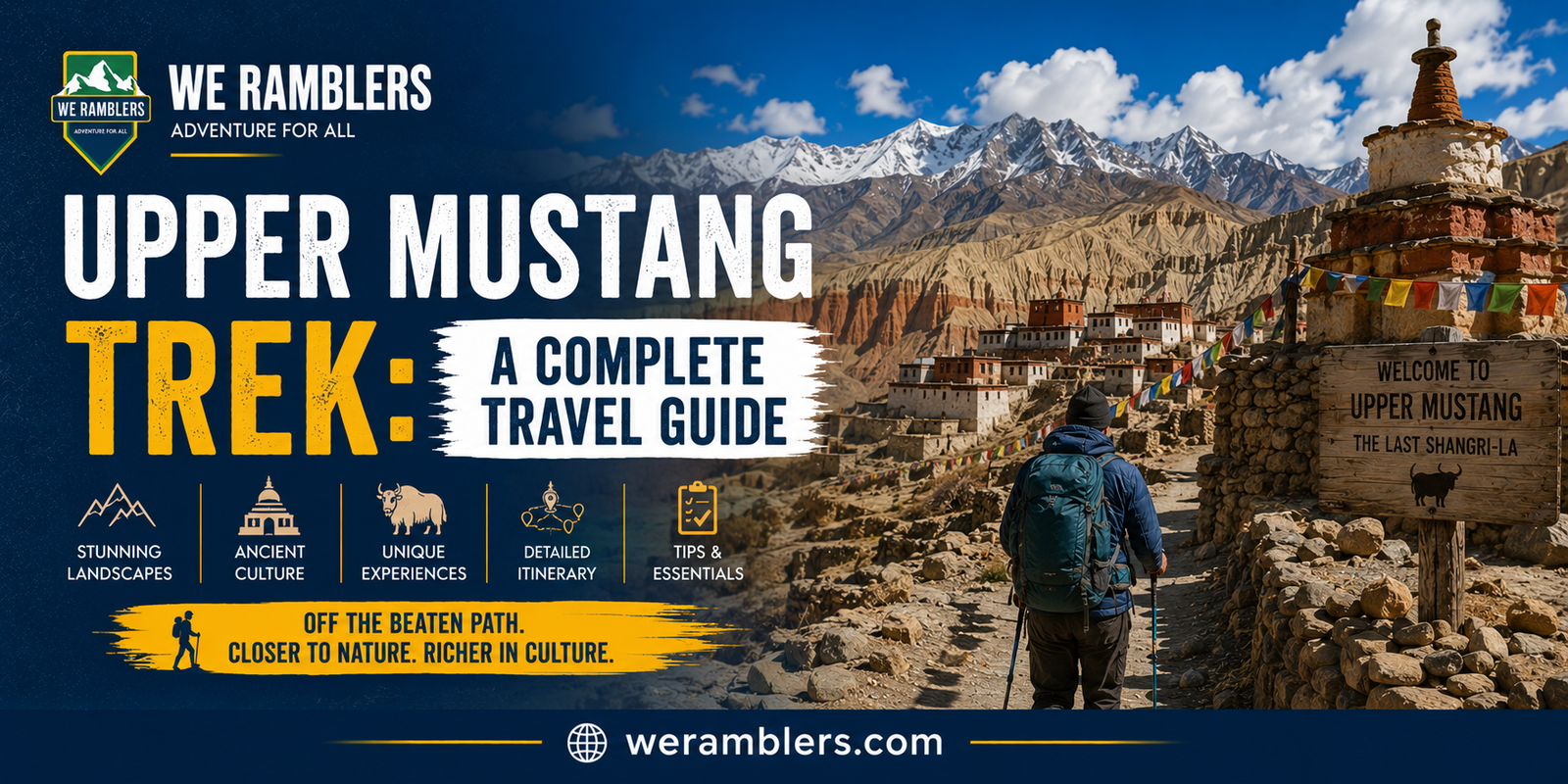
Upper Mustang is unlike anything else in the Himalayas. While the rest of Nepal’s popular trekking routes are green, forested, and dominated by dramatic peaks, Upper Mustang is a high-altitude desert. It is a vast, wind-carved landscape of red and ochre cliffs, ancient cave monasteries, and a former Tibetan kingdom that remained closed to outsiders until 1992.
Trekking in Upper Mustang means walking through a landscape that feels genuinely ancient. The walled city of Lo Manthang, the capital of the former Kingdom of Mustang, has stood largely unchanged for six centuries. The trek attracts trekkers who want something beyond the standard Himalayan experience: less crowded trails, a different culture, and a completely different terrain.
Here is everything you need to plan an Upper Mustang trek.
Upper Mustang Trek Overview
Region: Mustang district, Gandaki Province, northern Nepal (bordering Tibet) Maximum elevation: Lo Manthang at 3,840 metres; highest pass Ngab La at approximately 4,320 metres Trek duration: 12 to 16 days (Jomsom to Jomsom circuit) Difficulty: Moderate. The altitude is manageable, but the remoteness and dry conditions are demanding. Best season: May to October Permit type: Restricted Area Permit required
Upper Mustang Permits and Fees
Upper Mustang is a restricted trekking zone, meaning you cannot trek here independently. You must book through a government-registered Nepal trekking agency and trek with a licensed guide.
The Upper Mustang Restricted Area Permit costs USD 500 per person for the first ten days. Each additional day costs USD 50. This fee is among the most expensive trekking permits in Nepal, which has kept Upper Mustang less crowded than the Everest or Annapurna regions even in peak season.
In addition to the RAP, you need the Annapurna Conservation Area Permit (ACAP) at NPR 3,000 for SAARC nationals or USD 30 for others, and a TIMS card at USD 10 to 20 depending on whether you are trekking with a group or individually.
All permits are handled through your registered trekking agency in Kathmandu or Pokhara. Do not attempt to arrange these independently.
Best Season for Upper Mustang Trek
Upper Mustang is one of Nepal’s only viable monsoon-season trekking destinations. Because it sits in the rain shadow of the Annapurna and Dhaulagiri ranges, the monsoon (June to August) brings very little rainfall to the region. While the rest of Nepal becomes muddy and difficult during monsoon, Upper Mustang remains dry and trekable.
Spring (April to May): Good visibility, mild temperatures in the lower valleys. The local Lo-Gyalpo festival takes place in May, offering a rare chance to witness traditional Mustangi culture.
Summer and Monsoon (June to August): Dry in Upper Mustang even while monsoon rains fall elsewhere in Nepal. Temperatures are warm at lower altitudes and comfortable at Lo Manthang’s elevation. An excellent option with fewer trekkers.
Autumn (September to October): The most popular season. Clear skies, stable weather, and ideal temperatures. Views of Nilgiri, Tilicho, and Dhaulagiri from the trail are exceptional in post-monsoon clarity.
Winter (November to March): Cold, windy, and increasingly difficult as you move north. The route is technically possible in winter but not recommended for inexperienced trekkers. Some teahouses close.
Upper Mustang Trek Route
The standard Upper Mustang trek is a loop beginning and ending in Jomsom, the main hub of the lower Mustang region. Most trekkers fly from Pokhara to Jomsom to save two to three days of walking through the lower Kali Gandaki gorge. The flight takes approximately 20 minutes and offers spectacular mountain views.
Day-by-Day Upper Mustang Trek Itinerary
Day 1: Fly Pokhara to Jomsom (2,720 m). Trek to Kagbeni (2,810 m), the gateway to Upper Mustang. Permit checkpoint here.
Day 2: Kagbeni to Chele (3,050 m). Enter the restricted zone. The landscape changes dramatically with red cliffs, wind-carved formations, and the first cave settlements.
Day 3: Chele to Syangboche (3,800 m). Cross the Taklam La Pass (3,624 m). Vast open plateau views.
Day 4: Syangboche to Ghami (3,520 m). Walk along cliff edges above deep gorges. Ancient mani walls and chortens mark the trail.
Day 5: Ghami to Tsarang (3,620 m). Visit the Ghami monastery and the largest mani wall in the Mustang region.
Day 6: Tsarang to Lo Manthang (3,840 m). Arrive at the walled capital of the former Kingdom of Mustang. Explore the royal palace, Jampa Lhakhang monastery, and the old town walls.
Day 7: Rest and explore Lo Manthang. Optional hike to Namgyal Gompa for panoramic views across the plateau toward Tibet.
Day 8: Lo Manthang to Lo Gekar via the Sky Caves of Chungsi (4,200 m area). The Chungsi Caves are among the most dramatic archaeological sites in the Himalayas.
Day 9: Return toward Tsarang via an alternate route for a different perspective on the plateau landscape.
Day 10: Tsarang to Dhakmar (3,820 m). Red cliffs and dramatic erosion formations define this section.
Day 11: Dhakmar to Tangbe (2,990 m). Descend through increasingly green terrain as you re-enter the lower Mustang zone.
Day 12: Tangbe to Jomsom. Final day. Fly back to Pokhara or continue to Kathmandu.
Extended itineraries of 14 to 16 days allow for side trips to Yara village, Tange village, and the high passes north of Lo Manthang closer to the Tibetan border.
Accommodation on the Upper Mustang Trek
Unlike the Everest or Annapurna regions, teahouse facilities in Upper Mustang are simpler. In Lo Manthang and Kagbeni, you will find comfortable guesthouses with attached bathrooms and decent food. In smaller villages like Ghami and Tsarang, accommodation is more basic with shared bathrooms and limited menus.
Carry a good sleeping bag. Even in summer, nights in Lo Manthang are cold.
Upper Mustang Trek Physical Requirements
Upper Mustang is rated moderate in difficulty. The maximum sleeping altitude is Lo Manthang at 3,840 metres, significantly lower than Everest Base Camp or the Three Passes Trek. Altitude sickness is a lower risk than on higher Nepal treks, though it is still present and should not be ignored.
The main physical challenge is the terrain itself: long days on exposed plateau, strong afternoon winds, and occasionally rough trails. A reasonable base fitness level, meaning comfortable walking six to eight hours per day over uneven ground, is sufficient preparation.
Upper Mustang: What Makes It Different
Upper Mustang is Nepal’s last Himalayan kingdom. The culture is Tibetan Buddhist, the architecture is Tibetan, and in many ways Lo Manthang feels more connected to the Tibetan plateau than to the rest of Nepal. Visiting a region this well-preserved, with living monasteries, monks in traditional robes, and a walled medieval city still functioning as it has for centuries, is an experience that very few trekking destinations in the world can match.
If you have done the standard Nepal treks and want something genuinely different, Upper Mustang belongs at the top of your list.
Experience Upper Mustang With We Ramblers
Upper Mustang is a restricted zone and requires a registered, licensed agency to access. We Ramblers is one of those agencies, with full authorisation to operate treks in Upper Mustang and deep experience running this route across all seasons.
The We Ramblers Upper Mustang trek package covers everything: the Restricted Area Permit, ACAP entry, TIMS card, Pokhara to Jomsom flights, licensed local guide, porter support, all accommodation at vetted guesthouses along the route, and full meal arrangements. You arrive in Nepal, and the team takes care of the rest.
With offices in both Kathmandu and Bengaluru, We Ramblers is particularly well-placed for Indian trekkers looking to explore this remote kingdom without the stress of organising a complex restricted-zone trek independently. Visit weramblers.com to see the Upper Mustang itinerary or get in touch with the team to plan a custom departure date.