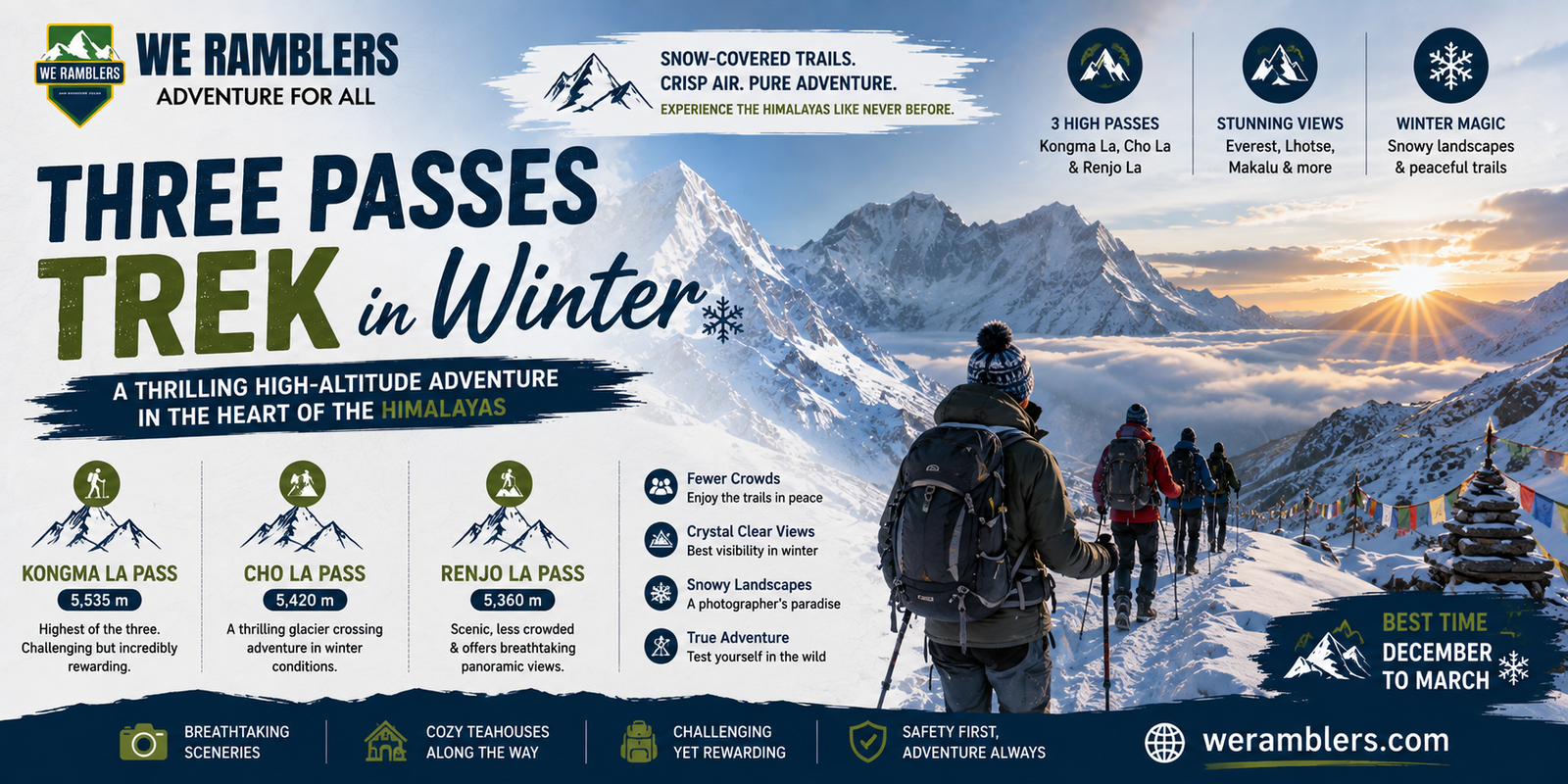
Winter is widely considered one of the toughest times of year to attempt the Everest Three Passes Trek, but it is also one of the most rewarding for trekkers who come prepared. Crossing Kongma La, Cho La, and Renjo La in the depths of December, January, and February means dealing with serious cold, potential snow closures, and a very different trekking experience than the busy spring and autumn seasons. This guide covers what winter actually looks like on this route so you can decide whether it fits your trekking style.
Is the Three Passes Trek Possible in Winter?
Yes, but it comes with real caveats. Winter is generally regarded as the most challenging season for the Three Passes Trek, largely due to freezing temperatures, heavy snowfall at higher elevations, and the risk that one or more passes may become temporarily impassable. That said, the route is not closed off entirely, and experienced cold weather trekkers with flexible schedules can and do complete it during winter months.
The key difference between winter and the peak spring or autumn seasons is unpredictability. A pass that is clear one week may be snowed in the next, which means winter itineraries need to build in extra flexibility rather than a fixed day by day schedule.
Winter Temperatures on the Three Passes Route
Temperatures drop significantly as the season progresses through December, January, and February. At lower altitudes, daytime temperatures generally range from around minus five to five degrees Celsius, dropping toward minus ten degrees at night. Higher up near the passes themselves, daytime temperatures can fall to minus ten to minus twenty degrees Celsius, with nighttime readings dropping considerably lower still.
December tends to offer a brief window of more stable weather before conditions become harsher through January and into February, which sees the heaviest snowfall of the winter months.
Snow and Pass Closures
Heavy snowfall is one of the biggest factors that shapes a winter Three Passes itinerary. Kongma La, Cho La, and Renjo La can all become temporarily blocked by fresh snow, particularly during January and February. When this happens, trekkers and guides typically wait out the weather at a nearby village or teahouse until conditions improve enough to cross safely.
This is one of the main reasons a fixed date itinerary is risky in winter. Trekkers attempting this route during the coldest months should build extra buffer days into their schedule and stay in close contact with local guides who understand current trail and snow conditions.
Why Some Trekkers Choose Winter Anyway
Despite the challenges, winter has genuine appeal for a certain kind of trekker. Trail traffic drops dramatically compared to the crowded spring and autumn seasons, meaning quieter teahouses, more personal attention from lodge owners, and a far more peaceful experience on the trail itself. Skies also tend to be notably clear during dry cold spells, offering some of the best mountain visibility of the year, along with striking views of snow covered peaks and frozen landscapes that spring and autumn simply cannot match.
Photographers and trekkers who prioritize dramatic mountain views over trail comfort often find winter’s trade offs worthwhile, provided they come properly prepared for the cold.
Who Should Consider a Winter Three Passes Trek
This is not a recommended season for first time high altitude trekkers or anyone without cold weather hiking experience. Winter Three Passes trekking suits people who have some background in high altitude or cold climate trekking, travel with an experienced local guide who understands current snow conditions, and are mentally prepared for the possibility of a delayed or altered itinerary if a pass becomes blocked.
Trekkers who have previously completed a similar high altitude route, or who have solid cold weather camping or hiking experience, are generally in a better position to handle the demands of a winter crossing.
Essential Gear for a Winter Crossing
Winter trekking on this route requires a noticeably heavier packing list than spring or autumn. A sleeping bag rated well below freezing is essential, since teahouse rooms are not heated overnight and temperatures at higher camps can drop dramatically. Crampons remain important for the Cho La glacier crossing regardless of season, but become even more critical in winter given fresh snow accumulation. Insulated, waterproof boots, multiple warm layers, quality gloves, and a good pair of sunglasses for snow glare all become non negotiable rather than optional extras.
Tips for Trekking the Three Passes in Winter
- Build in extra buffer days for potential pass closures due to fresh snowfall.
- Travel with an experienced guide who has current knowledge of trail and snow conditions.
- Pack a sleeping bag and layers rated for well below freezing temperatures.
- Prioritize early morning starts, since weather and wind tend to worsen later in the day.
- Stay flexible with your itinerary rather than committing to a fixed daily schedule.
- Confirm teahouse availability along your route in advance, since some lodges reduce services during the quietest winter weeks.
Plan Your Winter Three Passes Trek With We Ramblers
Winter trekking on this route rewards careful planning and experienced guidance far more than any other season. Our team at We Ramblers understands how quickly conditions can change on Kongma La, Cho La, and Renjo La during the colder months, and we build winter itineraries with the flexibility needed to handle snow delays safely.
Get in touch through our contact page to talk through a winter Three Passes itinerary, or browse our full range of trekking packages if you are still weighing which season suits your trip.
Frequently Asked Questions About the Three Passes Trek in Winter
Can you trek the Three Passes route in winter?
Yes, it is possible, though winter is considered the most challenging season due to freezing temperatures and the risk of temporary snow closures on the high passes.
Which winter month is best for the Three Passes Trek?
December generally offers the most stable winter conditions, with January and February bringing harsher cold and heavier snowfall.
Do the passes close in winter?
Yes, Kongma La, Cho La, and Renjo La can all become temporarily blocked by fresh snowfall, particularly during January and February, requiring trekkers to wait for conditions to improve.
How cold does it get on the Three Passes Trek in winter?
Higher altitude sections can see daytime temperatures of minus ten to minus twenty degrees Celsius, with nighttime temperatures dropping considerably lower.
Do teahouses stay open during winter on this route?
Most teahouses remain open through winter, though some reduce services during the quietest weeks, so confirming availability with your guide in advance is recommended.
Is winter a good time to avoid crowds on the Three Passes Trek?
Yes, winter sees significantly fewer trekkers than spring or autumn, offering quieter trails and teahouses along with often clearer mountain views during dry spells.