The Manaslu Conservation Area is best known among trekkers for its dramatic mountain scenery and the challenging Larkya La Pass, but it is also one of Nepal’s richest biodiversity zones. Spread across the Gorkha district and surrounding Mount Manaslu, the eighth highest peak in the world, this protected area is home to an impressive range of mammals, birds, and plant life that few trekkers expect to encounter along the trail. This guide covers the key wildlife you may spot while trekking through the region.
Why the Manaslu Conservation Area Supports So Much Wildlife
The Manaslu Conservation Area spans a huge altitude range, stretching from subtropical river valleys near the Budhi Gandaki up to alpine meadows and snowfields near Larkya La. This range of climate zones creates several distinct habitats within a single protected area, from dense rhododendron and oak forest at lower elevations to open alpine pasture higher up. That variety is what allows such a wide mix of species to survive within a relatively compact stretch of trail, making the Manaslu Circuit Trek as interesting for wildlife spotting as it is for mountain views.
Mammals of the Manaslu Region
The conservation area is home to roughly 33 recorded species of mammals, several of which are considered globally threatened.
Snow Leopard
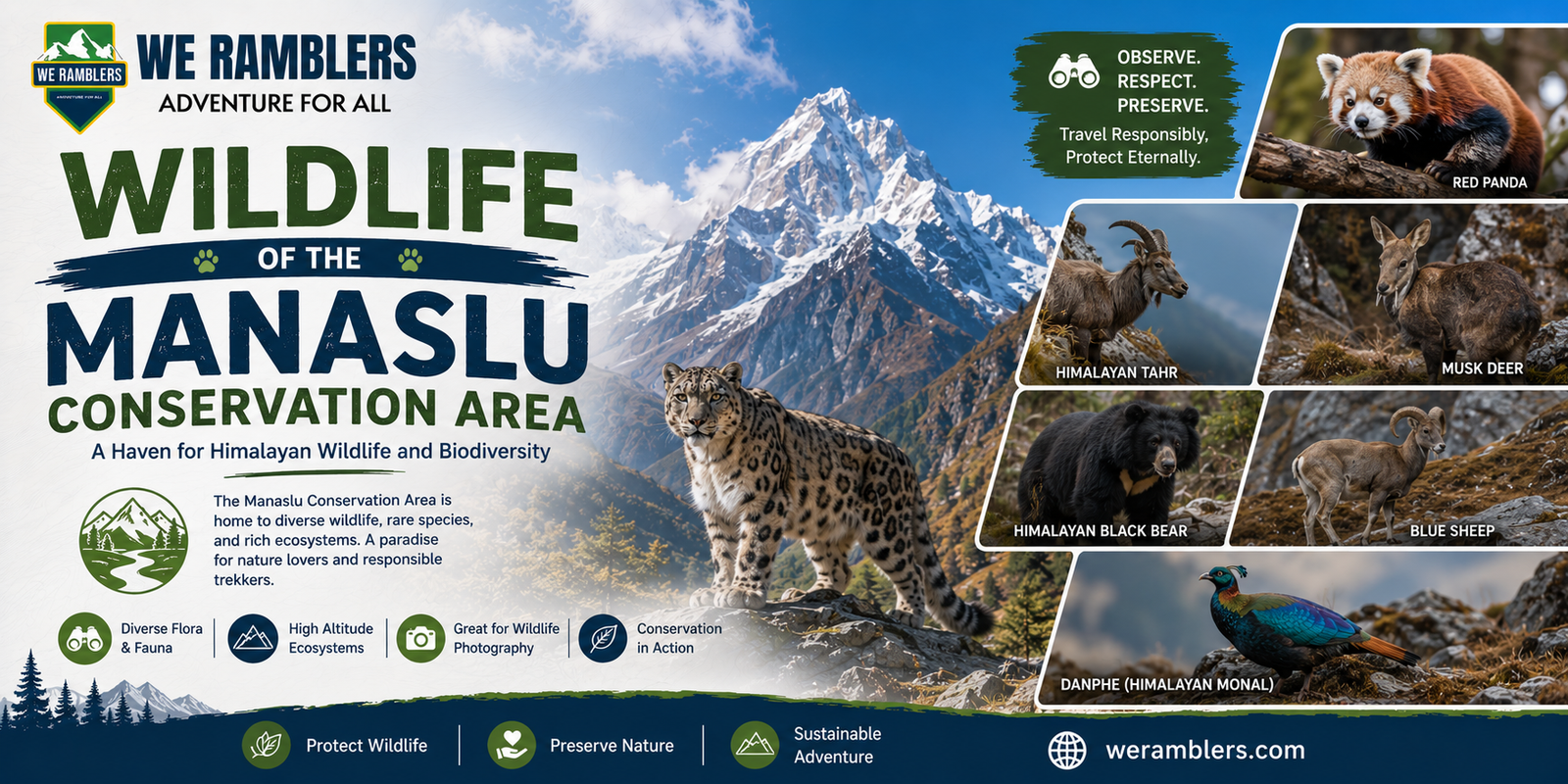
The snow leopard is the most iconic and elusive resident of the Manaslu Conservation Area, typically found in rocky alpine zones above 4000 meters. Sightings are rare since these cats are naturally shy and tend to avoid areas with regular human activity, but conservation groups conduct ongoing camera trap monitoring near villages such as Samagaun and Samdo to track their movements. Spotting one is considered a rare highlight rather than something to expect on a standard trek.
Blue Sheep
Blue sheep, also known as bharal, are one of the more commonly observed large mammals in the region and serve as the primary prey species for snow leopards. They are often seen grazing in herds on steep, grassy slopes, particularly near higher altitude sections of the trail closer to the Larkya glacier.
Himalayan Tahr
The Himalayan tahr, a wild goat like mammal with a shaggy coat, is frequently spotted on rocky slopes and ridgelines, especially in the higher stretches of the trek approaching Larkya La Pass.
Red Panda
Red pandas inhabit the temperate forests of the lower and middle sections of the conservation area, particularly where bamboo undergrowth is present. Listed as endangered, red pandas rely on undisturbed forest understory, and sightings tend to cluster around villages such as Namrung, Lho, and Samdo.
Musk Deer
Himalayan musk deer are present throughout the mid altitude forest zones. This species has historically been hunted for its musk gland and remains a protected but still vulnerable species within the conservation area.
Other Notable Mammals
Beyond these headline species, the region is also home to grey wolves, Himalayan black bears, red foxes, lynx, Himalayan serow, Himalayan marmots, woolly hares, and several smaller mammals such as pikas and yellow throated martens, each occupying different altitude bands across the protected area.
Birds of the Manaslu Conservation Area
Bird enthusiasts have plenty to look forward to here as well, with more than 110 recorded species across the conservation area. Notable sightings include the Himalayan monal, known locally as danphe and recognized as the national bird of Nepal, along with blood pheasants, snow partridges, Tibetan snowcocks, and chukor partridges. Larger birds of prey such as the Himalayan griffon, golden eagle, and lammergeier, also known as the bearded vulture, are regularly seen soaring over the higher ridgelines.
Reptiles, Amphibians, and Plant Life
While mammals and birds dominate most trekkers’ attention, the conservation area also supports three recorded species of reptiles and at least four species of frogs, reflecting the ecological range packed into this stretch of the Himalayas. Plant diversity is equally impressive, with between 1500 and 2000 recorded flowering plant species, many of which have traditional medicinal uses among local communities. Forest types shift dramatically with altitude, moving from subtropical vegetation near the valley floor through oak, maple, and blue pine forest, and finally into juniper, rhododendron shrubland, and alpine meadow near the highest points of the trek.
Best Places to Spot Wildlife Along the Trek
Wildlife sightings tend to cluster around specific sections of the Manaslu Circuit Trek. Lower forested stretches near Namrung and Lho offer the best chance of spotting red pandas and smaller forest mammals, while the higher villages of Samagaun and Samdo sit closest to snow leopard and blue sheep habitat. The open ridgelines and meadows leading up to Larkya La Pass are generally the best spot for tahr and marmot sightings, along with excellent birdwatching opportunities for raptors riding the mountain thermals.
Best Time of Year for Wildlife Spotting
Spring, from March to May, and autumn, from September to November, are considered the best seasons for wildlife spotting in the Manaslu Conservation Area. Both seasons bring clearer weather and more active animal movement, since temperatures are milder than the winter months and trails are free of the heavy monsoon rains that fall between June and September.
Responsible Wildlife Viewing Tips
- Keep a respectful distance from any wildlife you encounter, especially blue sheep and tahr grazing near the trail.
- Avoid loud noise near forested sections where red pandas and smaller mammals are more likely to be present.
- Bring binoculars if birdwatching or wildlife spotting is a priority for your trek.
- Follow your guide’s lead on where and when wildlife sightings are more likely, since local knowledge of seasonal movement is invaluable.
- Never attempt to feed or approach wild animals, even smaller and seemingly harmless species like marmots.
Trek the Manaslu Region With We Ramblers
Trekking through the Manaslu Conservation Area offers far more than mountain views, and our guides know the sections of trail where wildlife sightings are most likely, along with the best seasons to maximize your chances. Whether you are drawn by the idea of spotting a snow leopard’s tracks near Samdo or simply want to experience one of Nepal’s richest biodiversity zones, our team can help you plan a trek that fits your interests.
Reach out through our contact page to start planning your Manaslu trek, or browse our full range of trekking packages if you are still comparing routes across Nepal.
Frequently Asked Questions About Manaslu Conservation Area Wildlife
Can you actually see a snow leopard while trekking in Manaslu?
Sightings are rare since snow leopards are naturally shy and avoid areas of frequent human activity, though the region does support a healthy population in its higher alpine zones above 4000 meters.
What is the most commonly spotted large mammal in the Manaslu Conservation Area?
Blue sheep, also known as bharal, are among the most frequently observed large mammals, often seen grazing in herds on steep slopes.
Are red pandas found in the Manaslu region?
Yes, red pandas inhabit the bamboo forests of the lower and middle altitude zones, with sightings more common near villages such as Namrung, Lho, and Samdo.
How many bird species are found in the Manaslu Conservation Area?
Over 110 species of birds have been recorded in the region, including the Himalayan monal, blood pheasant, and several species of eagles and vultures.
When is the best time to spot wildlife on the Manaslu Circuit Trek?
Spring and autumn generally offer the best conditions for wildlife spotting, thanks to milder weather and clearer trails compared to the winter and monsoon seasons.
Is the Manaslu Conservation Area a restricted trekking area?
Yes, trekkers need a Restricted Area Permit along with a licensed guide to trek through the Manaslu Conservation Area, which also helps support ongoing conservation efforts in the region.