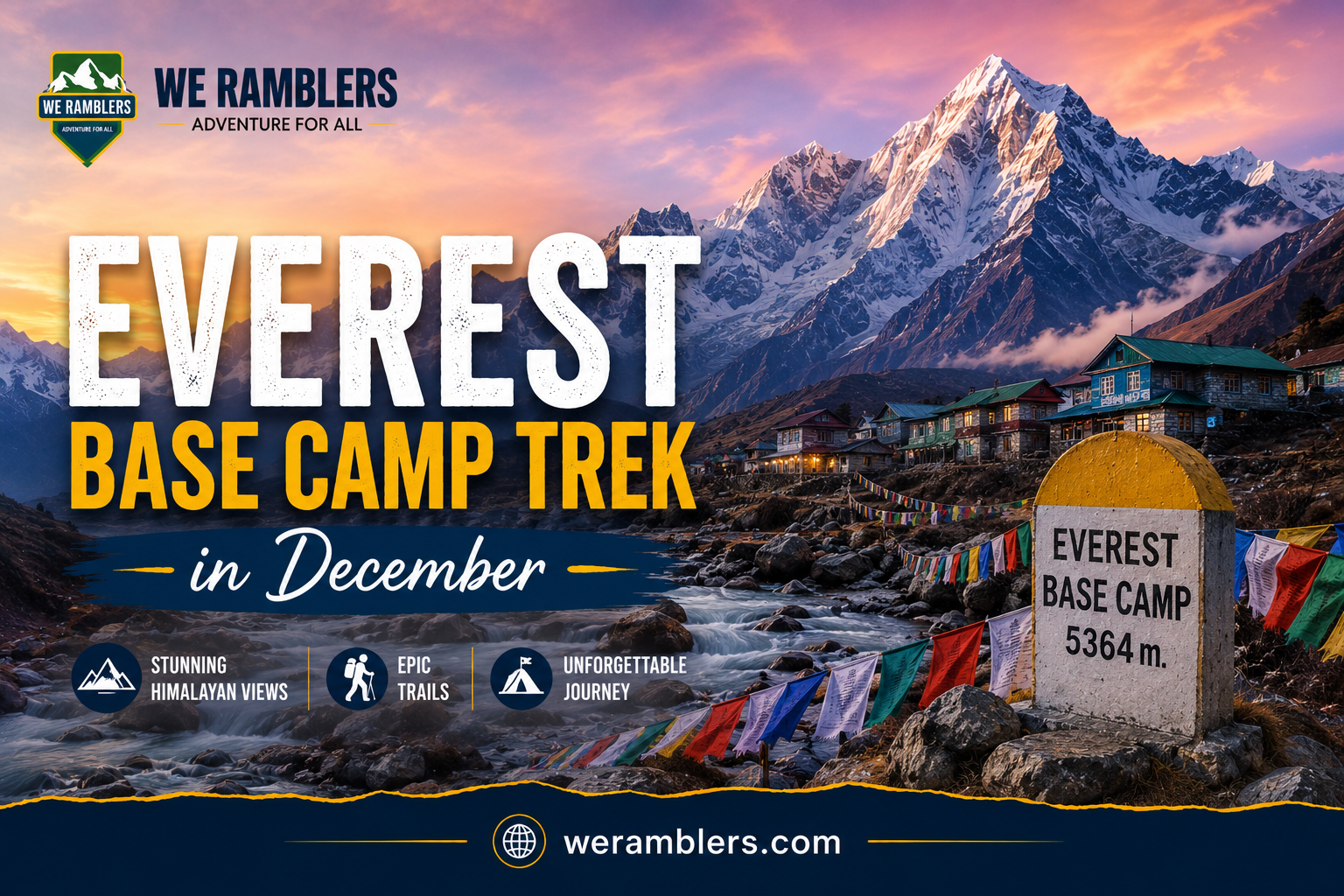
Most people assume trekking season ends when autumn does, but the Everest Base Camp trek in December is very much a real option, and for a certain kind of trekker, it might be the best month of the year. This is winter trekking in the Khumbu: cold, quiet, and rewarded with some of the clearest mountain views you will ever see.
At We Ramblers, we get one question constantly about this time of year: can you actually trek Everest Base Camp in December? The answer is yes, and this guide covers everything you need to know before you commit, including weather, temperature, a full itinerary, and honest answers to the questions we hear most.
Can You Trek Everest Base Camp in December?
Yes. December sits at the very start of Nepal’s winter season, and while it is colder and quieter than autumn or spring, the trail remains fully open, teahouses stay operational along the main route, and Lukla flights continue to run. This is not an extreme expedition reserved only for hardened mountaineers. It is a genuinely achievable trek for anyone in solid physical condition who is prepared for cold weather and comes with the right gear.
That said, December is not a beginner’s first choice. It suits trekkers who want solitude, don’t mind serious cold, and are comfortable with slightly less predictable trail conditions in exchange for empty trails and postcard-clear skies.
Everest Base Camp Trek December Weather
The Everest Base Camp trek December weather pattern is defined by two things: dryness and cold. Rainfall is essentially nonexistent this time of year, which means the skies stay remarkably clear for long stretches.
What to expect:
- Very low precipitation, with almost no rain and only occasional snowfall
- Some of the clearest, sharpest mountain views of the entire year, since the winter air is free of monsoon humidity and haze
- A higher chance of snow at higher elevations, particularly from mid-month onward, which can leave sections of trail above Dingboche covered in snow or ice
- Shorter daylight hours, with darkness setting in by around 5pm, which means earlier starts each day
- A meaningful chance of Lukla flight delays due to fog, wind, or occasional snow, though nowhere near as disruptive as monsoon season
One underrated perk of trekking this month: Lukla flights often operate directly out of Kathmandu rather than being diverted to Manthali airport, which is the case during the crowded peak seasons. That means skipping the long pre-dawn drive that spring and autumn trekkers have to deal with.
Temperature and What to Pack
Cold is the defining challenge of a December trek, and it is worth taking seriously. Temperature drops sharply with elevation, and nights are genuinely frigid at altitude.
- Lukla and Phakding (2,600 to 2,840 meters): daytime highs around 10°C to 12°C, with nights dropping well below that
- Namche Bazaar (3,440 meters): daytime temperatures hovering around 9°C, falling toward freezing after dark
- Dingboche and Lobuche (4,300 to 4,900 meters): daytime highs of roughly 0°C to 5°C, with nights regularly falling to -15°C or colder
- Everest Base Camp and Gorak Shep (above 5,100 meters): daytime temperatures near or below freezing, with nighttime lows commonly reaching -20°C or lower
A four-season sleeping bag, a heavyweight down jacket, thermal base layers, and quality gloves and headwear are not optional for this trek. Microspikes are also worth packing in case of icy trail sections above Dingboche, particularly later in the month as snow accumulates.
Everest Base Camp Trek in December Itinerary
The standard route stays the same as other seasons, but pacing and buffer days matter more in December than at any other time of year. Shorter daylight hours and the possibility of snow-related delays mean building in flexibility is essential.
Day 1: Arrive in Kathmandu and attend a pre-trek briefing.
Day 2: Fly to Lukla (2,840m) and trek to Phakding (2,610m).
Day 3: Trek to Namche Bazaar (3,440m), the main Sherpa hub of the region.
Day 4: Acclimatization day in Namche, with a short hike to a nearby viewpoint.
Day 5: Trek to Tengboche (3,860m), home to the region’s most iconic monastery.
Day 6: Trek to Dingboche (4,360m), where the trail opens into alpine terrain.
Day 7: Second acclimatization day in Dingboche, with an optional hike for altitude adjustment.
Day 8: Trek to Lobuche (4,940m).
Day 9: Reach Everest Base Camp (5,364m) and return to Gorak Shep (5,170m) for the night.
Day 10: Early morning hike to Kala Patthar (5,545m), then descend to Pheriche. Note that this viewpoint is often snow covered in December, so proper footwear and guide judgment on timing matter here.
Day 11: Trek back to Namche Bazaar.
Day 12: Trek back to Lukla.
Day 13: Fly back to Kathmandu, with a buffer day strongly recommended given December’s flight variability.
Day 14: Departure or extra sightseeing in Kathmandu.
Because of shorter daylight and colder conditions, we recommend building at least one or two additional buffer days into a December itinerary beyond what you would need in autumn or spring. This protects your trip against snow-related flight delays without forcing rushed decisions on the trail.
What Makes Trekking Everest Base Camp in December Worthwhile
Unmatched visibility. The dry winter air produces some of the sharpest, clearest views of Everest, Lhotse, and Ama Dablam available at any time of the year. Photographers in particular tend to rate December among the best months for this reason alone.
Genuine solitude. With the autumn crowds long gone, trails and teahouses are dramatically quieter. You get more space, more attention from lodge owners, and a much more intimate experience of the Khumbu.
Direct Kathmandu-Lukla flights. Unlike peak season, when flights are routed through Manthali airport due to congestion, December flights typically operate directly out of Kathmandu, saving hours of travel time on both ends of the trek.
A different kind of landscape. Snow-draped villages, frozen waterfalls, and prayer flags against a stark white backdrop give the trek a completely different character than the green, crowded trails of autumn.
Who Should Consider a December Trek
A December trek is well suited to trekkers who are in good physical condition, comfortable with genuinely cold temperatures, and flexible with their schedule in case of weather delays. It is a poor fit for complete beginners with no cold-weather hiking experience, or for anyone locked into a tight, inflexible travel schedule with no room for buffer days.
If you fall into the first category, December can be one of the most memorable versions of this trek precisely because so few people choose it.
Frequently Asked Questions: Everest Base Camp Trek in December
Can you trek Everest Base Camp in December?
Yes. The trail remains open, teahouses along the main route stay operational, and Lukla flights continue to run throughout the month. December is colder and quieter than autumn or spring, but it is a fully achievable trek for a reasonably fit trekker with proper winter gear.
What is the weather like on the Everest Base Camp trek in December?
December weather is dry and cold, with very little rainfall and occasional snowfall, especially at higher elevations later in the month. The trade-off for the cold is some of the clearest mountain visibility of the entire year.
How cold does it get on the Everest Base Camp trek in December?
Daytime temperatures range from around 9°C to 12°C at lower elevations, dropping to near freezing higher up. Nighttime temperatures can fall to -15°C to -20°C or colder near Everest Base Camp and Gorak Shep, so proper cold-weather gear is essential.
Is the Everest Base Camp hike in December difficult?
The route itself is the same as other seasons, but the cold, shorter daylight hours, and possible snow on the trail add extra difficulty. Trekkers should be in solid physical condition and prepared for genuinely cold conditions, particularly at night.
Do Lukla flights operate reliably in December?
Flights do operate, and December often sees flights depart directly from Kathmandu rather than being diverted to Manthali airport as they are in peak season. That said, fog, wind, or snow can still cause delays, so buffer days are strongly recommended.
What should the Everest Base Camp trek in December itinerary include?
A standard 12 to 14 day itinerary works well, with two acclimatization days at Namche Bazaar and Dingboche. Given the season’s weather variability, adding one or two extra buffer days is a smart precaution against flight delays.
Ready to Trek Everest Base Camp This December?
At We Ramblers, we build every December itinerary with the right cold-weather planning, experienced guides who know the winter trail, and enough buffer days to handle weather delays without stress. If you want to experience the Khumbu at its quietest and clearest, our team can help you plan a winter trek done right.
Get in touch with We Ramblers today to start planning your Everest Base Camp trek in December, and let us handle the logistics while you focus on the adventure ahead.