
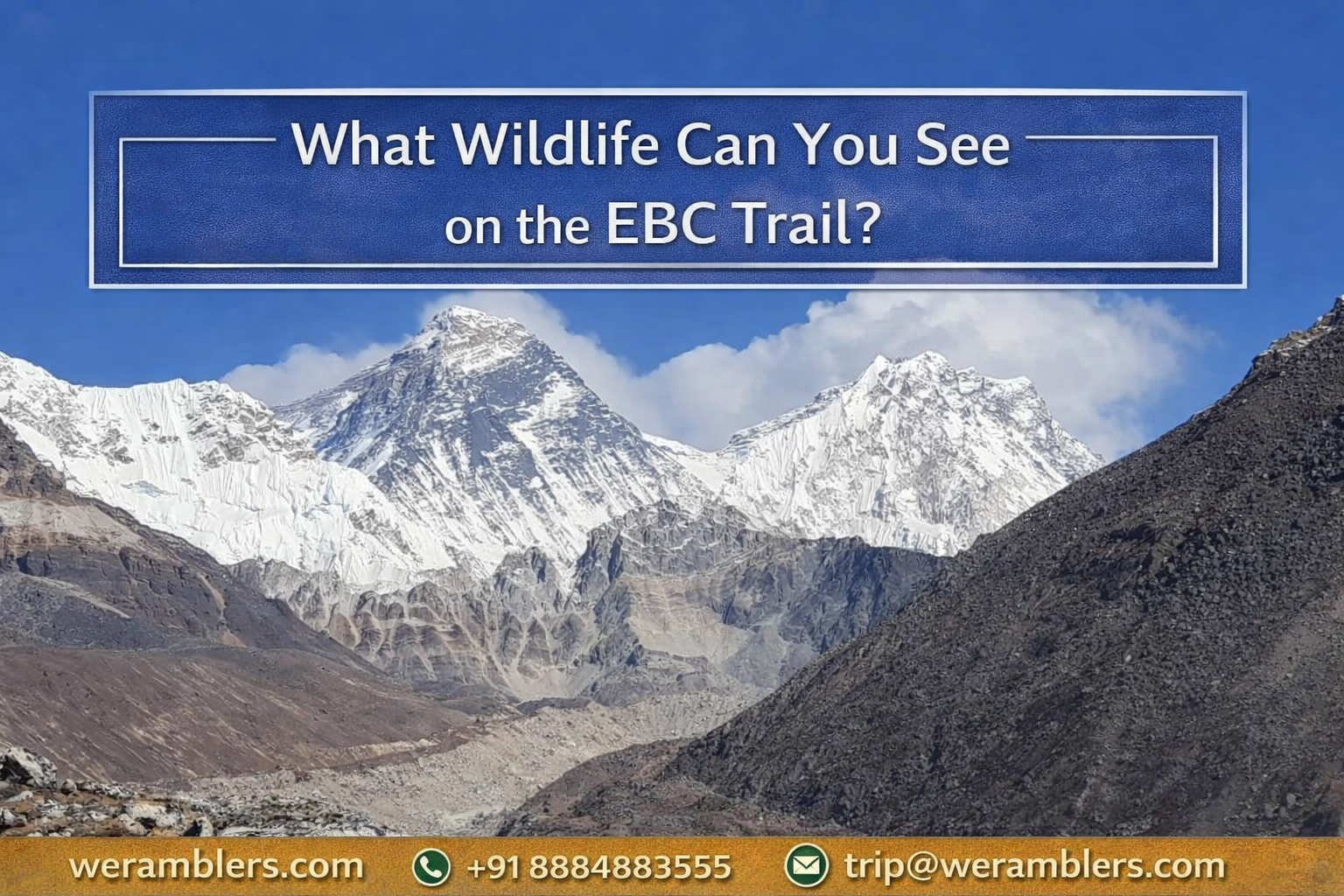
When most people think of the Everest Base Camp (EBC) Trek, they picture towering peaks and dramatic glaciers. But many trekkers also ask: what wildlife can you see on the EBC trail? The Everest region is part of Sagarmatha National Park, a protected area that supports a surprising variety of Himalayan wildlife.
While the EBC trek is not a safari-style wildlife expedition, observant trekkers often spot unique high-altitude animals and birds along the trail. From mountain goats scaling cliffs to colorful Himalayan birds flying overhead, the biodiversity adds another dimension to the trekking experience.
Understanding what wildlife can you see on the EBC trail helps you appreciate the region not just as a mountain destination, but as a living ecosystem.
Himalayan Thar – The Most Common Mammal
The Himalayan Thar is one of the most frequently seen animals along the EBC trail. These goat-like animals are well adapted to steep rocky slopes and can often be spotted near cliffs or grazing along hillsides.
They have thick brown fur and curved horns, which help them survive the cold, rugged terrain. Early mornings and quiet sections of the trail offer the best chances of sightings.
Musk Deer – The Shy Forest Dweller
In lower forested areas near Phakding and Namche Bazaar, you may encounter the elusive musk deer. These small, shy animals prefer dense woodland and are more active during quieter times of the day.
They are rarely seen up close but are occasionally spotted by attentive trekkers.
Himalayan Monal – Nepal’s National Bird
Birdwatchers often ask what wildlife can you see on the EBC trail, and the Himalayan Monal is one of the highlights. This brightly colored pheasant is Nepal’s national bird and is known for its iridescent feathers.
Monals are usually found in forested regions below the tree line. Their vibrant plumage contrasts beautifully with the mountain landscape.
Snow Leopard – Rare and Elusive
The snow leopard inhabits the higher altitudes of the Everest region, but sightings are extremely rare. These animals are solitary, elusive, and primarily active at night.
While it’s unlikely you’ll see one during your trek, knowing they roam the region adds a sense of wild mystery to the Himalayas.
Red Panda – Extremely Rare Sightings
Red pandas live in some forested areas of eastern Nepal, including parts of the Sagarmatha region. However, they are very rare along the main EBC trail.
Spotting one would be an extraordinary and uncommon experience.
Himalayan Griffon and Other High-Altitude Birds
Large birds of prey such as the Himalayan griffon vulture are commonly seen soaring above valleys. These impressive birds glide effortlessly along thermal currents, often visible against the clear blue sky.
Other bird species found along the trail include:
- Snow pigeons
- Blood pheasants
- Yellow-billed choughs
The higher you go, the more you’ll notice birds adapted to cold and rocky environments.
Yaks – The Icon of the Himalayas
While technically domesticated animals, yaks are a defining part of the EBC experience. They are essential for transporting supplies along the trail and are commonly seen in villages and open valleys.
Yaks are well adapted to high altitude with thick fur and strong builds. Trekkers should always give way to yak caravans on narrow trails.
Best Places to Spot Wildlife on the EBC Trail
Wildlife sightings are more common in lower forested areas between Lukla and Namche Bazaar. Early morning hikes and quieter sections of the trail improve your chances of spotting animals.
Above the tree line, wildlife becomes less common, but birds and occasional mammals may still be seen in remote areas.
Respecting Wildlife on the Everest Base Camp Trek
Sagarmatha National Park is a protected area, and wildlife should never be disturbed. Maintaining distance, avoiding loud noises, and not feeding animals helps preserve the ecosystem.
Wildlife encounters are special because they occur naturally in the animal’s habitat. Responsible trekking ensures these species remain protected for future generations.
Wildlife Experience with We Ramblers
At We Ramblers, we encourage trekkers to appreciate the full ecosystem of the Everest region — not just the mountains. Our experienced guides often point out wildlife sightings and share insights about the local environment.
Our trekking approach emphasizes:
- Responsible tourism
- Respect for protected wildlife areas
- Education about the Himalayan ecosystem
If you’re wondering what wildlife can you see on the EBC trail, trekking with knowledgeable guides increases your awareness of these hidden natural treasures.
Frequently Asked Questions: What Wildlife Can You See on the EBC Trail?
Are there dangerous animals on the EBC trail?
Dangerous wildlife encounters are extremely rare. Most animals avoid human contact.
Can I see snow leopards on the EBC trek?
Snow leopards live in the region but sightings are very rare.
Where are wildlife sightings most common?
Lower forested areas between Lukla and Namche Bazaar offer the best chances.
Are yaks dangerous?
Yaks are generally calm but can be unpredictable. Always stand on the uphill side of the trail when they pass.
Is the EBC trail inside a national park?
Yes, much of the trek passes through Sagarmatha National Park.
Is birdwatching good on the EBC trek?
Yes, especially in lower forested sections of the trail.