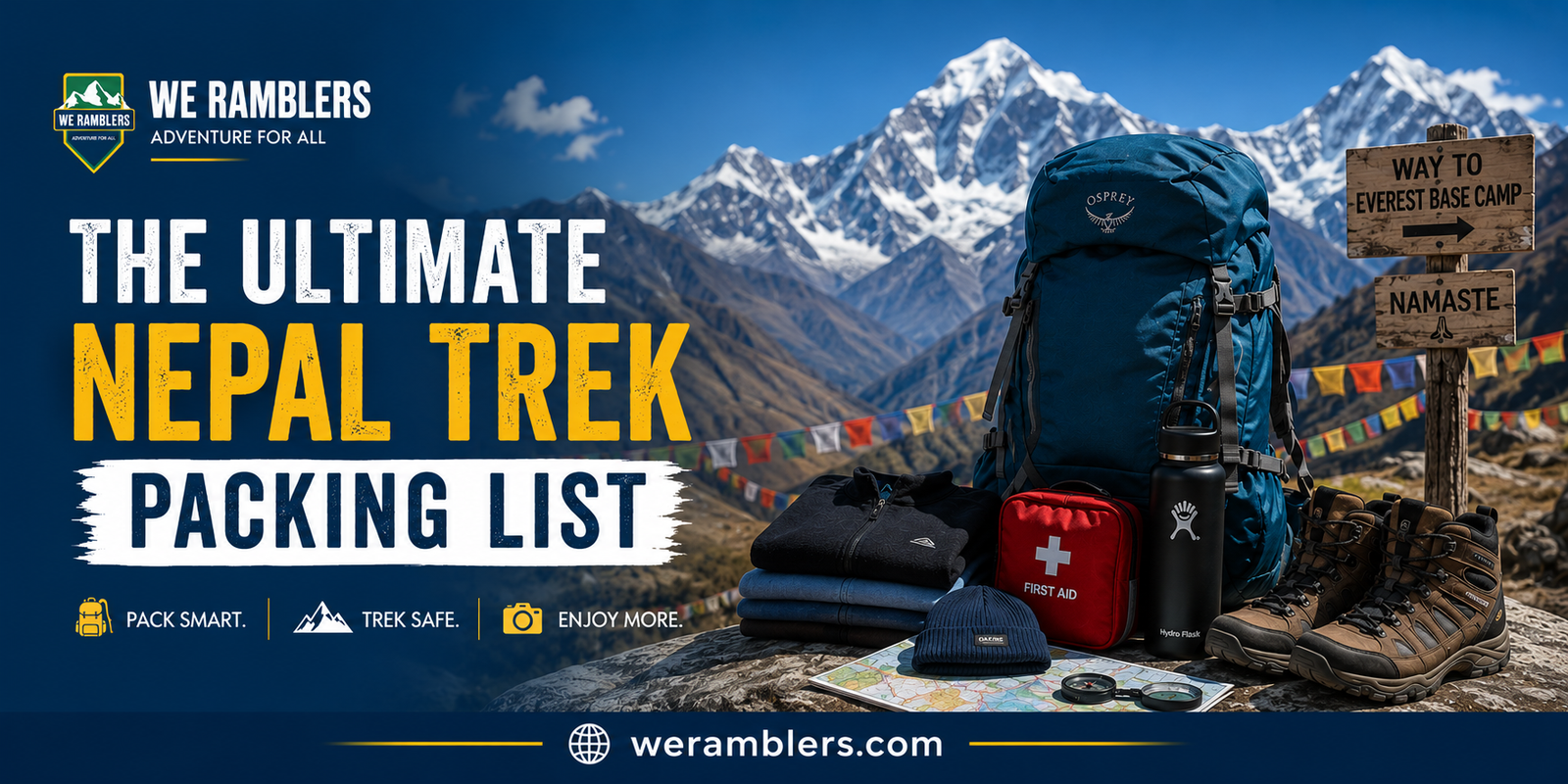
Packing for a Nepal trek is one of those things that separates a comfortable experience from a miserable one. Whether you are heading to Everest Base Camp, the Annapurna Circuit, or the Manaslu region, the principles are the same: carry enough to stay warm, dry, and safe, but not so much that the weight destroys your knees before you reach Namche Bazaar.
This Nepal trek packing list covers every layer, every essential, and just as importantly, everything you should leave behind.
Clothing: The Foundation of Every Nepal Trekking Packing List
Base Layers
Your base layers do the heavy lifting in terms of temperature regulation. Pack two moisture-wicking long-sleeve tops and two pairs of thermal leggings. Merino wool is the best choice because it resists odour across multiple days of wear, which matters a lot when laundry is scarce.
Avoid cotton entirely. Cotton holds moisture against your skin and becomes dangerously cold at altitude when you stop moving.
Mid Layers
A fleece jacket is non-negotiable. Go for something in the 200-weight range, warm enough for cool evenings at Dingboche or Thorong Phedi, but not so bulky that it cannot fit inside your pack.
A down jacket (700-fill or higher) is your second mid layer and your best friend above 4,000 metres. At Everest Base Camp or Thorong La Pass, temperatures drop well below freezing at night. A down jacket rated to minus 10 degrees Celsius is a minimum requirement.
Outer Shell
A waterproof, windproof hardshell jacket is essential. Nepal’s trekking seasons, spring and autumn, are generally dry, but afternoon rain and high-altitude wind are constant. Look for a jacket with sealed seams and a hood large enough to fit over a hat.
Trekking Trousers and Shorts
Two pairs of zip-off trekking trousers work well. They convert to shorts on warm lower-altitude days and stay as full-length trousers when the temperature drops. Pack one pair of thermal leggings to wear underneath in extreme cold.
Socks and Undergarments
Bring five to six pairs of merino wool trekking socks. Your feet will thank you. Pack enough undergarments for four days since most teahouses offer a basic laundry service.
Hats, Gloves, and Neck Gaiter
A warm beanie, a pair of lightweight liner gloves, and a thicker pair of outer gloves cover you across all conditions. A neck gaiter or buff is lightweight and invaluable in dust, wind, and cold.
Footwear for Nepal Trekking
Trekking Boots
Your boots are the single most important item on this Nepal trek packing list. Choose waterproof leather or synthetic boots with ankle support and a stiff sole compatible with crampons if you are doing an expedition. Break them in completely before you arrive since new boots cause blisters that can end a trek early.
Camp Shoes or Sandals
A pair of lightweight sandals or trail runners serves as camp footwear. After eight hours on the trail in heavy boots, your feet need to breathe. Teahouses are not always warm enough for bare feet.
Gaiters
Low gaiters keep trail dust and small stones out of your boots on dry days. Higher gaiters are useful on snow-covered passes like Thorong La or the Three Passes route.
Gear and Equipment
Backpack and Duffel Bag
Most trekkers carry a 30 to 40-litre daypack for daily essentials and hand a larger 60 to 80-litre duffel to a porter. Pack your daypack as if the duffel might get delayed. Keep medication, your sleeping bag, and a warm layer with you at all times.
Sleeping Bag
Teahouse blankets exist but are not hygienic and often inadequate above 4,000 metres. A sleeping bag rated to minus 10 degrees Celsius is the right choice for Everest Base Camp, Annapurna Base Camp, and similar high-altitude treks.
Trekking Poles
Trekking poles reduce knee strain on descents by up to 25 percent. On a long Nepal trek with thousands of metres of elevation loss, this is significant. Collapsible carbon poles are light and pack down easily.
Headlamp
Power cuts are common in teahouses. A headlamp with extra batteries or a USB-rechargeable model is essential. Early starts before sunrise are common on summit days and make a headlamp non-negotiable.
Water Purification
Never drink untreated water on a Nepal trek. Carry a filter bottle such as a LifeStraw or Sawyer Squeeze, or bring water purification tablets. This reduces plastic waste and saves money at teahouses that charge for bottled water at altitude.
Health, Hygiene, and First Aid
Pack a basic first aid kit including blister treatment, ibuprofen, paracetamol, oral rehydration salts, antihistamines, and Diamox (acetazolamide) for altitude sickness prevention if your doctor has prescribed it. Add a small supply of antidiarrheal medication and antibiotics for traveller’s diarrhoea.
Sunscreen (SPF 50 or higher), lip balm with UV protection, and glacier glasses with side shields are critical above 4,000 metres where UV radiation is intense.
Electronics and Documents
A portable power bank (20,000 mAh minimum) keeps your phone, camera, and GPS charged between teahouses. Charging points exist but often cost extra and are not always reliable.
Carry physical copies of your passport, trekking permits (TIMS card, national park entry), travel insurance policy, and emergency contacts. Store digital backups on your phone and in cloud storage.
What to Leave at Home
This is where most first-time trekkers go wrong. Here is what to cut from your Nepal trekking packing list.
Heavy tripods add significant weight for minimal gain. A small GorillaPod achieves the same shots at a fraction of the weight.
More than two pairs of trekking trousers is unnecessary. Laundry is available on the trail and you do not need five pairs.
Full-size toiletries are dead weight. Decant shampoo, conditioner, and face wash into small containers.
A laptop is rarely needed on the trail. Your phone handles navigation, photos, journalling, and communication with far less bulk.
Jeans or casual clothing will not be worn. They are heavy and dry slowly.
More than one guidebook is excessive. Download offline maps on Maps.me or Gaia GPS and carry one compact reference if needed.
Final Weight Check for Your Nepal Trekking Gear
Your loaded daypack should not exceed 8 to 10 kilograms. If it does, audit every item and ask whether you will genuinely use it every single day. If the answer is no, leave it at the hotel in Kathmandu.
Nepal trekking is physically demanding enough without carrying unnecessary weight. Pack smart, pack light, and your body will reward you when it counts most, on the long climbs above 5,000 metres.
Plan Your Nepal Trek With We Ramblers
Getting your packing list right is one part of the preparation. Having the right team on the ground is the other. We Ramblers is a Nepal and India-based adventure travel company with offices in Kathmandu and Bengaluru, specialising in Himalayan trekking, peak climbing, and expedition services across Nepal and Tibet.
Whether you are planning your first Everest Base Camp Trek, an Annapurna Circuit adventure, or a technical peak climb like Mera Peak or Island Peak, the We Ramblers team handles every detail from permits and accommodation to experienced guides and porter support. Every itinerary is designed with proper acclimatisation days, vetted teahouse stays, and local knowledge built from years on these trails.
If you are ready to stop researching and start trekking, visit weramblers.com to explore trek packages, get a custom itinerary, or simply ask the team a question. They have helped trekkers from across India and around the world reach some of the most extraordinary places on earth, and they can do the same for you.