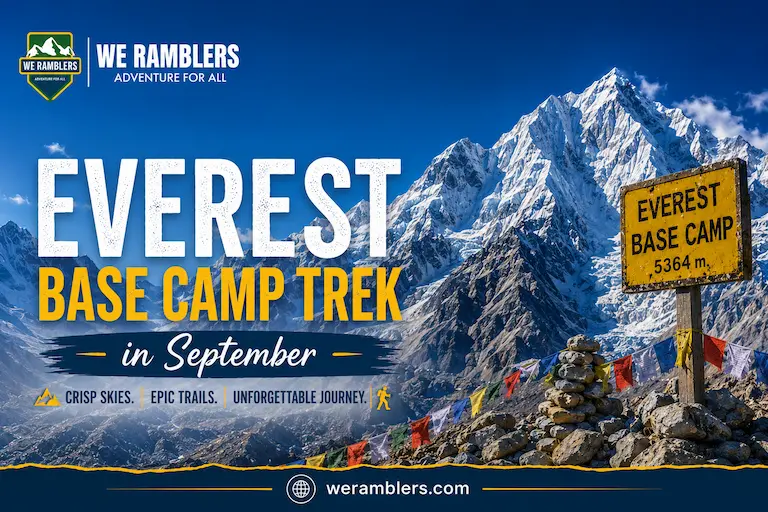
If you have been searching for the right window to finally tick off your Everest dream, the Everest Base Camp trek in September deserves a serious look. This is the month when the Himalaya wakes up from its monsoon slumber. The trails turn green, the skies begin to clear, and the crowds that flood the region in peak October and November have not quite arrived yet.
At We Ramblers, we get asked constantly whether September is a smart month to trek to Everest Base Camp. The short answer is yes, with a few caveats worth understanding before you book. This guide covers everything: weather, temperature, pricing, a full itinerary, and answers to the questions trekkers ask us most often.
Why Consider Everest Base Camp September Trekking
September sits at the hinge between two seasons. The monsoon is winding down, and autumn, the most popular trekking season in Nepal, is just beginning. That transition period gives September a personality all its own.
Trekkers who choose this month typically want one or more of the following:
- Fewer people on the trail compared to the October and November rush
- Lush, green hillsides instead of the dry, dusty look of late autumn
- A shot at experiencing local festival energy, since Nepal’s harvest and cultural festivals often fall around this time
- More room in teahouses without having to book weeks ahead
- A slightly gentler start to the peak season before prices and demand climb
The trade-off is that early September can still carry leftover monsoon weather, which means occasional rain, cloud cover, and the possibility of flight delays into Lukla. Understanding this trade-off is the key to planning a smooth trip.
Everest Base Camp Trek Weather in September
Weather is usually the first thing trekkers want to understand, and rightly so. The Everest Base Camp trek weather in September changes noticeably as the month progresses, so timing your departure within September matters almost as much as choosing the month itself.
Early September
The first half of the month can still feel like monsoon leftovers. Expect:
- Occasional rain showers, especially at lower elevations below Tengboche
- Cloud cover that can obscure mountain views, particularly in the afternoon
- Muddy and sometimes slippery trails
- A higher chance of Lukla flight delays due to unsettled weather patterns
This does not mean early September is a bad time to trek. It simply means you should build in flexibility and pack the right gear.
Late September
By the third and fourth weeks, conditions shift dramatically for the better:
- Skies become noticeably clearer, with much better visibility of Everest, Lhotse, Ama Dablam, and the surrounding peaks
- Rainfall drops off significantly
- Trails begin to dry out and firm up
- Flights to and from Lukla become more reliable
Most experienced operators, including our team at We Ramblers, recommend targeting a departure date after the fifteenth of the month if your schedule allows it. That extra couple of weeks of monsoon retreat makes a real difference in comfort and visibility.
Temperature by Altitude
Temperature drops steadily as you climb higher into the Khumbu. Here is a general range you can expect:
- Lukla and Phakding (around 2,600 to 2,840 meters): daytime highs between 18°C and 24°C
- Namche Bazaar (3,440 meters): daytime temperatures around 15°C, dropping to roughly 6°C at night
- Dingboche and higher villages (above 4,300 meters): daytime highs between 0°C and 10°C in sun, with nights regularly dropping below freezing
- Everest Base Camp and Gorak Shep (above 5,000 meters): night temperatures can fall well below zero, so proper cold weather gear is essential even though daytime sun can feel surprisingly warm
Layering is the golden rule. Mornings and evenings are cold at altitude regardless of the season, while midday sun at lower elevations can feel genuinely warm.
Everest Base Camp Trek in September Itinerary
A well-paced itinerary with proper acclimatization days is the single biggest factor in a safe, enjoyable trek. Below is the standard 14-day route that We Ramblers builds our September departures around, with buffer days factored in for possible flight delays.
Day 1: Arrive in Kathmandu and settle in for a pre-trek briefing.
Day 2: Fly to Lukla (2,840m) and trek to Phakding (2,610m). A short, easy walk to ease into the trail.
Day 3: Trek to Namche Bazaar (3,440m), the gateway town of the Khumbu region and your first serious altitude gain.
Day 4: Acclimatization day in Namche. A short hike to a nearby viewpoint helps your body adjust before continuing higher.
Day 5: Trek to Tengboche (3,860m), home to the famous Tengboche Monastery and sweeping mountain views.
Day 6: Trek to Dingboche (4,360m). The landscape opens up into alpine terrain here.
Day 7: Second acclimatization day in Dingboche, with an optional hike for better views and altitude adjustment.
Day 8: Trek to Lobuche (4,940m). The air noticeably thins from this point onward.
Day 9: Reach Everest Base Camp (5,364m) and return to Gorak Shep (5,170m) for the night. This is the day most trekkers count down to.
Day 10: Early morning hike to Kala Patthar (5,545m) for sunrise views of Everest, then descend to Pheriche or Pangboche.
Day 11: Trek back to Namche Bazaar.
Day 12: Trek back to Lukla.
Day 13: Fly back to Kathmandu, with a buffer day recommended given September’s flight variability.
Day 14: Departure or extra sightseeing in Kathmandu.
This structure includes two dedicated acclimatization days, which is non-negotiable at these altitudes. If your travel dates are flexible, we recommend keeping at least one extra spare day in your overall trip window in case of a Lukla flight delay.
Everest Base Camp Trek in September Price and Cost
Budget is usually the second biggest question after weather. The Everest Base Camp trek in September price does not swing wildly from other autumn dates, but it is worth understanding what goes into the number.
Most standard guided packages for a 12 to 14 day trek fall somewhere between USD 1,200 and USD 2,000 per person. Here is a general breakdown of what makes up that figure:
- Domestic flights (Kathmandu to Lukla round trip): roughly USD 350 to 450, depending on the season and how early you book
- Permits: the Sagarmatha National Park entry permit and the Khumbu Pasang Lhamu Rural Municipality permit together cost around USD 40 to 50
- Guide fees: licensed guides typically charge USD 25 to 35 per day, and hiring one is now mandatory for the EBC route
- Porter fees (optional but recommended): around USD 18 to 25 per day, often shareable between two trekkers
- Teahouse accommodation and meals: usually bundled into a full package, though budget independently and you can expect basic lodges plus meals to run USD 25 to 40 per day
- Travel insurance with high-altitude evacuation cover: this is non-negotiable and typically runs USD 80 to 150 for the full trip
For those asking specifically about the Everest Base Camp trek in September cost versus other months, the numbers are broadly similar to October and November. Where September can save you money is in teahouse negotiation. With fewer trekkers on the trail, especially in the first half of the month, lodges are sometimes more open to negotiating room rates or throwing in perks, something that becomes much harder once the peak crowds arrive in October.
Extra costs to budget for include hot showers, wifi, device charging, and bottled water at higher elevations, all of which get more expensive the higher you climb. Tipping guides and porters is also customary and typically adds another USD 150 to 300 to your total trip cost.
What Makes September Trekking Unique
Beyond the practical numbers, there are a few reasons trekkers keep coming back to this specific window.
Greener trails. The monsoon rains leave the lower Khumbu valley lush and vibrant in a way that late autumn and spring simply cannot replicate. Rhododendron forests and terraced hillsides look their best.
Fewer people, more connection. With trekker numbers noticeably lower than peak season, you get more one-on-one time with guides, more attention from teahouse hosts, and a quieter, more personal trail experience.
Cultural timing. September often overlaps with important Nepalese festivals. Trekking through Sherpa villages during this period can mean stumbling into local celebrations, an experience that adds real depth to the trip beyond the mountain views themselves.
A softer entry into peak season. If you want autumn conditions without autumn crowds, late September is close to the sweet spot.
Is September Right for You?
September works best for trekkers who can be flexible with their exact departure date, ideally aiming for the back half of the month, and who are comfortable packing solid rain gear alongside their cold weather layers. If your schedule is rigid and falls in the first two weeks of September, go in with realistic expectations about potential cloud cover and flight delays, and build buffer days into your itinerary.
If you would rather guarantee clear skies from day one, October remains the gold standard. But if you value quieter trails, greener scenery, and a slightly more relaxed pace, September earns its reputation as one of the underrated months for this trek.
Frequently Asked Questions: Everest Base Camp Trek in September
Is September a good month for the Everest Base Camp trek?
Yes, particularly from mid to late September onward. Early September can carry leftover monsoon weather, but conditions stabilize significantly as the month progresses, offering clear skies, green landscapes, and fewer crowds than peak October and November.
What is the weather like on the Everest Base Camp trek in September?
Early September tends to be cloudier and wetter, especially at lower elevations, while late September brings clearer skies and more stable trekking conditions. Temperatures range widely by altitude, from warm daytime highs near Lukla to below freezing nights at higher camps like Lobuche and Gorak Shep.
How much does the Everest Base Camp trek in September cost?
Most standard guided packages range from USD 1,200 to USD 2,000 per person for a 12 to 14 day trip, covering flights, permits, guides, porters, accommodation, and meals. Costs can vary based on group size, trek length, and whether you add extras like a helicopter return.
What should I pack for an Everest Base Camp trek in September?
Pack for both rain and cold. A waterproof jacket, waterproof trekking boots, and a pack cover are essential for early September, alongside insulated layers, a warm sleeping bag rated for sub-zero temperatures, gloves, and a hat for the higher altitudes later in the itinerary.
Are Lukla flights reliable in September?
Flights become more reliable as the month progresses, but early September can still see delays or cancellations due to residual monsoon weather. Building at least one buffer day into your itinerary before and after the trek is a smart precaution.
How many days does the Everest Base Camp trek in September take?
Most trekkers complete the route in 12 to 14 days, including two acclimatization days built in at Namche Bazaar and Dingboche. Shorter or longer variations are available depending on your fitness level and time constraints.
Ready to Trek Everest Base Camp This September?
At We Ramblers, we build every September itinerary with the right acclimatization schedule, experienced local guides, and enough buffer days to handle the season’s occasional flight delays without derailing your trip. If you are ready to experience the Khumbu at its greenest and quietest, our team can help you plan a trek that matches your fitness level, budget, and travel dates.
Get in touch with We Ramblers today to start planning your Everest Base Camp trek in September, and let us handle the logistics while you focus on the adventure ahead.