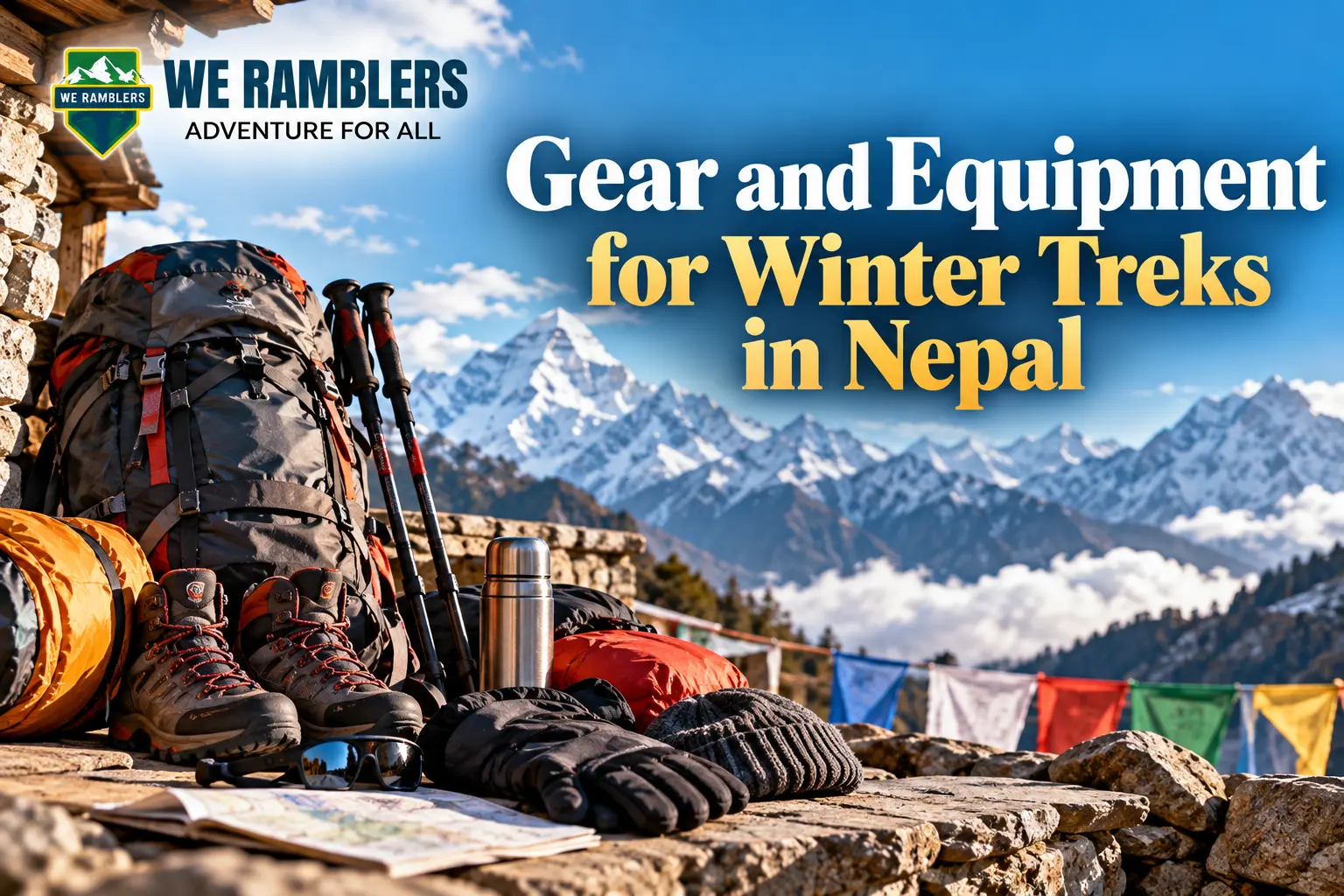
Winter treks in Nepal, starting in late December and going on until February, provide hikers with spectacular mountain scenery and colder weather. However, winter in Nepal requires extensive preparation. The selection of proper gear and equipment for winter trekking in Nepal will be what distinguishes your adventure experience from being simply amazing to being rather uncomfortable, as low temperatures can drop below freezing at night, especially on high altitudes. If you decide to go on a winter trek in Nepal to Everest Base Camp, Annapurna, or other regions in Nepal close to Kathmandu, this article will give you advice about necessary winter gear and equipment to pack layer by layer. It also provides useful information about the trekking season in Nepal and how cold it really is in Nepal in winter.
Quick Answer
It is necessary to pack for cold weather when going on an adventure trip in Nepal during the winter months, particularly from December to February, as it gets very cold up in the mountains.
Clothing & Layers
- Base Layer: Bring thermal tops and bottoms in Merino wool or synthetic fabric. It helps in transferring sweat off the body and keeps you dry. Stay clear from cotton fabric as it remains wet and makes you feel cold.
- Mid-Layer: Fleece jacket or a lightweight woolen sweater serves as an additional layer. You can add/remove it based on your comfort level as you walk through the mountain trails.
- Outer Shell and Down Jacket: Bring an outer shell, which is wind-resistant and water-resistant such as a Gore-Tex jacket with you as well as a good down jacket. It is wise to have a down jacket with a rating of -15°C or below for cold nights at tea houses.
- Lower Body: Fast-dry hiking pants or cargo pants are recommended for the daytime walks. For snowy conditions, you can add insulation pants or rain pants over them.
- Head & Hands: Two beanies like Annapurna Wool & Fleece Beanie must be carried together with a balaclava or a neck gaiter. Gloves have to be worn in pairs — an inner one that keeps your hands warm and an outer one which can protect from the wind and water.
Footwear
- Hiking Shoes: Pick some strong, waterproof, and pre-worn hiking boots. It is essential to have good support for ankles, particularly when walking on rough terrain.
- Socks: Take along a number of pairs of socks made out of moisture-wicking merino wool. Thermal socks are also handy for warming up your feet at night.
- Tea House Footwear: You may find some good sandals or slides useful at the end of the day, allowing your feet to rest from wearing hiking shoes in the tea house.
Technical Gear & Accessories
- Sleeping Gear: Take a four-season sleeping bag which is appropriate for around -10°C to -20°C temperature. The blankets from tea houses are not always sufficient during winter nights, particularly at higher elevations.
- Stability & Traction: The trekking poles having snow baskets would be useful for maintaining stability while walking on snowy tracks. Depending on the track and situation, you will need microspikes or crampons.
- Safety & Utilities: You should take sunglasses giving UV protection or glacier glasses, head lamps, spare batteries, and hot water bottles which can be reused at night time. The water purification tablets would be handy during trekking.
- Shopping Point: It is not necessary for you to purchase all the items before your trek. There are plenty of trekking equipment stores in Kathmandu such as Thamel and Tridevi Marg.
What Is the Trekking Season in Nepal?
Four seasons are considered good for trekking in Nepal – spring (March-May), summer or monsoon (June-August), autumn (September-November) and winter (December-February). The autumn season is regarded as the peak season for trekking in Nepal due to the stability of the climate and moderate temperature, yet winter season is becoming quite popular among those people who like to travel off the beaten path and see snowy and clear mountains.
However, winter trekking is not suitable for all trekking routes in Nepal. Low altitude trekking routes such as Poon Hill, Mardi Himal and low altitude part of Annapurna and Langtang regions remain easily accessible during winter season. Yet trekking in high passes and high altitude trekking routes may be dangerous and require some additional equipment and preparation as heavy snowfalls may block some high passes for several days.
How Cold Is Nepal in Winter?
This is one of the first questions almost every trekker asks, and for good reason — the answer changes a lot depending on altitude. In Kathmandu and lower valley regions, winter daytime temperatures generally sit between 10°C and 20°C, dropping close to freezing at night. Once you climb above 3,000 to 4,000 metres, daytime highs can hover around 0°C to -5°C, and night-time temperatures at high-altitude tea houses regularly drop to -15°C or colder.
Wind chill adds another layer to this. For example, at 4,000 meters altitude, a ridge facing strong winds could be far colder than what the temperatures show, which is one of the reasons why windproofing is equally important in winter trekking as insulating properties. There might also be sudden changes in weather conditions, meaning that days without any clouds may suddenly turn into snowfall within the course of only a few hours. This is why having equipment that will work in different situations will be far more practical.
That is why using proper multi-layer clothing and equipment suited for cold temperatures is not a luxury when trekking in Nepal in winter – it is necessary. This is exactly what our gear list is based on.
Clothing and Layering System for Winter Trekking in Nepal
Base Layer
Begin by using moisture wicking thermal shirts and trousers made either of merino wool or a combination of synthetic materials. The role of the garments in this layer is to keep sweat away from your skin, as wet clothes will make you cool down quickly at high altitudes. In no case should you wear cotton garments for this layer – their main disadvantage is moisture absorption and slow drying, and you don’t need this feature when climbing cold mountains.
Mid-Layer (Insulation)
After the base layer, a fleece jacket or a lightweight woolen sweater can be used as a layer that insulates your body from the cold and is convenient to take off while climbing a mountain and put on when resting.
Outer Shell and Down Jacket
In the final layer, you need a windproof and waterproof jacket that will provide protection from rain and snow. It can be a jacket made of material such as Gore-Tex. Together with it, you may need to use a heavy duty down jacket with a low temperature rating (at least -15°C).
Lower Body
Day time walks may call for fast-dry hiking pants or cargo trekking pants. Layer them on with some insulated soft-shell pants or waterproof rain pants to protect you from snow, wind, and high altitude areas.
Head and Hand Protection
Some of the body parts that lose heat very fast include head, face, and hands. It is for this reason that you need to wear a beanie hat, balaclava or a neck gaiter, and glove layering that includes an inner fleece glove and an outer waterproof and wind proof glove.
Complete Winter Trek Packing List (Checklist Format)
- Moisture-wicking thermal base layer (top and bottom)
- Fleece jacket or wool mid-layer
- Windproof, waterproof outer shell jacket
- Down jacket rated to at least -15°C
- Fast-drying trekking pants
- Insulated softshell or waterproof rain pants
- Warm beanie and balaclava or neck gaiter
- Inner fleece liner gloves and outer waterproof/windproof gloves or mitts
- Waterproof, broken-in trekking boots with ankle support
- Merino wool hiking socks (multiple pairs) and dedicated thermal sleeping socks
- Camp sandals or slides
- Four-season sleeping bag (-10°C to -20°C)
- Adjustable trekking poles with snow baskets
- Microspikes or lightweight crampons
- Polarised sunglasses or glacier glasses
- Headlamp with spare batteries
- Insulated, crack-resistant water bottle
- Water purification tablets or filter
- Basic first-aid kit and personal medication
- Portable power bank for phones and cameras in the cold
Print this list, tick items off as you pack them, and re-check it against your specific route, a short Poon Hill trek and a winter Everest Base Camp trek won’t need identical kits, even though the core layering system stays the same.
Tips for a Safe and Comfortable Winter Trek in Nepal
- Of course, proper equipment addresses many of the potential issues that you could experience when trekking during the cold season. However, some other techniques will prove to be just as useful:
- Research the condition of trails and passes ahead of time – a lot of high passes may be closed for days due to heavy snowfall, so try to be flexible with the schedule.
- Leave early every morning – the days during winter are shorter, so the temperature begins dropping very rapidly after the ridgeline hides the sun from you.
- Don’t forget to hydrate enough – it may be hard to feel thirsty when you are not sweating so actively, but altitude dehydration is still possible.
- Carefully acclimatise on longer and higher routes – being cold does not lessen the chances of developing altitude sickness, and being unprepared for the high-altitude winter trek is quite a common mistake among trekkers.
- Hire an experienced guide for higher-altitude winter routes – knowing the current conditions on the trail and weather forecasts is worth more than any item of equipment.
- Carry dry clothes to sleep in – the best way to get really cold is to be in wet clothes at night.
Footwear for Winter Treks in Nepal
-
Hiking Boots
Pick reliable, waterproof hiking boots with sturdy ankle support that have been properly broken in before setting out; wearing new boots in the cold will only cause you problems such as blisters.
-
Socks
Bring along several pairs of moisture-wicking hiking socks made of merino wool for hiking during the day, and an additional pair of thermal socks meant exclusively for sleeping during cold weather treks.
-
Camp Shoes
An extra pair of camp shoes or slides gives you a chance to rest your feet and give them some air, not to mention being much quicker to put on when exiting the teahouse in the evening.
Technical Gear and Accessories for Nepal Winter Trekking
-
Sleeping Gear
It is advised to carry a sleeping bag with temperature ratings ranging from -10°C to -20°C. It is difficult to warm oneself with just the tea-house blankets alone since they are insufficient during winter nights in high altitudes.
-
Traction and Stability
Having trekking poles that can be adjusted with snow baskets is very helpful when walking through icy and snowy tracks, while carrying a pair of microspikes or light crampons is important for routes with frozen and snow-covered sections.
-
Safety and Utility Gear
The list should also include UV-protected polarized or glacier sunglasses for snow, a good quality headlamp with extra batteries for early mornings and tea-house nights, a freeze-proof water bottle, and some water purification tablets or a water filter.
Best Winter Treks in Nepal
However, not all trails are fit for winter; only some have a good track record and have been recommended as the best winter trek in Nepal by varying degrees of difficulty:
- Poon Hill and Ghorepani – 4-5 days of travel at an elevation of about 3,210 meters. A relatively short and low altitude trek that allows one to enjoy the views of the magnificent Annapurna and Dhaulagiri mountains during sunrise.
- Mardi Himal – 5-6 days of travel at a base camp height of about 4,500 meters. A lesser known trekking route, away from the popular Annapurna circuit, that provides spectacular views of the Machapuchare mountain (Fishtail).
- Langtang Valley – 7-8 days of travel at an elevation of 3,870 meters to Kyanjin Gompa. Another trek that is fairly easy throughout winter and lets you pass through rhododendron forests and Tamang settlements.
- Everest Base Camp – 12-14 days of trekking at the height of 5,364 meters. It can be achieved in winter by experienced trekkers and will provide great visibility due to clear skies and no crowds.
For those who are trekking for the first time in winter, a better option would be to go on a less challenging trek with lower altitude than attempting the winter trek of the Everest Base Camp.
Common Packing Mistakes to Avoid on Nepal Winter Trekking
There are certain recurring errors that appear to be in each incorrectly prepared packing list for winter trekking in Nepal – it’s better to avoid them consciously:
- Using cotton clothes as under-layer clothing – it gets wet from sweating, takes a long time to dry, and will keep you cold instead of warm when you stop.
- Take a sleeping bag suitable only for autumn weather conditions instead of a -10°C to -20°C winter sleeping bag and think that you can compensate for the lack by using the blankets in the tea-houses.
- Failing to bring microspikes or crampons for trekking in winter if the route passes through icy or snow-covered areas, depending on your trekking poles instead.
- Taking many things that can easily be either rented or purchased in Kathmandu, adding unnecessary weight to the luggage.
- Forgetting about hand and head protection – the skin will lose heat quickly in altitude, and one layer of gloves is not enough above 3,500 meters.
Avoiding such mistakes is as significant as preparing proper equipment for winter trekking in Nepal.
Is It Cheaper to Buy Trekking Gear in Nepal?
If you prefer not having to carry all the stuff you have at home, there is plenty of trekking gear available in Kathmandu, both branded and more budget-friendly local stuff. Honestly speaking, this is the most convenient way to get what you need without carrying unnecessary stuff in your flight bags.
Local gear will typically cost much less than branded ones. And it may be an adequate solution for single use of things such as trekking poles, gloves or gaiters. But for technical gear that you would be using extensively, like your sleeping bag or down jacket, you should think about the price/performance trade-off.
Final Thoughts
Winter treks in Nepal have some of the clearest mountain views and the most peaceful hiking trails of the year – if and only if you are prepared for winter. Your layering system should comprise the right base, insulation and outer layers that can keep you warm. It must include an appropriately cold rated down jacket along with appropriate hiking shoes, sleep wear and traction gear for ice-covered terrains. At We Ramblers, we can assist trekkers plan a winter adventure in the Nepal Himalayas. Our experts can guide you on how to select a suitable winter trek route and how to pack your equipment according to the selected trail.
Frequently Asked Questions About Gear and Equipment for Winter Treks in Nepal
What gear should I bring for trekking in Nepal?
Basic equipment includes a clothing system consisting of a thermal base layer, fleece mid layer, and waterproof and windproof shell layer, waterproof trekking shoes, a sleeping bag, trekking poles, a head lamp, and sunglasses. When trekking in winter conditions in Nepal, it would be necessary to add a down jacket, insulating pants, and traction devices such as microspikes.
What gear is needed for winter hiking?
Winter hiking equipment is mainly focused on insulation and water resistance: thermal base layer, insulating mid layer, windproof and waterproof outer layer, warm head and hand gear, waterproof footwear, and a cold sleeping bag if one will spend the night on the way.
What is the best trek to do in Nepal during winter?
There are numerous winter treks in Nepal that are recommended for trekkers; these include Poon Hill, Mardi Himal and Langtang Valley trekking. These areas offer great winter conditions and low altitude. Experienced trekkers who have all cold-weather equipment can do the winter trekking of Everest Base Camp to enjoy spectacular mountain views.
Is it cheaper to buy trekking gear in Nepal?
Sometimes, indeed. For instance, in the Thamel district of Kathmandu, one can find trekking equipment which is either imported or local and available for cheaper than the cost of buying it overseas, particularly for accessories and other non-technical items.
What is Nepal famous for buying?
Aside from the trekking equipment, one can also purchase pashmina shawls, hand-knotted carpets, singing bowls, prayer flags, handmade paper crafts, and local roasted coffee and tea in the Nepalese capital city.
What is the best jacket for trekking in Nepal?
As far as winter trekking in Nepal is concerned, it is safe to assume that the best way of equipping yourself with proper clothing for the trekking would be to buy a -15°C-rated down jacket along with its protective outer shell.
Which is the warmest Kathmandu jacket?
These Kathmandu expedition down jackets that are meant for extreme weather are generally the warmest that are available in the market, and they are made with the idea to keep you warm in sub-zero temperatures.
Which type of jacket is best for snow?
For snow, the combination of a windproof and waterproof outer layer (such as a Gore-Tex jacket) on top of the down insulation jacket works well because it repels moisture from outside while keeping you warm inside.
What is the price of a Kathmandu brand jacket in Nepal?
Prices for this type of jacket will obviously vary depending upon the brand and also the originality of the product. You should check prices from a couple of shops in Thamel and read reviews to make sure what you are getting for your money, and also ask your trekking guide about the shop recommendations.