Ask most climbers about Lobuche Peak and they are almost certainly picturing Lobuche East, without necessarily realizing that Lobuche is actually two separate summits joined by a long, steep ridge. Lobuche East and Lobuche West sit just meters apart in elevation, yet they occupy completely different categories in Nepal’s mountaineering regulations, one welcoming beginner climbers each season, the other rarely attempted at all.
This guide breaks down exactly what separates these two summits, why only one carries the official “trekking peak” classification, and what that distinction actually means for anyone planning a Lobuche expedition.
The Two Summits: Lobuche East vs. Lobuche West
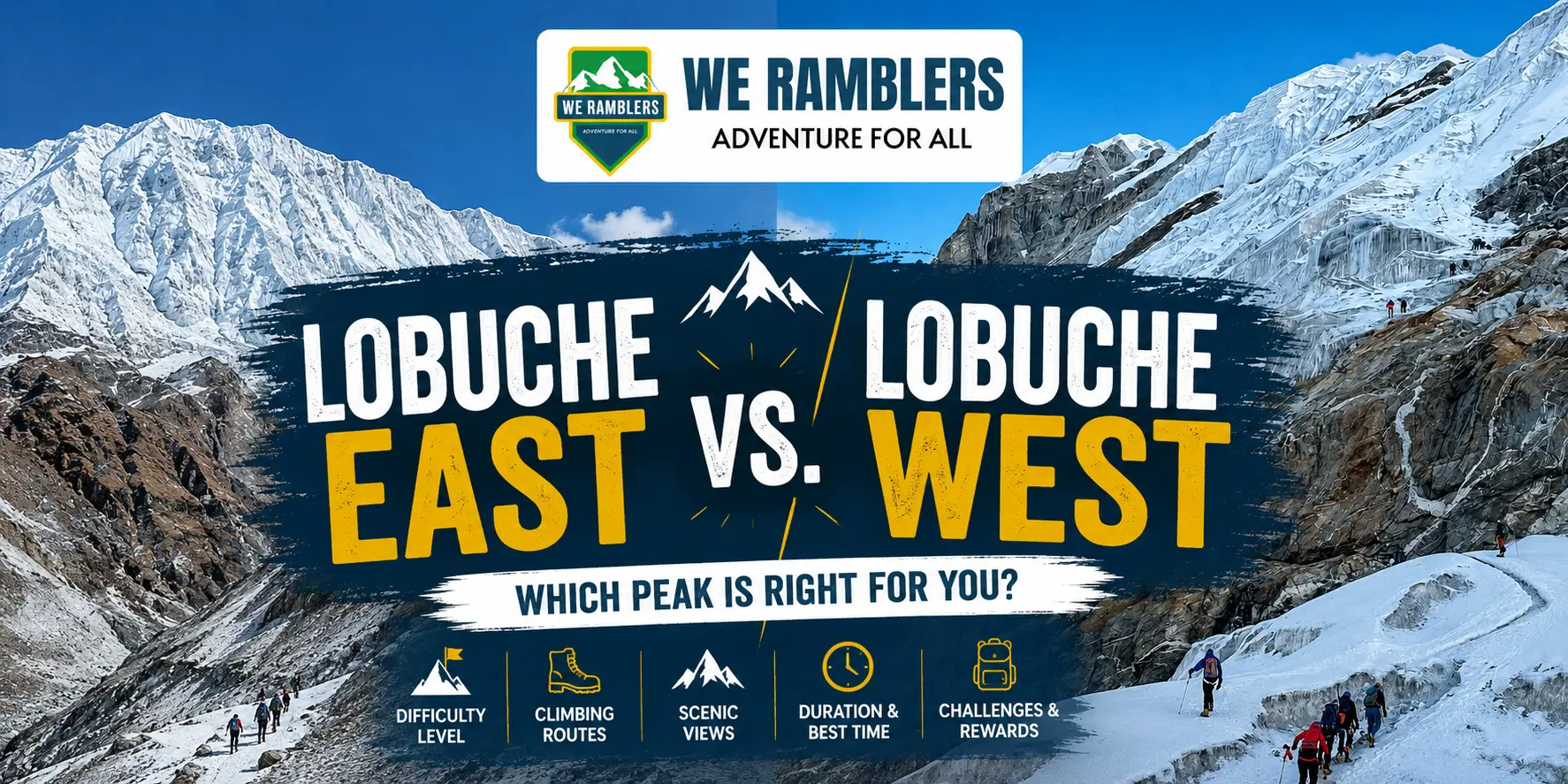
Lobuche consists of two distinct peaks connected by a long, deeply notched ridge. Lobuche East rises to 6,119 meters, while Lobuche West stands slightly higher at 6,145 meters. Despite the modest 26 meter difference in elevation, the two summits could not be more different in terms of accessibility, technical demand, and how frequently climbers actually attempt them.
The ridge separating the two peaks features a steep drop and considerable distance, making a direct approach from one summit to the other practically impossible for climbers attempting either peak individually.
Why Lobuche East Is Classified as a Trekking Peak
Lobuche East holds official status as a trekking peak under the Nepal Mountaineering Association, which governs how peaks in Nepal are categorized and permitted. This classification exists because Lobuche East, while still genuinely technical, sits within a difficulty range considered accessible to climbers with basic mountaineering skills and proper guided support.
The climb still involves real technical elements, including snow and ice slopes, minor crevasses, some rock scrambling, and sustained use of fixed ropes near the summit. Lobuche East is graded PD+ on the alpine scale, which places it firmly in moderate technical territory rather than an easy walk-up. However, compared to the demands of a full expedition peak, this level of difficulty remains manageable for climbers with proper training and guide support, which is exactly why hundreds of climbers attempt Lobuche East each season.
Why Lobuche West Is Classified as an Expedition Peak
Lobuche West, despite being only slightly higher than its eastern counterpart, falls into an entirely different regulatory category. It is classified as a full expedition peak, requiring a separate expedition permit rather than the simpler trekking peak permit issued for Lobuche East.
This distinction reflects genuine differences in technical demand. Lobuche West involves steeper slopes, longer sustained technical sections, and significantly greater exposure than Lobuche East. The terrain requires advanced mountaineering skills, more extensive technical gear, and considerably more climbing experience than most guided commercial expeditions are designed to accommodate. As a result, Lobuche West remains rarely attempted, with only specialized expedition teams typically taking it on.
Permit Differences Between the Two Peaks
The trekking peak versus expedition peak classification directly affects the permitting process for each summit. Lobuche East, as a trekking peak, involves a comparatively simpler permit process through the Nepal Mountaineering Association, along with the standard Sagarmatha National Park trekking and climbing permits.
Lobuche West requires a full expedition permit, which typically involves more extensive documentation, higher costs, and often additional logistical requirements compared to the streamlined process for Lobuche East. This administrative gap is part of why trekking companies overwhelmingly focus their commercial offerings on Lobuche East rather than its western counterpart.
What This Means for Climbers Choosing Between the Two
For the vast majority of climbers, this comparison is somewhat academic, since almost every commercial Lobuche expedition, including ours, targets Lobuche East specifically. When trekking companies advertise a “Lobuche Peak Climb,” they are referring to Lobuche East unless explicitly stated otherwise.
Lobuche West is generally reserved for highly experienced mountaineers with a specific interest in a serious technical expedition, often as part of a broader climbing career rather than an introductory Himalayan peak. If your goal is to gain genuine alpine climbing experience while still working within a guided, well-supported itinerary, Lobuche East remains the clear and practical choice.
The False Summit on Lobuche East
One detail that surprises some climbers is that reaching the top of Lobuche East technically means reaching a false summit, positioned a short distance and several hours from the mountain’s true highest point. Most guided commercial climbs, including standard itineraries, conclude at this recognized summit point, which still delivers the full technical climbing experience, sweeping views of Everest, Lhotse, and Ama Dablam, and the satisfaction of a completed peak climb.
This distinction rarely affects the overall experience or sense of achievement for climbers, since the recognized summit point still involves the same fixed rope sections, crampon work, and alpine exposure that define the climb.
How Lobuche East Compares to Other Trekking Peaks
Even within the trekking peak category, Lobuche East stands out as one of the more technically demanding options available. Compared to peaks like Island Peak or Mera Peak, Lobuche East involves steeper terrain and a greater reliance on fixed rope technique throughout the summit push. This is precisely why many climbers choose Lobuche East as a deliberate stepping stone toward more serious mountaineering objectives, using it to build genuine technical experience before attempting bigger expedition peaks later on.
If you are still weighing whether Lobuche East fits your current skill level, our detailed guide on how hard it is to climb Lobuche Peak breaks down the physical and technical requirements in more depth.
Preparing for Lobuche East as Your Chosen Summit
Since Lobuche East is the summit nearly every guided expedition targets, preparation should focus specifically on the demands of this peak rather than the far more extreme requirements of Lobuche West. This means building comfort with crampons, fixed ropes, and basic self-arrest technique well before departure, along with cardiovascular fitness suited to sustained effort at altitude.
Understanding how the mountain’s technical sections connect to the broader itinerary, including the crucial preparation stage at Lobuche High Camp, helps climbers arrive with realistic expectations for what the summit push actually involves.
Frequently Asked Questions: Lobuche East vs. Lobuche West
What is the main difference between Lobuche East and Lobuche West?
Lobuche East is classified as a trekking peak suitable for climbers with basic mountaineering skills, while Lobuche West is a full expedition peak requiring advanced technical experience and a separate permit.
Which Lobuche peak do most climbers attempt?
The vast majority of climbers, including nearly all guided commercial expeditions, attempt Lobuche East due to its trekking peak classification and more accessible technical demands.
Is Lobuche East actually easy since it is called a trekking peak?
No, Lobuche East still involves genuine technical climbing, including fixed ropes, crampons, and an ice axe, and is graded PD+ on the alpine scale, making it a moderate technical climb rather than an easy trek.
Why is Lobuche West rarely climbed?
Lobuche West involves steeper terrain, longer technical sections, and greater exposure than Lobuche East, requiring advanced mountaineering skills that fall outside the scope of most standard guided expeditions.
Can climbers move between Lobuche East and Lobuche West during a climb?
No, a long, deeply notched ridge with a steep drop separates the two summits, making a direct approach from one peak to the other practically impossible.
Does reaching the top of Lobuche East mean reaching the true summit?
Most guided climbs conclude at a recognized summit point that is technically a false summit, positioned some distance from Lobuche East’s true highest point, though this does not diminish the overall climbing experience.
Do I need a different permit for Lobuche East compared to Lobuche West?
Yes, Lobuche East requires a trekking peak permit through the Nepal Mountaineering Association, while Lobuche West requires a more extensive expedition peak permit.
Final Thoughts
The distinction between Lobuche East and Lobuche West comes down to a genuine difference in technical demand, despite their close proximity and similar elevation. Lobuche East’s trekking peak classification makes it an accessible yet genuinely rewarding introduction to technical Himalayan climbing, while Lobuche West remains a serious expedition objective reserved for experienced mountaineers.
If you are ready to take on Lobuche East with a properly guided and well-supported itinerary, contact our team at We Ramblers, or explore the full Lobuche Peak Climb itinerary to see exactly what the climb involves.