
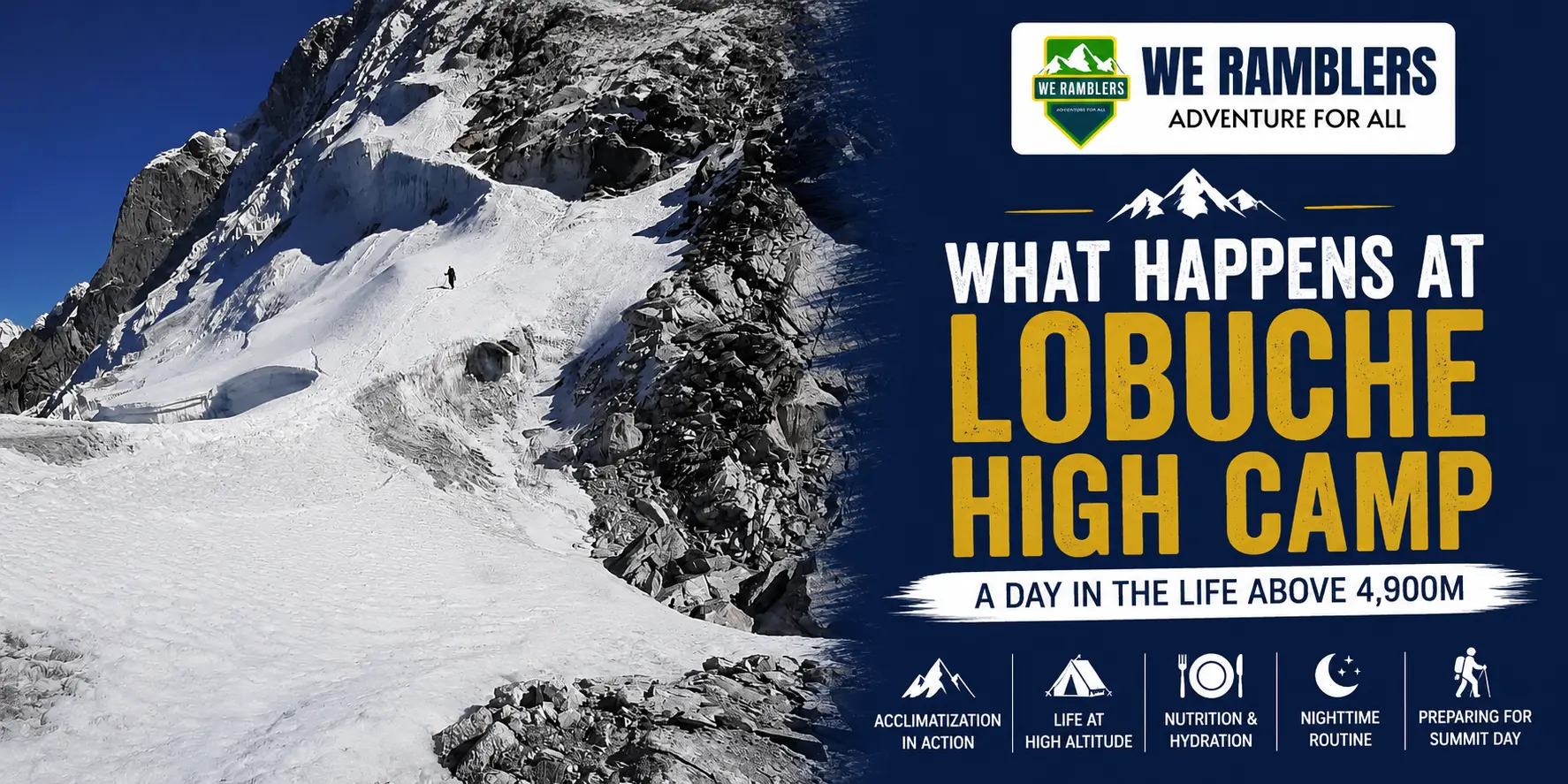
Every Lobuche Peak expedition builds toward one critical stop before the summit push: High Camp. Sitting at roughly 5,400 meters, this exposed, wind-battered perch is where climbers spend the night before attempting Nepal’s popular technical peak near Everest Base Camp. Understanding what actually happens here, from the training to the sleepless hours before a midnight departure, helps set realistic expectations for one of the most demanding stages of the entire climb.
This guide walks through exactly what a night at Lobuche High Camp looks like, why it exists in the itinerary at all, and how climbers prepare for the summit push that follows.
Where Lobuche High Camp Sits in the Journey
Lobuche High Camp comes after climbers have already trekked the classic Everest Base Camp route through Namche Bazaar, Tengboche, and Dingboche, before branching toward Lobuche village itself. From Lobuche, climbers move up to Base Camp, then finally to High Camp, which sits considerably higher and closer to the technical climbing sections of the mountain.
Unlike the teahouses found in villages along the standard EBC trail, High Camp offers no permanent lodges. Climbers sleep in tents here, fully exposed to the sub-zero temperatures and unpredictable winds that define this altitude on Lobuche.
Why Climbers Move to High Camp Before Summit Night
The purpose of High Camp is straightforward but essential. Moving higher before the final summit push shortens the distance and elevation gain required on summit day itself, which typically starts well before dawn. Attempting the summit directly from Base Camp instead would mean a significantly longer and more exhausting push, increasing the risk of exhaustion or poor decision-making during the technical sections near the top.
By positioning climbers closer to the mountain’s technical terrain, High Camp effectively becomes the last staging point where physical readiness, gear checks, and mental preparation come together before the real climbing begins.
Final Skills Training at High Camp
One of the most important things that happens at Lobuche High Camp is final skills training and refreshment. Even climbers who have practiced with crampons, harnesses, and ice axes earlier in the expedition typically go through a final review of technique here, since summit night leaves no room for hesitation or fumbling with unfamiliar gear.
Guides use this window to walk climbers through fixed rope movement, jumar technique, and self-arrest practice with an ice axe, reinforcing skills under conditions that closely resemble what climbers will face during the actual ascent. This training session is not a formality. Given that most of the mountain above High Camp is protected by fixed ropes across exposed, steep terrain, comfort with this equipment directly affects both safety and pacing during the summit attempt.
Setting Up Camp in Harsh Conditions
Physically setting up camp at 5,400 meters is its own challenge. Wind at this altitude can be strong and unpredictable, making tent pitching more difficult than it would be at lower elevations. Climbers and guides typically work together to secure tents properly, since a poorly anchored tent can become a serious problem overnight in high winds.
Once tents are up, the priority shifts to staying warm and conserving energy. Cooking equipment and meals are more basic at this stage compared to teahouse dining lower on the route, focusing on quick, calorie-dense food that helps climbers maintain energy for the demanding hours ahead.
Rest, or the Attempt at It
Sleep at High Camp is often minimal, and this is widely accepted as part of the experience rather than a sign of poor preparation. Between the cold, the altitude, the wind against tent walls, and pre-summit nerves, few climbers report a full night of restful sleep before a Lobuche summit attempt.
Most expeditions plan for climbers to rest rather than expect deep sleep, using the hours before departure to stay warm, hydrated, and mentally prepared rather than forcing rest that may not come naturally at this altitude. A high quality sleeping bag rated for extreme cold becomes essential here, since even a few hours of decent warmth can make a meaningful difference to how climbers feel heading into summit night.
Final Gear Checks Before Departure
Before leaving High Camp, climbers go through a final equipment check with their guides. This includes confirming that crampons are properly fitted, harnesses are secure, headlamps have fresh batteries, and layering systems are ready for temperatures that can drop toward minus twenty degrees Celsius during the ascent.
This final check matters enormously, since adjusting gear at altitude in the dark, mid-climb, is far more difficult and time-consuming than catching an issue while still at camp. Guides typically insist on this step regardless of how many times climbers have already checked their own gear earlier in the trip.
The Midnight Departure
Summit day on Lobuche typically begins in the very early hours, often well before dawn, so that climbers can reach the summit and begin their descent before weather conditions deteriorate later in the day, which is common at this altitude. Leaving High Camp in complete darkness, guided by headlamps, is a disorienting but standard part of the process.
The initial stretch of the climb from High Camp connects to the fixed rope sections that define the technical portion of Lobuche Peak, meaning climbers move fairly quickly from a resting state into active rope work, testing everything practiced the night before.
Why Preparation at High Camp Cannot Be Skipped
Skipping or rushing through the High Camp stage of a Lobuche expedition is one of the more common mistakes among underprepared climbers or poorly structured itineraries. The training, rest, and gear checks that happen here directly influence how safely and efficiently climbers move through the technical sections above. Our detailed breakdown of how hard it is to climb Lobuche Peak explains why this preparation phase matters just as much as physical fitness heading into the expedition.
What Guides Watch for at High Camp
Beyond training and logistics, guides closely monitor climbers for early signs of altitude-related issues during the High Camp stage, since this is typically the highest point climbers have slept at before the summit push itself. Symptoms like persistent headaches, unusual fatigue, or difficulty catching breath are taken seriously here, and experienced guides know the difference between normal high-altitude discomfort and something that requires closer attention or, in rare cases, a change of plan.
Given the remote nature of this stage of the climb, understanding emergency response options in advance is a genuinely important part of preparation. Our guide on rescue during Lobuche Peak climb covers what happens if a climber needs evacuation from this stage of the expedition.
Frequently Asked Questions: What Happens at Lobuche High Camp
How high is Lobuche High Camp?
Lobuche High Camp sits at approximately 5,400 meters, positioned above Lobuche Base Camp and closer to the technical climbing sections of the mountain.
Do climbers sleep in tents or lodges at Lobuche High Camp?
Climbers sleep in tents at High Camp, since no permanent lodges exist at this elevation, making a high quality sleeping bag and insulated jacket essential.
Is it normal to not sleep well at High Camp before summit night?
Yes, minimal sleep is common at this altitude due to cold, wind, and pre-summit nerves, and most expeditions plan for rest rather than expecting deep sleep.
What kind of training happens at Lobuche High Camp?
Guides typically lead a final review of jumar technique, crampon use, and ice axe self-arrest skills to ensure climbers are ready for the fixed rope sections above camp.
What time do climbers usually leave High Camp for the summit?
Departure typically happens in the very early hours, well before dawn, to allow enough time to summit and descend before weather conditions can worsen later in the day.
How cold does it get at Lobuche High Camp?
Temperatures at High Camp are consistently sub-zero, with the coldest conditions during the summit push sometimes dropping toward minus twenty degrees Celsius or lower.
Can altitude sickness develop at Lobuche High Camp?
Yes, since this is often the highest point climbers have slept at during the expedition, guides monitor closely for early symptoms of altitude-related issues before allowing a summit attempt to proceed.
Final Thoughts
Lobuche High Camp is far more than a simple overnight stop. It is the final stage of preparation where training, rest, and gear checks come together before climbers face the mountain’s most technical terrain. Understanding what genuinely happens here, from the cold and minimal sleep to the final skills refresher, helps climbers arrive mentally prepared for one of the most demanding nights of the entire expedition.
If you want a detailed, guided itinerary that properly accounts for High Camp preparation and training, contact our team at We Ramblers, or explore the full Lobuche Peak Climb itinerary to see exactly how this stage fits into your expedition.