
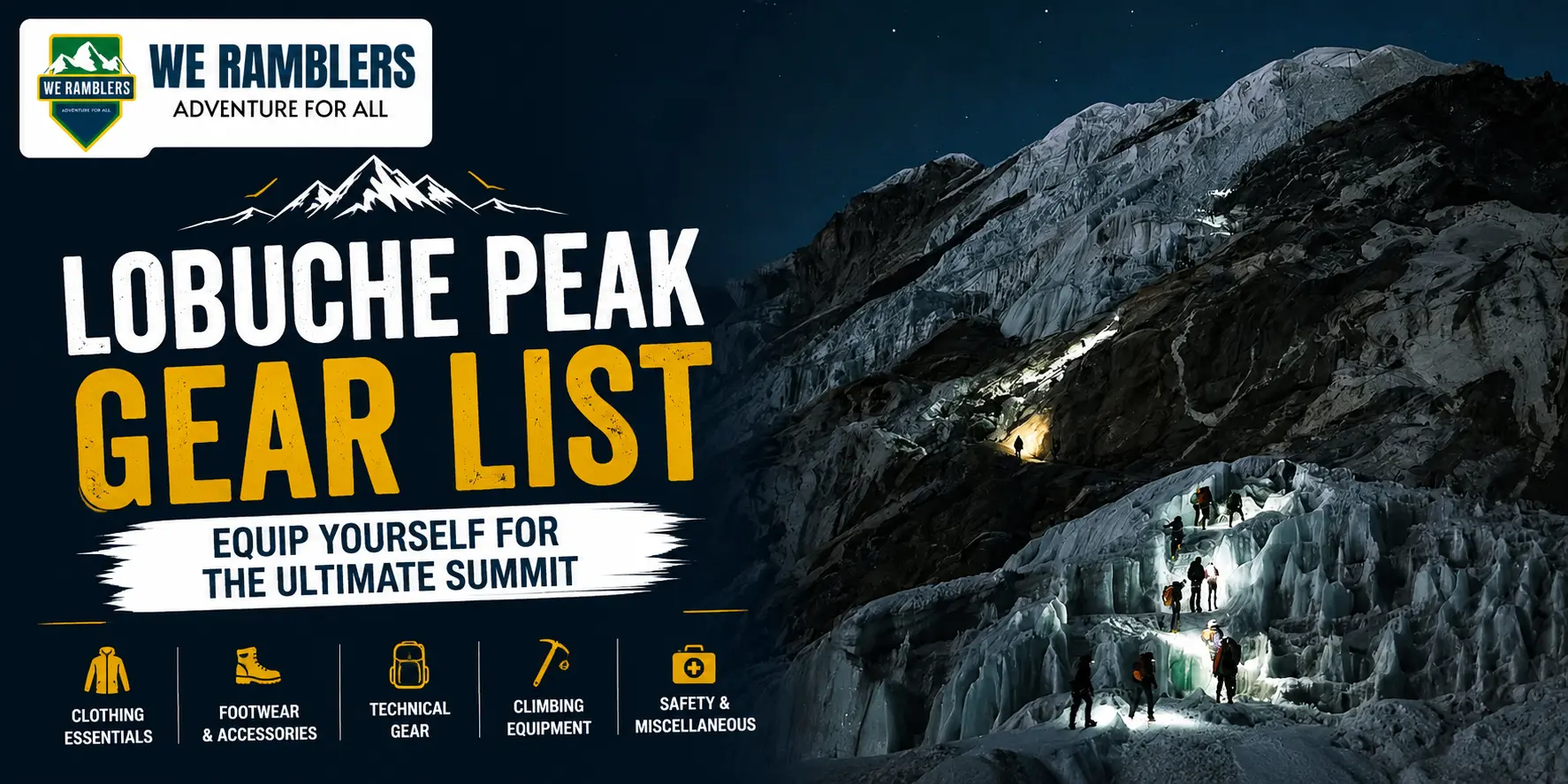
Climbing Lobuche Peak is a different experience compared to a standard Himalayan trek, and the gear list reflects that difference clearly. Standing at 6,119 meters with sections graded Alpine PD+, Lobuche East involves fixed-rope climbing, exposed ridge sections, and genuine technical mountaineering equipment. Unlike a trekking peak such as Mera, which stays largely non-technical, Lobuche demands real comfort with tools like jumars, harnesses, and ice axes before you ever leave base camp.
This guide walks through exactly what each piece of technical gear does, why it matters on Lobuche specifically, and what else you need to pack for a climb that combines high altitude with genuine alpine skill.
Why Lobuche Peak Needs a More Technical Gear List
Lobuche Peak follows the classic Everest Base Camp trail before branching off toward its own icy ridgeline, which means the approach trek feels familiar, but the final climbing days are anything but ordinary. The route includes 45-degree snow slopes and an exposed ridge near the summit, most of which is protected by fixed ropes. This is precisely why understanding your climbing gear, not just packing it, matters so much here.
Unlike lower altitude treks where a poncho and warm jacket cover most needs, Lobuche requires climbers to move confidently on crampons, manage their own ascender on fixed lines, and understand basic rope safety before the summit push even begins.
Jumars, or Ascenders, Explained
A jumar, also called an ascender, is a mechanical device that clamps onto a fixed rope and allows you to climb upward while preventing backward slippage. On Lobuche, most of the mountain above base camp is protected by fixed ropes, so knowing how to use a jumar correctly is not optional.
The device works through a simple cam mechanism that grips the rope when weight is applied downward, but slides freely when pushed upward by hand. Climbers slide the jumar up the rope, step higher, and repeat this motion continuously along the fixed line sections. It sounds simple in theory, but doing this efficiently while wearing thick gloves, at altitude, with fatigue setting in, is a skill that benefits enormously from proper training beforehand.
Most guided expeditions, including ours, schedule a dedicated training day at high camp specifically to practice jumar technique before attempting the real ascent.
Climbing Harnesses Explained
A climbing harness is the piece of gear that physically connects you to the fixed rope system, distributing force safely across your waist and legs rather than any single point of your body. On Lobuche, your harness stays on for extended periods during the summit push, so fit and comfort matter as much as safety certification.
A proper mountaineering harness includes an adjustable waist belt and leg loops, along with gear loops for attaching carabinets, your jumar, and a descender. Since temperatures at high camp and above can swing dramatically, your harness needs to be adjustable enough to fit comfortably over multiple clothing layers without cutting off circulation or shifting awkwardly during movement.
Crampons Explained
Crampons are metal spikes that attach to the sole of your mountaineering boots, providing traction on ice, hardened snow, and the steep slopes that define much of the Lobuche summit route. Given that summit conditions frequently involve icy terrain and temperatures dropping toward minus twenty degrees Celsius, reliable crampon use is central to safe movement above base camp.
Learning to walk confidently with crampons takes practice, since technique differs significantly from normal walking. Climbers typically use a flat-footed stance on moderate slopes and a more deliberate front-pointing technique on steeper sections, kicking the front spikes directly into the ice. This is another skill area covered during pre-summit training sessions, since crampon technique errors are a common source of slips on exposed terrain.
Ice Axes Explained
An ice axe serves multiple purposes on a climb like Lobuche, acting as a walking aid on moderate slopes, a self-arrest tool if you begin to slip, and a stability point during steeper sections of the ascent. The tool consists of a shaft, a curved pick for self-arrest, and an adze for cutting steps into snow or ice when needed.
On Lobuche’s steeper snow slopes, knowing self-arrest technique, essentially how to stop a fall using your ice axe, is a genuinely important skill rather than a theoretical one. Guides typically walk climbers through this technique during acclimatization days before the technical sections of the climb begin.
Additional Technical Gear You Will Need
Beyond the four core items above, a complete Lobuche gear list includes several supporting pieces of equipment.
- A climbing helmet to protect against falling ice or rock on exposed sections
- Locking and non-locking carabiners for attaching your jumar, descender, and other gear to your harness
- A descender or figure-eight device for controlled rope descents after summiting
- A sling or personal anchor system for additional safety at fixed rope stations
Most reputable operators supply access to fixed ropes and group safety gear on the mountain itself, but personal items like your harness, crampons, and helmet should be properly fitted and tested well before departure.
Clothing and Layering for Lobuche’s Extreme Cold
Temperatures on Lobuche Peak can range from relatively mild at lower elevations to well below freezing near high camp and the summit ridge, sometimes dropping toward minus twenty degrees Celsius during the final push.
- A high quality insulated down jacket for mornings, evenings, and summit day
- A warm, reliable sleeping bag, since high camp involves tented accommodation rather than lodges
- Moisture-wicking base layers, with wool or synthetic fabrics preferred over cotton
- A windproof and waterproof outer shell for both jacket and pants
- Insulated gloves for general climbing, with a thinner liner glove for technical tasks requiring more dexterity
- Warm insulated mountaineering boots compatible with your crampons
Since there are no lodges at Lobuche High Camp, climbers sleep in tents exposed to the elements, which makes a genuinely high quality down jacket and sleeping bag two of the most important non-technical items on the entire packing list.
Training Matters as Much as the Gear Itself
Owning the right equipment is only half the equation on Lobuche Peak. Because the route demands real comfort with fixed ropes, crampon technique, and ice axe use, most well-run expeditions build in a dedicated training day at high camp before the summit attempt. This is where climbers practice jumar technique, crampon walking, and basic self-arrest skills under guide supervision, rather than attempting these movements for the first time on summit night itself.
If you are still evaluating whether you are ready for this level of technical demand, our detailed guide on how hard it is to climb Lobuche Peak breaks down the physical and technical requirements in more depth.
Renting Versus Buying Technical Gear
Many climbers choose to rent core technical items like crampons, harnesses, and ice axes in Kathmandu rather than purchasing gear they may only use once or twice. This is a practical option for occasional climbers, though it is worth trying on rental boots and crampons together in advance to confirm proper compatibility and fit before heading into the mountains.
Items like your down jacket, sleeping bag, and base layers are generally better purchased, since proper fit and consistent quality matter more for extended personal use across multiple cold nights.
Preparing for the Unexpected
Given the technical nature of the climb and the extreme conditions at high camp, understanding evacuation options before you go is a genuinely important part of preparation. Our guide on rescue during Lobuche Peak climb covers what to expect in emergency situations, along with the kind of insurance coverage that actually applies at this altitude.
Frequently Asked Questions: Lobuche Peak Gear List
Do I need prior climbing experience to use a jumar on Lobuche Peak?
No prior experience is required, but pre-summit training on jumar technique is essential, and most guided expeditions include a dedicated practice day at high camp before the actual climb.
Can I rent crampons and an ice axe in Kathmandu instead of buying them?
Yes, renting technical gear in Kathmandu is common and practical for climbers who do not plan to use this equipment regularly, though fit should always be tested in advance.
How cold does it get during the Lobuche Peak summit push?
Temperatures during the final ascent can drop to around minus twenty degrees Celsius or lower, making a high quality down jacket and insulated gloves essential.
Is a helmet really necessary for Lobuche Peak?
Yes, a climbing helmet is important protection against falling ice or rock, particularly on the exposed ridge sections near the summit.
What is the difference between a jumar and a descender?
A jumar is used for ascending a fixed rope and grips when weight is applied downward, while a descender, such as a figure-eight device, is used for controlled movement while descending the same rope.
Do I sleep in a tent or a lodge at Lobuche High Camp?
Climbers sleep in tents at high camp, since no lodges exist at that elevation, which is why a warm sleeping bag and insulated jacket are considered essential rather than optional.
Is Lobuche Peak more technical than Mera Peak?
Yes, Lobuche is generally considered more technical than Mera Peak, involving steeper terrain, more sustained use of fixed ropes, and a greater emphasis on crampon and ice axe skills.
Final Thoughts
The gear list for Lobuche Peak reflects just how different this climb is from a standard Himalayan trek. Understanding what each piece of technical equipment does, from your jumar to your ice axe, matters just as much as simply owning it, since confidence with this gear directly affects your safety on the mountain’s exposed sections.
If you want a detailed, climb-specific gear checklist and training plan tailored to your experience level, contact our team at We Ramblers, or explore the full Lobuche Peak Climb itinerary to see exactly how technical training fits into the complete expedition.