The Everest Base Camp trek is one of the most iconic hiking adventures on the planet, drawing thousands of trekkers every year to the heart of the Khumbu region in Nepal. While many people focus on the stunning views and Sherpa culture, understanding the Everest Base Camp trek elevation profile is just as important for a safe and successful journey. Elevation gain, altitude changes, and daily ascents play a huge role in how your body adapts and how enjoyable your trek turns out to be.
In this guide, we at We Ramblers will walk you through everything you need to know about the elevation profile, along with essential details like Everest Base Camp trek distance, duration, difficulty, starting point, and available packages. By the end of this post, you will have a clear picture of what to expect and how to prepare.
Understanding the Everest Base Camp Trek Elevation Profile
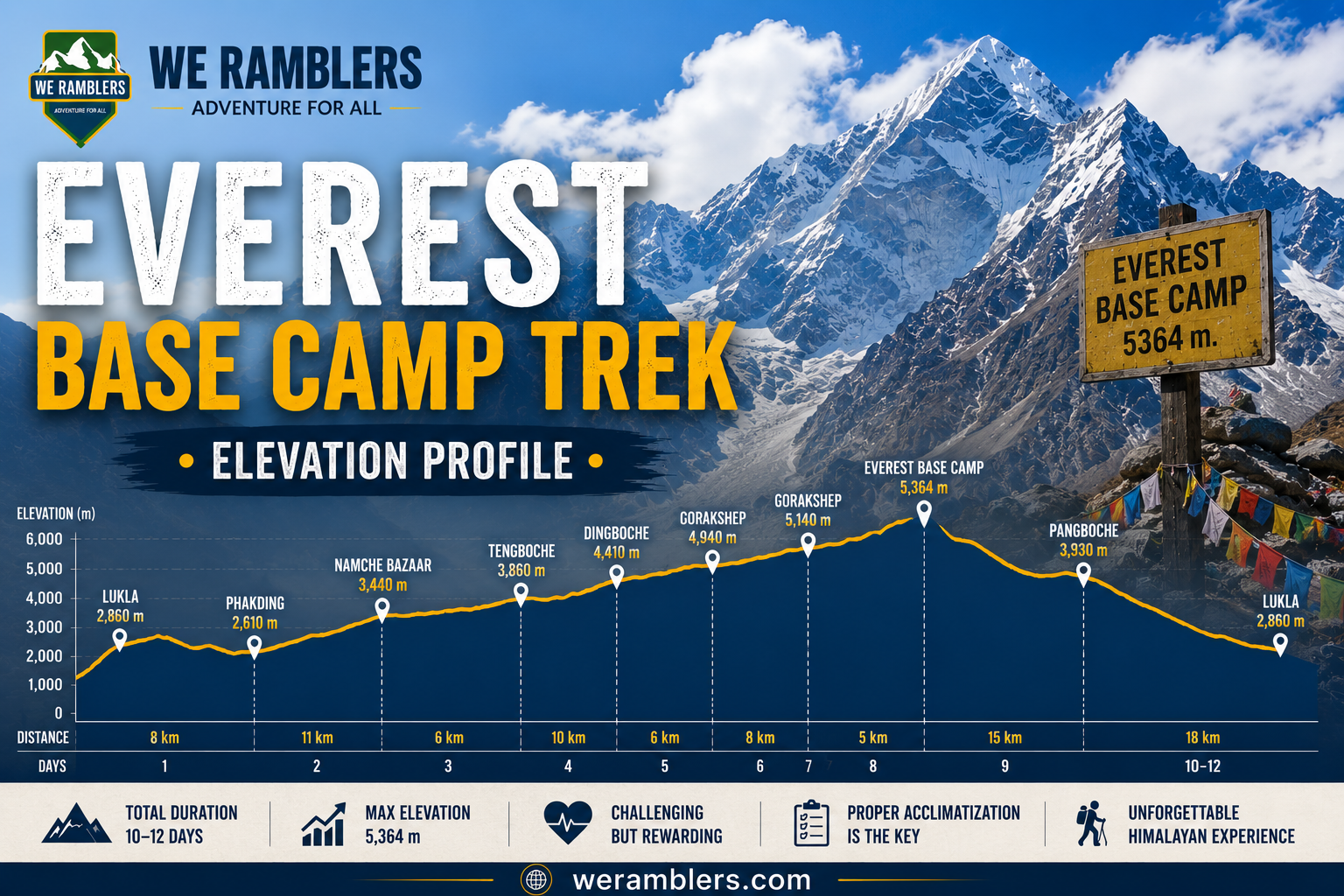
The Everest Base Camp trek elevation profile is not a simple straight climb. Instead, it involves a series of ups and downs that allow trekkers to acclimatize gradually while still making steady progress toward Base Camp. The trek starts at a relatively low elevation and gradually increases, with a few strategic dips built in to help your body adjust to decreasing oxygen levels.
Here is a general breakdown of the elevation profile you can expect along the route:
Lukla (2,860 meters)
Your trek typically begins here after a short scenic flight from Kathmandu. This is the official Everest Base Camp trek starting point.
Phakding (2,610 meters)
Interestingly, the trail actually descends slightly on day one before climbing again the following day.
Namche Bazaar (3,440 meters)
This is the bustling gateway to the Khumbu region and typically the first acclimatization stop.
Tengboche (3,860 meters)
Home to a famous monastery, this stop offers incredible views of Ama Dablam and Everest itself.
Dingboche (4,410 meters)
Another acclimatization day is usually scheduled here to help your body adjust to the thinning air.
Lobuche (4,940 meters)
The trail becomes noticeably more rugged and rocky as you approach higher altitudes.
Gorak Shep (5,164 meters)
This is the last settlement before Base Camp and serves as the base for summiting Kala Patthar.
Everest Base Camp (5,364 meters)
The final destination, sitting at the foot of the world’s tallest mountain.
Kala Patthar (5,545 meters)
Many trekkers add this side trip for the best panoramic views of Everest.
This gradual elevation gain, combined with rest days, is designed specifically to reduce the risk of altitude sickness. Understanding this profile in advance helps trekkers mentally and physically prepare for the demands of each stage.
Why the Elevation Profile Matters So Much
Altitude sickness is one of the biggest concerns for anyone attempting this trek. The human body needs time to adjust to lower oxygen levels, and rushing the ascent can lead to serious health complications. This is why reputable trekking companies, including We Ramblers, structure their itineraries around the natural elevation profile rather than trying to rush trekkers to the top.
A well planned elevation profile typically follows the golden rule of high altitude trekking, climb high and sleep low. This means that even on days where trekkers hike to a higher point during the day, they often return to sleep at a slightly lower elevation. This method significantly reduces the chances of acute mountain sickness and allows the body to build red blood cells more efficiently.
Everest Base Camp Trek Distance
The total Everest Base Camp trek distance is approximately 130 kilometers round trip when starting and ending in Lukla. This includes the trek to Base Camp itself, the side trip to Kala Patthar, and the return journey back to Lukla for your flight to Kathmandu.
On average, trekkers cover somewhere between 8 to 15 kilometers per day, depending on the terrain, altitude, and acclimatization schedule. Some days involve longer distances but easier terrain, while other days may cover shorter distances but include steep and technical sections.
Knowing the distance helps trekkers pace themselves and understand that this is not a race. Slow and steady progress is the key to reaching Base Camp comfortably and safely.
Everest Base Camp Trek Duration
The standard Everest Base Camp trek duration ranges from 12 to 16 days, depending on the specific itinerary chosen. This typically includes:
- Two days for flights between Kathmandu and Lukla
- Eight to ten days of actual trekking
- Two to three built in acclimatization days
- A buffer day in case of flight delays or weather issues
Some trekkers opt for shorter itineraries of around 10 days, but these come with increased risk since there is less time for proper acclimatization. On the other hand, extended itineraries of up to 18 or 20 days allow for a more relaxed pace and additional exploration of nearby villages and viewpoints.
At We Ramblers, we recommend choosing an itinerary of at least 12 days to ensure your body has adequate time to adjust to the altitude changes described in the elevation profile above.
Everest Base Camp Trek Map
Having a reliable Everest Base Camp trek map is essential for understanding the route, identifying key landmarks, and planning your daily hikes. A good trek map will show you the major stops mentioned earlier, including Lukla, Phakding, Namche Bazaar, Tengboche, Dingboche, Lobuche, Gorak Shep, and Everest Base Camp itself.
Trek maps also highlight important details such as:
- Suspension bridges you will cross
- Teahouse locations for overnight stays
- Water sources and rest points
- Alternative routes and side trips
- Emergency evacuation points
While digital GPS apps have become increasingly popular among trekkers, having a physical map as a backup is always a smart idea. Many trekking agencies, including We Ramblers, provide detailed maps as part of their trip preparation materials so you always know exactly where you are on the trail.
Everest Base Camp Trek Difficulty
When it comes to Everest Base Camp trek difficulty, this journey is generally classified as moderate to challenging. You do not need technical climbing skills or mountaineering experience, but a good level of physical fitness is essential.
Several factors contribute to the overall difficulty of the trek:
Altitude
Reaching over 5,000 meters means dealing with significantly reduced oxygen levels, which can cause fatigue, headaches, and shortness of breath even in otherwise fit individuals.
Terrain
The trail includes rocky paths, steep ascents, suspension bridges, and occasionally icy or snowy conditions depending on the season.
Duration
Trekking for multiple days in a row, often for six to seven hours daily, requires solid stamina and mental endurance.
Weather
Conditions in the Himalayas can change rapidly, and trekkers need to be prepared for cold temperatures, wind, and occasional precipitation.
Despite these challenges, thousands of people with no prior high altitude trekking experience successfully complete this journey every year. Proper preparation, a realistic training plan, and choosing an experienced guide service can make a significant difference in how manageable the trek feels.
Everest Base Camp Trek Starting Point
The Everest Base Camp trek starting point is the small mountain village of Lukla, home to the famous Tenzing Hillary Airport. Most trekkers fly from Kathmandu to Lukla, a flight that takes around 30 to 40 minutes but is known for its dramatic mountain scenery and short runway landing.
From Lukla, the trail winds through the Khumbu region, passing through Sherpa villages, pine forests, and suspension bridges before eventually reaching the base of Mount Everest. Some trekkers choose alternative starting points, such as Jiri, which adds several extra days of walking before reaching Lukla, offering a more traditional and less crowded experience.
For most travelers, however, flying into Lukla remains the most practical and time efficient way to begin this incredible adventure.
Everest Base Camp Trek Packages
Choosing the right Everest Base Camp trek packages can make a significant difference in your overall experience. At We Ramblers, we offer a variety of packages tailored to different fitness levels, budgets, and time constraints.
Our packages typically include:
- Airport transfers in Kathmandu
- Domestic flights to and from Lukla
- Professional English speaking guides
- Porter services to carry your heavier gear
- Teahouse accommodation throughout the trek
- Meals during the trekking portion
- Necessary permits and paperwork
- Comprehensive support for altitude related concerns
We also offer customizable packages for those looking to combine the Everest Base Camp trek with additional experiences, such as visiting the Gokyo Lakes or attempting the Three Passes trek for a more adventurous route.
Whether you are a first time trekker or an experienced hiker looking for your next big challenge, We Ramblers has a package designed to match your goals and comfort level.
Tips for Managing the Elevation Profile Successfully
To make the most of the Everest Base Camp trek elevation profile and reduce the risk of altitude sickness, keep these practical tips in mind.
Stay well hydrated throughout the trek, since dehydration can worsen altitude sickness symptoms. Walk at a slow and steady pace rather than rushing between stops. Follow the acclimatization schedule built into your itinerary, even if you feel physically capable of moving faster. Avoid alcohol and smoking during the trek, as both can negatively affect your body’s ability to adjust to altitude. Listen to your body and communicate any symptoms of discomfort to your guide immediately.
Following these simple guidelines, combined with a well structured itinerary, significantly increases your chances of a safe and enjoyable trek to Everest Base Camp.
Ready to Start Your Everest Base Camp Adventure?
Understanding the Everest Base Camp trek elevation profile is just the first step toward planning your dream trek. From distance and duration to difficulty and starting point, every detail matters when preparing for this life changing journey.
At We Ramblers, we specialize in creating safe, well paced, and unforgettable trekking experiences in the Everest region. Our experienced guides know the trail, the terrain, and the challenges of altitude better than anyone, and we are committed to helping you reach Base Camp safely and successfully.
Visit weramblers.com today to explore our Everest Base Camp trek packages, check available dates, and speak with our team about creating a personalized itinerary that fits your goals. Your journey to the top of the world starts with a single step, and we would love to help you take it.
Frequently Asked Questions: Everest Base Camp Trek Elevation Profile
What is the highest point on the Everest Base Camp trek elevation profile?
The highest point most trekkers reach is Kala Patthar at 5,545 meters, though Everest Base Camp itself sits at 5,364 meters.
How difficult is the Everest Base Camp trek for beginners?
The trek is considered moderate to challenging, and beginners with good fitness levels and proper preparation can complete it successfully, especially with experienced guides.
What is the best time of year to attempt this trek?
The most popular seasons are spring, from March to May, and autumn, from September to November, due to stable weather and clear mountain views.
Do I need prior trekking experience for Everest Base Camp?
No prior high altitude trekking experience is required, though general fitness and some hiking background are helpful.
How many acclimatization days should I include in my itinerary?
Most itineraries include at least two full acclimatization days, typically at Namche Bazaar and Dingboche.
If you have any questions about the trek or want help choosing the right package for your fitness level and schedule, feel free to reach out to the We Ramblers team anytime.