
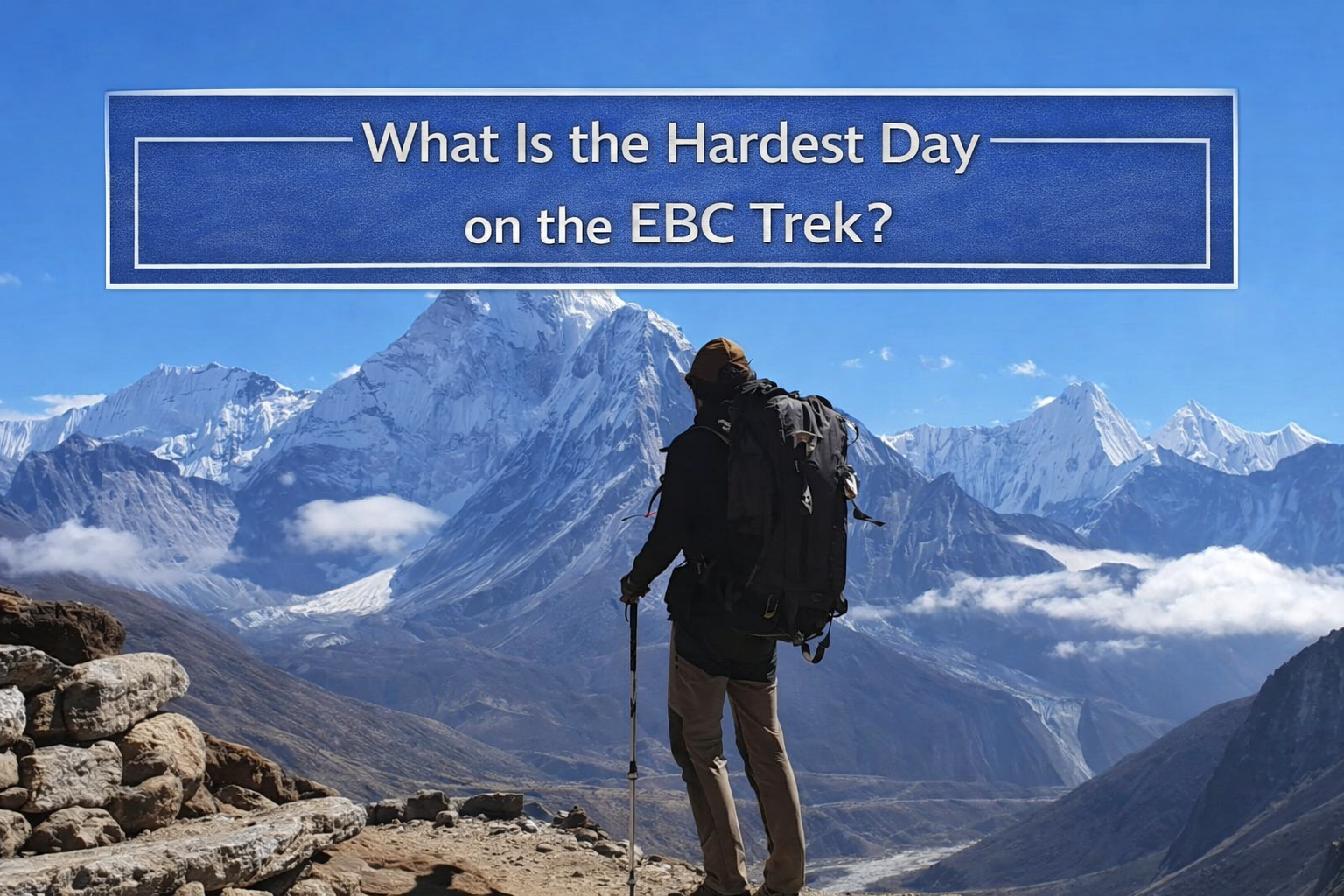
One of the most common questions trekkers ask before heading to the Himalayas is: what is the hardest day on the EBC trek? While every trekker’s experience is different, most agree that the toughest day is either the climb to Kala Patthar or the long stretch from Lobuche to Everest Base Camp and back to Gorak Shep.
These days are considered the hardest because of altitude, long walking hours, thinner air, and physical fatigue after several days of trekking. By the time you reach this stage, your body has already been trekking for over a week at increasing elevations.
Understanding what is the hardest day on the EBC trek helps you mentally and physically prepare for the most demanding sections of the journey.
Why the Lobuche to Everest Base Camp Day Is Challenging
The trek from Lobuche to Everest Base Camp (EBC) via Gorak Shep is physically demanding for several reasons.
First, the altitude is high — above 4,900 meters for most of the day. At this elevation, oxygen levels are significantly lower, making even steady walking feel exhausting.
Second, the terrain becomes rocky and uneven as you approach the Khumbu Glacier. The trail requires careful footing, and progress can feel slow.
Third, it’s a long day. Trekkers walk from Lobuche to Gorak Shep, continue to Everest Base Camp, and then return to Gorak Shep for the night. Fatigue builds quickly, especially in cold and windy conditions.
For many people asking what is the hardest day on the EBC trek, this is the most physically draining day.
Why Kala Patthar Is Often the Toughest Climb
While reaching Everest Base Camp is symbolic, the climb to Kala Patthar is often considered the hardest single push of the trek.
Kala Patthar sits at around 5,545 meters and offers the best close-up view of Mount Everest. The climb is steep and typically done early in the morning for sunrise views.
What makes this day so challenging?
- Extremely thin air
- Steep uphill ascent
- Cold temperatures before sunrise
- Accumulated fatigue from previous days
Even short distances feel intense at this altitude. However, the panoramic views from the top make the effort worthwhile.
Other Challenging Days on the EBC Trek
While the final days are the toughest, some trekkers find earlier sections challenging as well.
Namche Bazaar Ascent
The climb from Phakding to Namche Bazaar includes a long uphill stretch toward the end of the day. For many first-time trekkers, this is the first major altitude gain and can feel demanding.
Dingboche to Lobuche
This section introduces higher altitude and colder conditions. Energy levels may feel lower here, especially if acclimatization has been challenging.
What Makes a Day Hard on the EBC Trek?
Several factors influence difficulty:
- Altitude and oxygen levels
- Length of trekking hours
- Steep ascents and descents
- Weather conditions
- Individual fitness and pacing
Altitude plays the biggest role. Even strong, fit trekkers feel the impact of thinner air above 5,000 meters.
How to Prepare for the Hardest Day on the EBC Trek
While you can’t eliminate the challenge entirely, you can prepare effectively.
- Train consistently before the trek
- Build cardiovascular endurance
- Strengthen legs and knees
- Trek at a slow, steady pace
- Stay hydrated and eat properly
- Respect acclimatization days
Mental preparation is equally important. Knowing that the hardest day is temporary helps maintain motivation.
How We Ramblers Helps You Handle the Toughest Days
At We Ramblers, our Everest Base Camp itineraries are designed to manage fatigue and altitude safely. We include proper acclimatization days and maintain realistic daily walking distances.
Our experienced guides:
- Set a steady, manageable pace
- Monitor oxygen levels and symptoms
- Encourage hydration and nutrition
- Adjust plans if needed for safety
By prioritizing health over speed, we ensure trekkers approach the hardest days confidently and safely.
Is the Hardest Day Worth It?
Absolutely. The sense of achievement after reaching Everest Base Camp and standing atop Kala Patthar is unmatched. The difficulty of the final days makes the accomplishment even more meaningful.
If you’re asking what is the hardest day on the EBC trek, the answer may sound intimidating — but with preparation and the right guidance, it becomes the most rewarding part of the journey.
Frequently Asked Questions: What Is the Hardest Day on the EBC Trek?
Is reaching Everest Base Camp harder than Kala Patthar?
Many trekkers find Kala Patthar harder because of the steep climb and higher altitude.
Why is altitude the biggest challenge?
Lower oxygen levels make physical exertion more difficult and increase fatigue.
Is the hardest day dangerous?
Not if proper acclimatization and pacing are followed. Safety protocols reduce risk significantly.
Can beginners handle the hardest day?
Yes, with preparation and proper pacing, beginners can complete the trek successfully.
Does everyone struggle on the same day?
No. Difficulty varies based on fitness, weather, and individual altitude response.
Is the descent easier?
Physically, yes — but descents can strain knees and require careful footing.