While most people associate the Everest Base Camp Trek with towering peaks and dramatic landscapes, one of the most enriching aspects of the journey is its cultural depth. Many trekkers ask, what are the cultural highlights on the EBC Trek? The trail to Everest Base Camp passes through centuries-old Sherpa villages, sacred monasteries, prayer sites, and traditional mountain lifestyles that remain deeply rooted in Tibetan Buddhist culture.
The Everest region is not just a trekking destination—it is a living cultural landscape. Walking through the Khumbu Valley gives trekkers a rare opportunity to witness how local communities coexist with extreme altitude, harsh weather, and spiritual traditions that shape everyday life.
Understanding “what are the cultural highlights on the EBC Trek” allows trekkers to appreciate the journey beyond physical achievement and connect more meaningfully with the region and its people.
Sherpa Culture and Mountain Life in the Khumbu Region
The Sherpa community is central to the cultural identity of the Everest region. Sherpas are renowned not only for their mountaineering expertise but also for their warmth, resilience, and strong sense of community.
As you trek through villages like Lukla, Phakding, Namche Bazaar, Dingboche, and Lobuche, you’ll see traditional stone houses, prayer flags fluttering in the wind, and locals going about daily life. Farming, yak herding, and tourism form the backbone of the local economy.
Hospitality is a defining feature of Sherpa culture. Staying in family-run teahouses gives trekkers a firsthand experience of local life, food, and traditions.
Buddhist Monasteries and Spiritual Landmarks
Buddhism plays a central role in daily life along the EBC trail. One of the most important cultural highlights is visiting monasteries and sacred sites that dot the route.
Tengboche Monastery
Tengboche Monastery is the most famous and spiritually significant monastery in the Everest region. Set against a dramatic mountain backdrop, it serves as a religious center for the Khumbu Valley. Trekkers often witness prayer ceremonies, hear monks chanting, and observe traditional rituals that have been practiced for generations.
Mani Walls, Chortens, and Prayer Flags
Throughout the trail, you’ll pass mani walls carved with sacred mantras, stone chortens, and colorful prayer flags. These structures are not decorative—they are deeply symbolic and represent protection, compassion, and spiritual guidance.
Trekkers traditionally walk clockwise around these sacred objects as a sign of respect.
Festivals and Local Traditions
If your trek coincides with local festivals, you may witness vibrant cultural celebrations. Festivals often involve masked dances, prayers, music, and community gatherings that reflect Buddhist beliefs and seasonal cycles.
Even outside festival times, cultural traditions are visible in daily rituals such as morning prayers, butter lamp offerings, and ceremonial blessings for trekkers and climbers.
Namche Bazaar: Cultural and Economic Hub
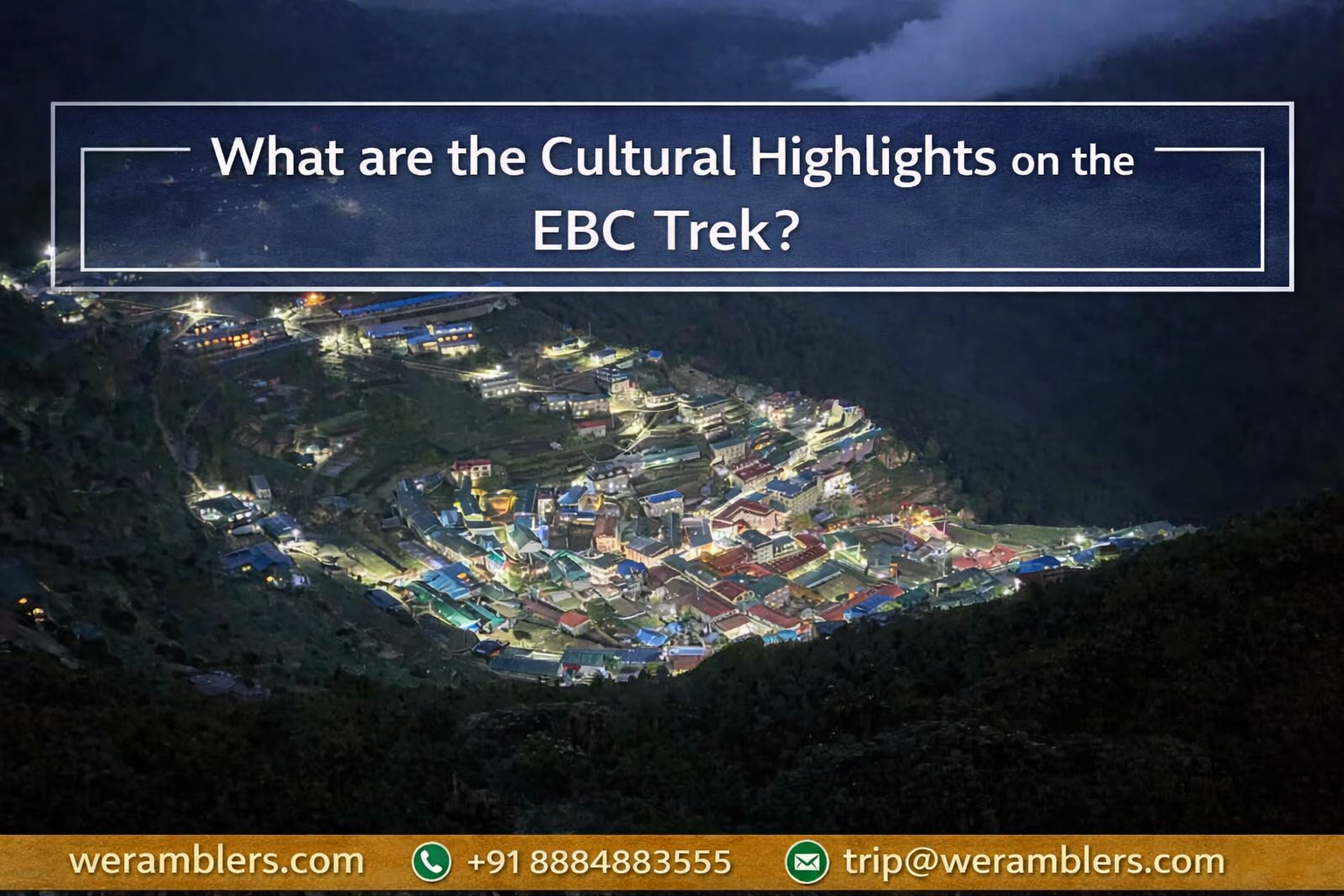
Namche Bazaar is the heart of the Everest region and one of the most culturally interesting stops on the trek. It blends traditional Sherpa culture with modern trekking life.
Here, trekkers can explore local markets, visit cultural centers, learn about Everest history, and interact with locals who have deep connections to the mountains. Namche also plays a key role in acclimatization and cultural immersion.
Cultural Etiquette on the EBC Trek
Respecting local customs enhances the trekking experience. Simple practices such as dressing modestly, asking before taking photographs, and following local traditions show appreciation for the culture.
Understanding what are the cultural highlights on the EBC Trek also means being mindful of the spiritual significance of the land and the people who call it home.
Why Cultural Experiences Matter on the EBC Trek
The cultural elements of the Everest Base Camp Trek add depth and meaning to the journey. They transform the trek from a physical challenge into a holistic experience—one that combines nature, spirituality, and human connection.
For many trekkers, moments spent in monasteries, conversations with local hosts, and observing daily life become just as memorable as reaching Everest Base Camp itself.
Cultural Experiences with We Ramblers
At We Ramblers, we believe that trekking responsibly includes cultural understanding and respect. Our guides share insights into Sherpa traditions, Buddhist practices, and local history throughout the trek.
We encourage trekkers to engage respectfully with communities, support local businesses, and appreciate the cultural richness of the Everest region.
Everest Base Camp Trek with We Ramblers
Our Everest Base Camp Trek is designed to offer a complete Himalayan experience—natural beauty, physical challenge, and cultural immersion.
Trekking with We Ramblers includes:
- Cultural insights from experienced local guides
- Opportunities to visit monasteries and villages
- Responsible trekking practices
- Meaningful interactions with local communities
If you’re wondering what are the cultural highlights on the EBC Trek, trekking with We Ramblers ensures you experience the region with awareness, respect, and deeper understanding.
Frequently Asked Questions: What Are the Cultural Highlights on the EBC Trek?
Who are the Sherpas?
Sherpas are an ethnic group native to the Everest region, known for their mountaineering skills and strong Buddhist traditions.
Can trekkers visit monasteries along the EBC trail?
Yes. Several monasteries, including Tengboche Monastery, are accessible to trekkers and often open for visits.
Is photography allowed in monasteries?
Photography rules vary. Always ask for permission before taking photos inside religious sites.
Are cultural experiences included in guided treks?
Yes. Guides often explain local customs, traditions, and history during the trek.
Do trekkers need to follow any cultural rules?
Basic respect such as walking clockwise around sacred sites and dressing modestly is appreciated.
Does trekking tourism support local communities?
Yes. Trekking provides employment and economic support to Sherpa communities throughout the region.