Nepal is home to some of the most breathtaking trekking routes on earth, and teahouse trekking is the style that has made these mountains accessible to travelers from every corner of the globe. If you are planning your first Himalayan adventure or simply want to understand how teahouse trekking works before booking a trip, this guide covers everything you need to know, from what a teahouse actually is to how to prepare for your journey.
What Is Teahouse Trekking in Nepal?
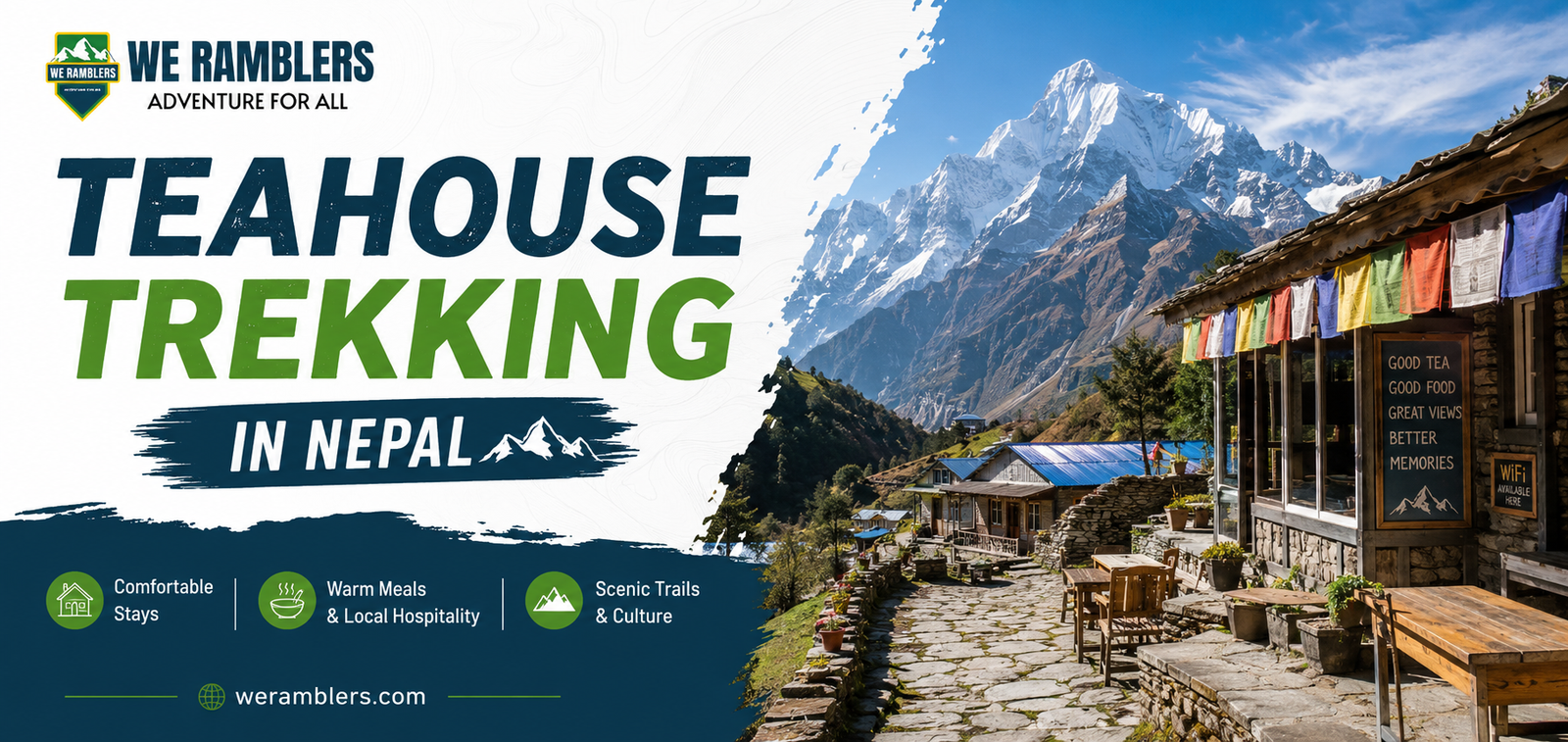
Teahouse trekking refers to a style of trekking where hikers stay overnight in small, locally run lodges called teahouses instead of camping in tents. These lodges are scattered along Nepal’s major trekking routes, including the trail leading to Everest Base Camp, as well as routes through the Annapurna and Langtang regions.
A teahouse typically offers a private or shared room, a communal dining hall heated by a stove, hot meals, and basic bathroom facilities. Unlike full camping treks that require porters to carry tents, cooking equipment, and food supplies, teahouse trekking allows travelers to walk with lighter packs while still enjoying warm meals and a roof over their heads every night.
This model has turned Nepal into one of the most beginner friendly trekking destinations in the world, since it removes much of the logistical burden that comes with wilderness camping in high altitude terrain.
Why Teahouse Trekking Has Become So Popular
There are several reasons trekkers from India, Europe, the United States, and beyond continue to choose the teahouse route over camping expeditions.
Lower Cost Compared to Camping Treks
Camping treks require a full support crew, including cooks, kitchen staff, and additional porters, which significantly raises the overall trip cost. Teahouse trekking cuts down on this overhead since meals and accommodation are purchased directly from the lodges along the trail.
Cultural Immersion With Local Communities
Every teahouse is family owned and often run by Sherpa, Gurung, or Tamang households depending on the region. Staying in these lodges gives trekkers a genuine window into Himalayan village life, something a tented camp simply cannot offer. This is especially true on quieter trails such as the Langtang Valley Trek, where villages feel far less commercial.
Lighter Packs and Easier Logistics
Since food and shelter are provided along the way, trekkers do not need to carry cooking gear, tents, or bulky supplies. This makes the trekking experience far more manageable, especially for first timers tackling remote routes such as the Manaslu Circuit Trek.
A Warm Meal and Bed at the End of a Long Day
After hours of walking through rugged mountain terrain, arriving at a teahouse with a hot bowl of dal bhat and a bed waiting is a comfort that keeps trekkers coming back to Nepal year after year.
What to Expect Inside a Nepal Teahouse
Teahouses vary in comfort level depending on altitude and location, but most share a similar structure.
- Rooms: Simple twin bed rooms with a mattress, pillow, and blanket. Extra blankets are usually available for higher altitude stops.
- Dining Hall: A shared space that doubles as the social hub of the lodge, usually warmed by a wood or dung burning stove in the evening.
- Food: Menus commonly include dal bhat, noodle soups, momos, porridge, and basic pasta dishes. Dal bhat is often the best choice since most lodges offer free refills.
- Bathrooms: Lower altitude teahouses often have attached bathrooms with hot showers available for a small fee. Higher up, shared squat toilets and bucket showers become more common.
- Electricity and Wi-Fi: Charging and internet access are usually available for an extra charge as you climb higher, and both become less reliable above 4000 meters.
Packing a good sleeping bag rated for sub zero temperatures is strongly recommended, since teahouse rooms are not heated overnight.
Best Teahouse Trekking Routes in Nepal
Nepal offers multiple teahouse trekking corridors suited to different fitness levels and trip durations.
Everest Region: The trail to Everest Base Camp and the nearby Gokyo Lakes and Gokyo Ri Trek has some of the best developed teahouse infrastructure in the country, with lodges available at nearly every stop along the way to Kala Patthar.
Annapurna Region: Routes such as the Annapurna Circuit Trek and Annapurna Base Camp Trek are known for comfortable teahouses with strong Wi-Fi and varied menus, making this region popular among first time trekkers.
Langtang Region: Closer to Kathmandu, the Langtang Valley Trek offers a quieter teahouse experience with fewer crowds and equally stunning mountain views.
Manaslu Region: The Manaslu Circuit Trek has a more remote teahouse network, ideal for trekkers seeking a less commercial route without giving up the comfort of local lodges.
Best Time of Year for Teahouse Trekking in Nepal
The two main trekking seasons in Nepal are spring, from March to May, and autumn, from September to November. Both seasons bring clear skies, stable weather, and blooming rhododendron forests in spring, along with excellent mountain visibility in autumn. Winter trekking is possible on lower altitude routes, but many high altitude teahouses close during the coldest months, so it is worth checking route specific conditions before booking. Our trekking blog has season by season breakdowns for each major region if you want to plan around the best weather window.
Tips for a Comfortable Teahouse Trekking Experience
- Carry a sleeping bag rated for at least minus 10 degrees Celsius for high altitude nights.
- Bring small denomination Nepali rupees, since card payments are rarely accepted along the trail.
- Order dal bhat whenever possible, since it is filling, affordable, and usually comes with unlimited servings.
- Pack a portable charger, since electricity access at higher elevations can be limited or costly.
- Book ahead during peak season, particularly on the Everest and Annapurna routes, where popular teahouses fill up quickly.
- Carry basic snacks and rehydration salts, since food options become simpler as you gain altitude.
Plan Your Teahouse Trek With We Ramblers
We Ramblers has been guiding trekkers through Nepal’s most iconic teahouse routes for years, and our team knows exactly which lodges offer the best comfort, food, and hospitality at every stage of your journey. Whether you are dreaming of standing beneath Everest, walking the Annapurna trails, or exploring the quieter paths of Langtang and Manaslu, our experienced guides and porters handle the planning so you can focus on the mountains.
Get in touch with our team through our contact page to build a teahouse trekking itinerary suited to your fitness level, budget, and travel dates. Our guides and porters will take care of the details so you can focus on the mountains ahead.
Frequently Asked Questions About Teahouse Trekking in Nepal
What is the difference between teahouse trekking and camping trekking in Nepal?
Teahouse trekking involves staying in locally run lodges along the trail with hot meals and basic rooms, while camping trekking requires carrying tents, cooking equipment, and a larger support crew. Teahouse trekking is generally more affordable and requires less gear.
Do I need to book teahouses in advance?
During peak trekking seasons in spring and autumn, popular teahouses on routes like Everest Base Camp and Annapurna Base Camp can fill up quickly, so booking ahead through a trekking agency is recommended. During quieter months, walk in bookings are usually possible.
Is Wi-Fi available in teahouses?
Most teahouses at lower and mid altitudes offer Wi-Fi for a small fee. Connectivity becomes weaker and less reliable at higher elevations above 4000 meters.
What kind of food is served in Nepal teahouses?
Common dishes include dal bhat, noodle soups, momos, porridge, pasta, and pancakes. Dal bhat is the most popular choice among trekkers since most lodges offer unlimited refills.
Do teahouses have hot showers?
Hot showers are usually available at lower altitude teahouses, often for an additional charge. At higher elevations, hot water becomes limited and some teahouses only offer bucket showers.
Is teahouse trekking suitable for beginners?
Yes, teahouse trekking is considered one of the most beginner friendly ways to experience the Himalayas, since it removes the need for camping gear and provides regular access to food, shelter, and rest along well established routes.
How much does teahouse accommodation cost in Nepal?
Teahouse rooms are generally very affordable, often costing very little or nothing if trekkers eat their meals at the same lodge, since food purchases usually cover the cost of the room.