
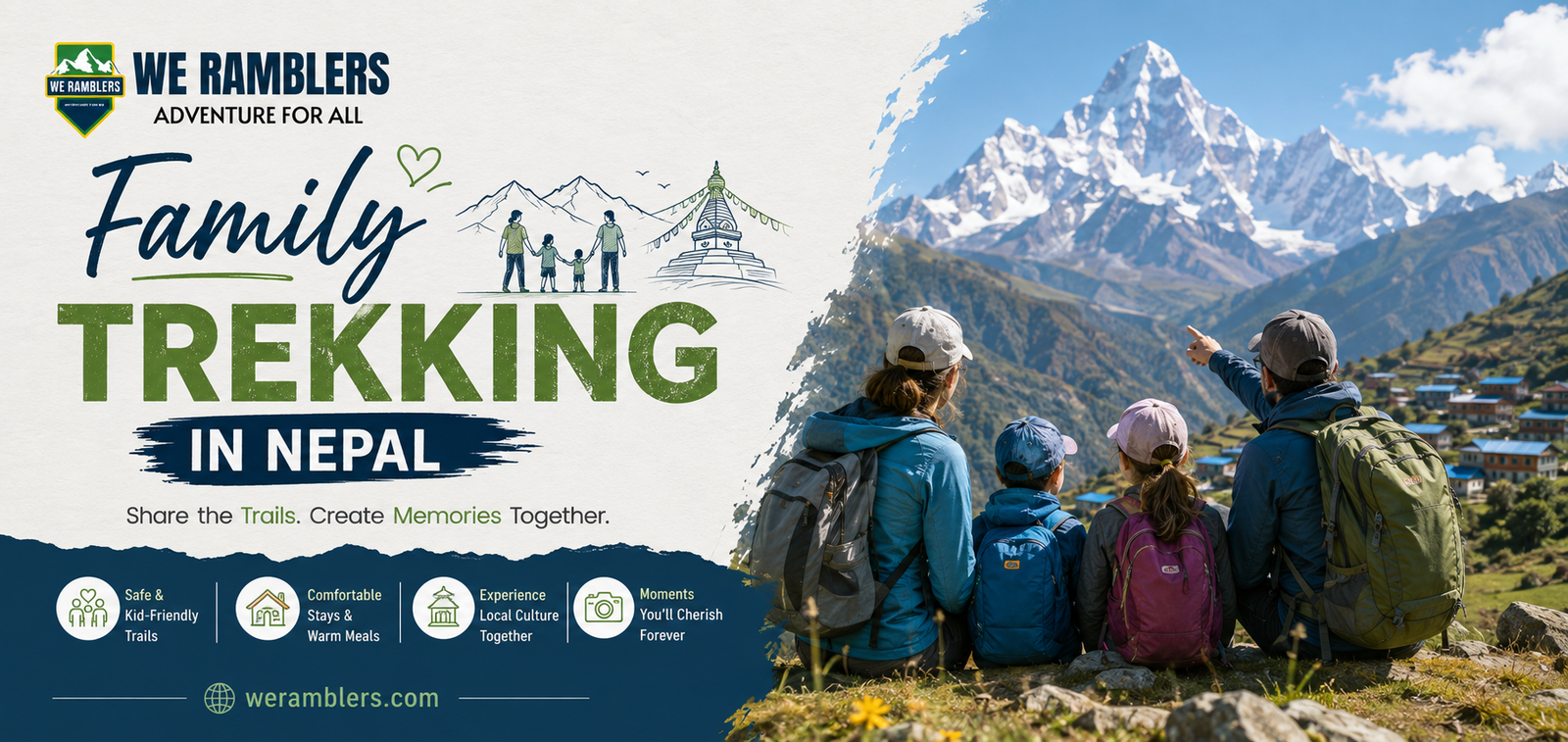
Nepal is often pictured as a destination for hardcore mountaineers and long distance trekkers, but the Himalayas welcome families just as warmly. With the right route, pace, and preparation, trekking in Nepal can become one of the most memorable experiences you share with your children, parents, or extended family. This guide walks you through everything you need to know before planning a family trek in Nepal.
Why Nepal Works Well for Family Trekking
Nepal’s trekking infrastructure has developed around teahouses, short daily walking distances, and well marked trails, which makes it far more accessible for families than many people assume. Unlike expedition style mountaineering, most family friendly routes involve gentle daily hikes of three to six hours, with plenty of time to rest, take photos, and enjoy the scenery along the way.
Villages along the main trekking routes are used to hosting visitors of all ages, and many teahouses offer larger rooms or extra bedding that can accommodate a family group comfortably. Add in dramatic mountain views, warm hospitality, and rich Himalayan culture, and it becomes clear why more families are choosing Nepal for a shared adventure.
Choosing the Right Trek for Your Family
Not every trail in Nepal suits a family group, especially one traveling with young children or older relatives. The key is picking a route that balances scenery with manageable altitude gain and shorter walking days.
Short and Gentle Routes
Treks such as the Mardi Himal Trek are ideal for families new to trekking, since the trail can be completed in four to five days with a gradual altitude profile and rewarding mountain views near the finish.
Moderate Routes With Rich Scenery
Families with some hiking experience often enjoy routes like the Khopra Ridge Trek with Khayer Lake, which offers dramatic Himalayan panoramas without the extreme altitude challenges of longer expeditions.
Classic Routes for Older Children and Teens
For families with older kids or teenagers who are comfortable with longer walking days, routes such as the Langtang Valley Trek and the Annapurna Base Camp Trek provide a fuller Himalayan experience while still remaining achievable within a one to two week window.
Best Age for Kids to Start Trekking in Nepal
There is no single correct age to begin trekking in Nepal, since it depends heavily on a child’s fitness, temperament, and comfort with walking for several hours a day. Many trekking families find that children aged seven and above handle lower altitude routes reasonably well, particularly on trails that stay below 3000 meters. For families trekking with toddlers or very young children, porters can carry the child in a specialized carrier for parts of the day, though this should always be discussed with your trekking operator in advance.
Older children and teenagers generally adapt quickly to trekking once they get past the first day or two, and many end up enjoying the physical challenge as much as the scenery.
Altitude Considerations for Family Groups
Altitude sickness does not discriminate by age, and children can be affected just as adults are. When trekking with a family, it helps to choose routes that allow for gradual acclimatization and to build in rest days at key points along the trail. Signs of altitude sickness in children can be harder to spot since younger kids may not clearly communicate symptoms like headaches or nausea, so parents should stay alert to changes in appetite, energy levels, and mood.
Keeping the group well hydrated, walking at a comfortable pace, and avoiding overly ambitious daily altitude gains are some of the simplest ways to reduce the risk for the whole family.
What to Pack for a Family Trek in Nepal
Packing for a family trek requires a bit more planning than a solo or couples trip, since you are accounting for different needs across ages.
- Layered clothing: Temperatures shift quickly between morning, midday, and evening, so pack breathable layers along with a warm jacket for each family member.
- Comfortable, broken in footwear: Trekking boots should be tested well before the trip, especially for children who may not yet have proper hiking shoes.
- Snacks and hydration: Energy bars, dried fruit, and electrolyte packets help keep younger trekkers fueled between meals.
- A basic first aid kit: Include blister plasters, any regular medication, and altitude sickness remedies recommended by your doctor.
- Entertainment for downtime: Cards, a small notebook, or a simple game can help kids unwind during long teahouse evenings.
Tips for a Smooth Family Trekking Experience
- Choose shorter daily walking distances rather than pushing for a faster itinerary.
- Build in extra rest days, especially on longer routes above 3000 meters.
- Travel with an experienced guide who is used to trekking with families and can pace the day accordingly.
- Keep meals simple and familiar where possible, since teahouse menus can be limited at higher altitudes.
- Set realistic expectations with kids ahead of time about walking hours and basic teahouse comforts.
- Celebrate small milestones along the trail to keep younger trekkers motivated and engaged.
Plan Your Family Trek With We Ramblers
We Ramblers has helped families of all shapes and sizes experience the Himalayas safely and comfortably, from grandparents joining their grandchildren on a gentle valley walk to parents introducing teenagers to their first real mountain trek. Our guides are experienced in pacing family groups, choosing the right teahouses along the way, and adjusting the itinerary based on how everyone is feeling each day.
If you are ready to start planning, reach out through our contact page and our team will help you build a family friendly itinerary suited to your children’s ages, your group’s fitness level, and the time of year you plan to travel.
Frequently Asked Questions About Family Trekking in Nepal
What is the best trek in Nepal for families with young children?
Shorter, lower altitude routes such as the Mardi Himal Trek tend to work well for families with young children, since the daily walking distances are manageable and the altitude gain is gradual.
Is trekking in Nepal safe for kids?
Trekking in Nepal is generally safe for children when the route, pace, and altitude gain are chosen appropriately, and when the group travels with an experienced guide familiar with family trekking.
How many hours a day should a family trek walk?
Most family friendly itineraries plan for three to six hours of walking per day, with breaks built in for rest, snacks, and enjoying the scenery.
Can toddlers go trekking in Nepal?
Trekking with toddlers is possible on select lower altitude routes, often with the help of a porter who can carry the child for part of the day, though this should always be arranged and discussed with your trekking operator beforehand.
What should I do if my child shows signs of altitude sickness?
If a child shows symptoms such as headache, unusual tiredness, or loss of appetite at altitude, it is important to stop ascending, monitor them closely, and descend if symptoms do not improve, following the guidance of your trekking guide.
Do teahouses accommodate families well?
Many teahouses along popular routes can provide extra bedding or larger rooms for family groups, though it is best to confirm this in advance, especially during peak trekking seasons.