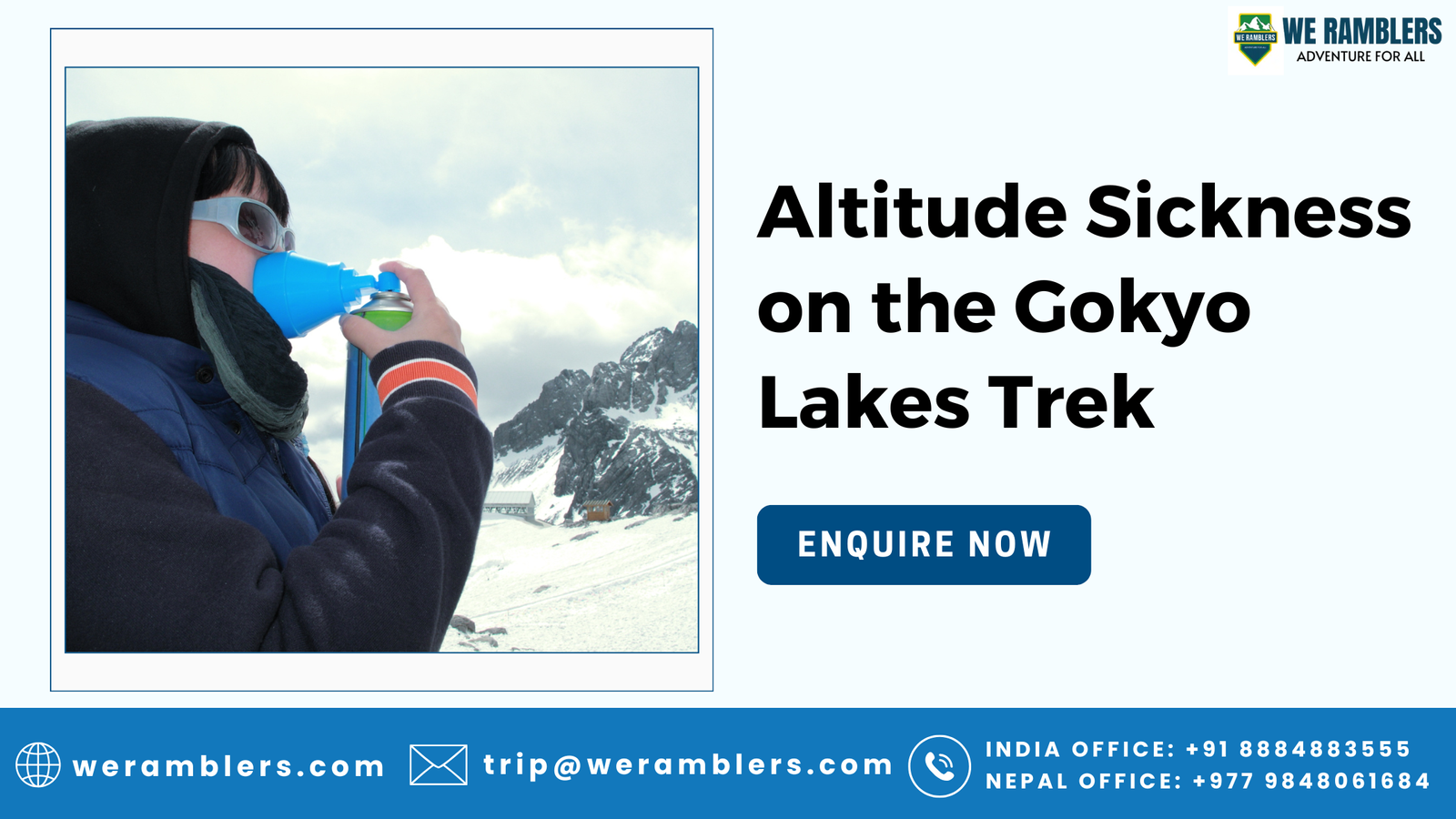
Altitude Sickness on the Gokyo Lakes Trek: Prevention, Symptoms & Emergency Plan
The Gokyo Lakes Trek is one of the most beautiful journeys in the Everest region, offering views of sparkling blue lakes, the Ngozumpa Glacier, and towering peaks including Cho Oyu, Everest, Lhotse, and Makalu. But its beauty comes with a challenge: altitude. With overnight stays approaching 5,000 meters and ascents to Gokyo Ri (5,357 m), trekkers must understand how to prevent, identify, and respond to altitude-related illnesses.
This complete guide to Altitude Sickness Gokyo Lakes explains what trekkers should expect, how to avoid AMS, and what to do in case of emergencies. Whether you’re trekking independently or with a guided group, understanding altitude safety is essential for a successful Himalayan adventure.
Why Altitude Affects Trekkers on the Gokyo Lakes Route
The Gokyo region has some of the highest sleeping elevations among popular treks in Nepal. Because altitude increases quickly after Namche Bazaar, the risk of Altitude Sickness Gokyo Lakes is higher for trekkers who do not acclimatize properly.
Key altitude points on the Gokyo route include:
- Namche Bazaar: 3,440 m
- Dole: 4,040 m
- Machhermo: 4,470 m
- Gokyo Village: 4,790 m
- Gokyo Ri summit: 5,357 m
Sleeping close to 5,000 m means your body must adapt to lower oxygen levels. Acclimatization is essential to avoid AMS and to safely enjoy the climb to Gokyo Ri.
What Is Altitude Sickness? Understanding AMS, HAPE & HACE
Altitude sickness (Acute Mountain Sickness or AMS) occurs when the body cannot adjust to decreasing oxygen at high elevations.
There are three major forms relevant to Altitude Sickness Gokyo Lakes:
Acute Mountain Sickness (AMS)
Most common and mildest form.
Symptoms:
- Headache
- Nausea
- Dizziness
- Loss of appetite
- Fatigue
- Insomnia
AMS often appears above 3,000 meters and becomes more likely over 4,000 meters.
High-Altitude Pulmonary Edema (HAPE)
Fluid accumulation in the lungs.
Symptoms:
- Breathlessness at rest
- Persistent cough
- Chest tightness
- Blue lips or nails
HAPE is life-threatening and requires immediate descent.
High-Altitude Cerebral Edema (HACE)
Fluid accumulation in the brain.
Symptoms:
- Confusion
- Loss of coordination (ataxia)
- Hallucinations
- Severe headache
- Inability to walk straight
HACE is a medical emergency requiring urgent evacuation.
These conditions make it essential to understand how to avoid altitude sickness Gokyo.
Why Altitude Sickness Is Common on the Gokyo Lakes Trek
Several factors increase the risk of AMS on this route:
Rapid Altitude Gain
Many trekkers ascend from Machhermo to Gokyo too quickly.
Sleeping Above 4,500 m
Overnight elevation at Gokyo Village places strain on the body.
Gokyo Ri Summit Push
Ascending to 5,357 m after sleeping at 4,790 m adds extra pressure.
Underhydration
Cold weather often reduces water intake.
Overexertion
Steep ascents at high altitude increase oxygen demand.
This makes Altitude Sickness Gokyo Lakes awareness essential.
How to Avoid Altitude Sickness on the Gokyo Lakes Trek
Avoiding AMS is not about strength or fitness—it is about pacing and smart trekking strategies. Below are scientifically supported strategies for how to avoid altitude sickness Gokyo.
1. Follow a Proper Acclimatization Schedule
A good itinerary includes:
- Two nights in Namche Bazaar (mandatory)
- An acclimatization hike to Everest View Hotel or Khumjung
- Gradual ascent to Dole and Machhermo
- Optional extra acclimatization in Gokyo before climbing Gokyo Ri
This is the foundation of acclimatisation Gokyo and the most effective method of preventing AMS.
2. Walk Slowly and Maintain a Steady Pace
The “slow is safe” approach helps your body adjust to reduced oxygen.
- Avoid racing or pushing hard uphill
- Take deep breaths
- Maintain even pacing
Altitude sickness does not care how fit you are—pace is more important than strength.
3. Stay Hydrated
Drink at least 3–4 liters per day.
- Cold weather often reduces hydration
- Dehydration worsens AMS symptoms
- Use warm liquids (tea, soup) to stay hydrated comfortably
Hydration is central to every altitude safety plan.
4. Eat Well and Fuel Regularly
High altitude reduces appetite, but your body needs more calories.
Best trekking foods include:
- Porridge
- Soups
- Dal Bhat
- Potatoes
- Eggs
Avoid heavy, greasy foods that slow digestion.
5. Avoid Alcohol and Smoking
Alcohol slows altitude adaptation and dehydrates the body.
Smoking reduces oxygen intake.
Both increase the risk of Altitude Sickness Gokyo Lakes.
6. Consider Medication (Diamox)
Diamox (acetazolamide) is often used to prevent and reduce AMS symptoms.
- Consult your doctor before your trek
- Typical dose: 125–250 mg twice daily
- Helps speed up acclimatization
Only use medication as part of a broader acclimatization plan.
7. Sleep Low After Hiking High
This is a classic high-altitude rule.
For example:
Hike to a higher point such as Gokyo Ri in the afternoon, then descend to Gokyo Village to sleep.
This supports natural acclimatisation Gokyo.
Symptoms of Altitude Sickness on the Gokyo Lakes Trek
Monitoring symptoms is essential. They usually begin 6–12 hours after reaching a new altitude.
Watch for:
- Persistent headaches
- Nausea or vomiting
- Loss of coordination
- Inability to sleep
- Shortness of breath
- Loss of appetite
If symptoms appear, do not ascend further.
What to Do if You Develop AMS on the Gokyo Lakes Trek
Responding quickly and correctly can prevent serious complications.
Step 1: Stop Ascending
Do not climb higher until symptoms improve.
Step 2: Rest, Hydrate, and Eat
Mild AMS may improve with rest and fluids.
Step 3: Take Medication
Diamox can help mild-to-moderate AMS symptoms.
Step 4: Descend Immediately if Symptoms Worsen
Descending is the only effective treatment for severe AMS, HAPE, or HACE.
Step 5: Seek Rescue or Evacuation
Contact your guide, teahouse owner, or use satellite equipment for emergency communication.
This emergency protocol is vital for managing Altitude Sickness Gokyo Lakes.
Emergency Plan for Serious Altitude Illness
In case of serious AMS, HAPE, or HACE:
Immediate Descent
Descend at least 500–1,000 meters.
Oxygen Support
Some teahouses and rescue teams carry supplemental oxygen.
Evacuation
Helicopter evacuation from Gokyo or Machhermo is common for severe cases.
Hospital Treatment
Kathmandu hospitals provide specialized altitude treatment facilities.
Understanding this plan is crucial for safe trekking.
Acclimatization Tips Specific to Gokyo Ri (AMS Gokyo Ri)
Climbing Gokyo Ri requires special caution due to its height.
Tips for a Safe Ascent
- Spend at least one night (preferably two) in Gokyo Village
- Do a warm-up hike before attempting Gokyo Ri
- Avoid climbing in poor weather
- Ascend slowly and take breaks
These steps significantly reduce the risk of AMS Gokyo Ri.
Frequently Asked Questions (FAQs): Altitude Sickness Gokyo Lakes
1. How common is Altitude Sickness Gokyo Lakes?
Altitude sickness is common above 4,500 meters, especially between Machhermo and Gokyo. Proper acclimatization reduces risk significantly.
2. How do I avoid AMS Gokyo Ri during the summit climb?
Spend enough time acclimatizing in Gokyo, climb slowly, stay hydrated, and avoid climbing too soon after arriving at high altitude.
3. What is the best acclimatisation Gokyo strategy?
Follow a gradual ascent plan, take rest days in Namche and Machhermo, and use the “hike high, sleep low” approach.
4. What medications help with altitude sickness?
Diamox is commonly used but must be taken under medical advice. It assists with acclimatization but is not a cure for severe AMS.
5. When should I descend immediately?
If symptoms worsen despite rest, if you develop severe headache, confusion, breathlessness, inability to walk straight, or persistent vomiting.
Trek Gokyo Lakes Safely with We Ramblers
Altitude awareness is essential, but trekking with an experienced team ensures that you are monitored, supported, and guided every step of the way. We Ramblers specializes in high-altitude treks with safety-first itineraries and expert local guides.
Why trek with We Ramblers:
- Well-designed acclimatization schedules
- Guides trained in altitude response and first aid
- Emergency planning and communication systems
- Small groups for personalized attention
- Trusted teahouse networks and reliable logistics
With the right preparation and the right team, the Gokyo Lakes trek becomes a safe, breathtaking, and unforgettable Himalayan experience.
Start your high-altitude adventure with confidence—trek with We Ramblers.