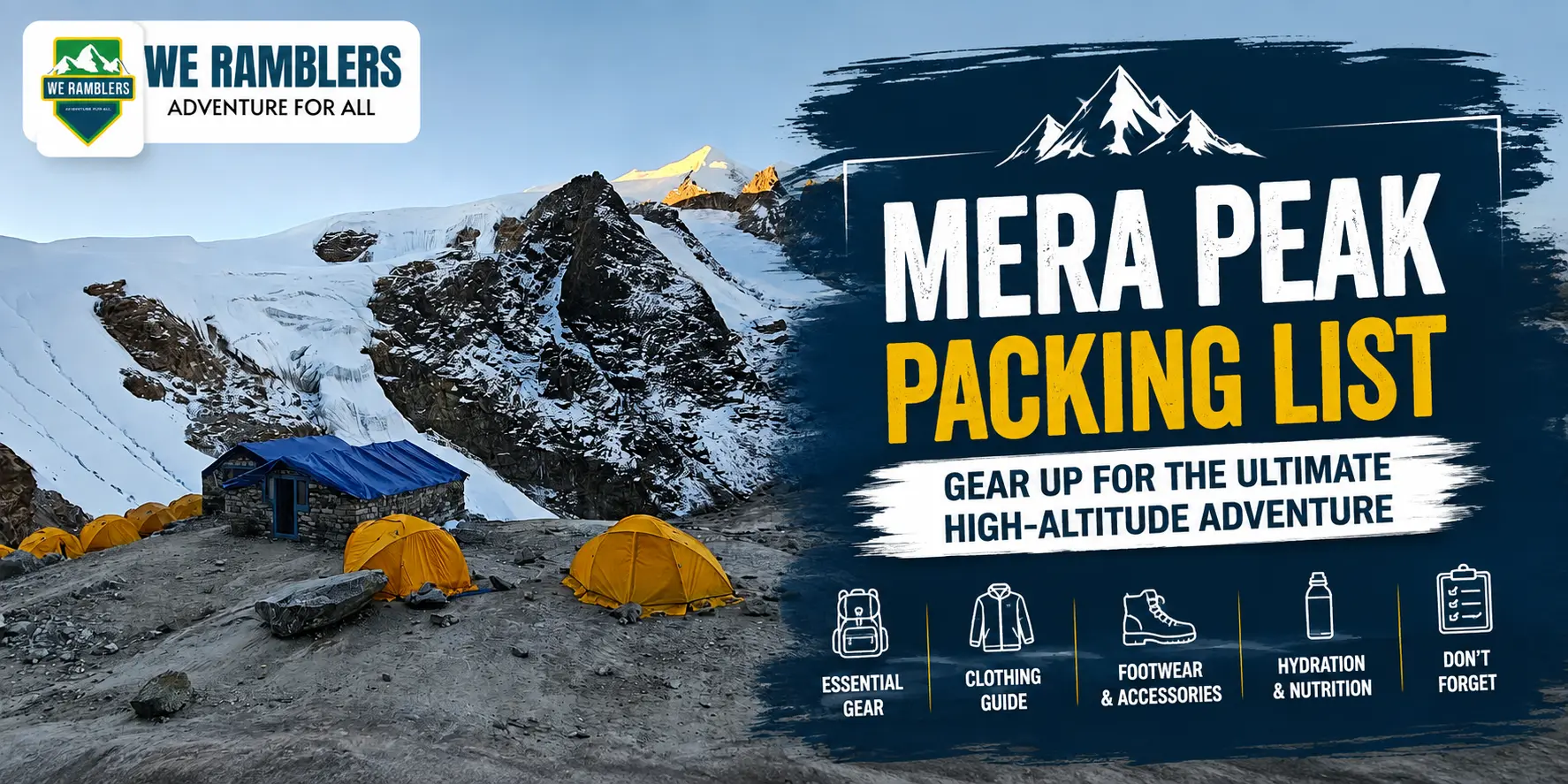
Packing for the Mera Peak Climb is a different exercise altogether compared to a standard trek. At 6,476 meters, Mera Peak is Nepal’s highest trekking peak, and while it does not demand advanced mountaineering skills, it does require a specific set of technical gear that a regular Himalayan trek simply does not call for. Getting this list wrong, either by under-packing critical equipment or overloading your bag with unnecessary extras, can genuinely affect how your summit attempt goes.
This guide breaks down exactly what you need to pack for Mera Peak, separating true technical essentials from optional extras, so you arrive prepared without hauling around dead weight.
Why Mera Peak Packing Is Different From Regular Trekking
Unlike treks such as Annapurna Base Camp or the standard Everest Base Camp route, Mera Peak involves actual glacier travel, fixed ropes near the summit ridge, and a final steep section that requires an ice axe. The climbing route is graded mostly Alpine F, meaning easy by mountaineering standards, but the last thirty to forty meters steepens considerably, requiring a jumar ascender on a fixed rope to reach the top.
This means your packing list needs to cover two very different phases of the trip: the long trekking approach through forests and valleys, and the technical summit push itself, which begins around midnight and involves crossing minor crevasses marked with safety flags before reaching the final ridge.
Technical Climbing Gear
This is the category that separates Mera Peak from a standard trekking packing list, and it is not optional.
- Mountaineering boots rated for high altitude and compatible with crampons
- Step-in or strap-on crampons suited to your boots
- An ice axe for the final steep section near the summit
- A climbing harness for use with fixed ropes
- A jumar ascender for climbing the fixed rope near the summit ridge
- Carabiners, at least two to three locking and non-locking combined
- A belay device for controlled descents on fixed lines
- Trekking poles for the long approach trek before the technical sections begin
Most reputable operators, including guided expeditions like ours, provide access to shared technical gear such as ropes and safety flags on the mountain itself, but personal items like your harness, crampons, and ice axe should fit you properly and ideally be tested before the trip.
Cold Weather Clothing for Extreme Altitude
Since you will spend four to five consecutive days above 5,000 meters, and the summit push happens at night in freezing, windy conditions, your clothing layers need to handle serious cold.
- A down suit or heavyweight down jacket rated for extreme altitude
- Insulated down trousers for summit night
- A base layer set, both top and bottom, in a moisture-wicking fabric
- A mid-layer fleece or softshell for the trekking approach days
- A windproof and waterproof outer shell jacket and pants
- Insulated mittens for summit day, with a thinner glove liner underneath
- A balaclava or buff to protect your face from wind at higher altitude
- A warm insulated hat, plus a lighter cap for lower altitude sections
Summit morning is when this layering system gets tested the most, since temperatures at 6,476 meters combined with wind chill can feel brutally cold, and removing gloves even briefly for photographs requires caution.
Footwear and Lower Body Essentials
- Insulated mountaineering boots for summit day, compatible with your crampons
- A separate, lighter pair of trekking boots for the approach trek through forests and valleys
- Gaiters to keep snow and debris out of your boots
- Four to five pairs of thick trekking or mountaineering socks
- A lightweight pair of camp shoes or sandals for evenings at lower elevation lodges
Many climbers underestimate how different their footwear needs are between the approach trek and the summit push itself, so packing two distinct pairs of boots is genuinely worth the extra weight.
Head, Eye, and Sun Protection
- Glacier sunglasses or ski goggles rated for high UV exposure and snow glare
- A headlamp with spare batteries, essential for the midnight summit start
- Sunblock rated SPF 50 or higher
- Lip balm with sun protection
- A buff or neck gaiter for added wind and sun coverage on exposed sections
Snow glare at this altitude is intense enough to cause serious eye damage without proper glacier glasses, so this is not an item to compromise on.
Sleeping and Camp Gear
- A sleeping bag rated for extreme cold, typically down to at least minus twenty degrees Celsius
- A sleeping bag liner for added warmth and hygiene
- A basic sleeping pad if camping at higher camps where teahouses are unavailable
- A dry bag or waterproof stuff sacks to keep gear protected from snow and moisture
Higher camps on the Mera Peak route often move away from teahouse-style accommodation into more basic camping setups, so your sleeping system needs to handle genuinely cold nights.
Health, Hydration, and Safety Items
- A basic first aid kit including altitude sickness medication as advised by your doctor
- Water purification tablets or a filter for refilling bottles along the trek
- A wide-mouth insulated water bottle, since standard bottles can freeze at altitude
- Hand and toe warmers for summit day
- A personal medical kit with any prescribed medications
Given the altitude and remoteness beyond Lukla, understanding your evacuation options and having appropriate insurance in place matters just as much as your physical gear. Our detailed breakdown on insurance for the Mera Peak climb covers what standard travel policies typically miss at this elevation.
Backpacks and Carrying Equipment
- A larger duffel bag for porter-carried gear during the approach trek
- A daypack, roughly 30 to 40 liters, for summit day essentials like water, snacks, and spare layers
- Packing cubes or stuff sacks to organize gear by category and keep technical equipment easily accessible
Since summit day requires quick access to specific gear like crampons, your harness, and extra layers, organizing your daypack thoughtfully before the midnight start saves valuable time and reduces fumbling in the dark.
What You Can Skip
Not everything marketed as essential mountaineering gear is actually necessary for Mera Peak. Since the route does not involve ice climbing or technical rock climbing, items like ice screws, technical rock protection, or a full alpine rack are unnecessary. Similarly, extremely heavy expedition-grade gear designed for peaks like Ama Dablam goes beyond what Mera Peak actually demands.
How Fitness Affects Your Gear Choices
The right gear only takes you so far if your fitness level does not match the demands of the climb. Since Mera Peak involves sustained days above 5,000 meters and a demanding summit push, understanding your own preparation level matters just as much as your packing list. Our guide on how fit you need to be to climb Mera Peak breaks down realistic training expectations before you commit to the climb.
Frequently Asked Questions: Mera Peak Packing List
Do I need my own crampons and ice axe, or can I rent them?
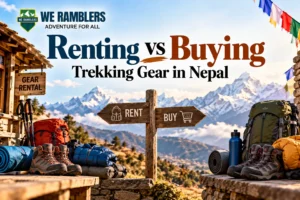
Both purchasing and renting are common options. Many climbers rent technical gear like crampons and ice axes in Kathmandu, though owning well-fitted personal gear is often preferred for comfort and reliability on summit day.
Is a down suit necessary for Mera Peak, or will a jacket and pants combination work?
A combination of a heavyweight down jacket and insulated down trousers is generally sufficient, though some climbers prefer a one-piece down suit for added warmth on summit night.
Do I need technical rock climbing gear for Mera Peak?
No, Mera Peak does not require rock climbing or ice climbing skills, so technical rock protection and ice screws are not necessary for this climb.
How cold does it get on Mera Peak summit day?
Summit day is extremely cold and windy due to the 6,476 meter elevation, which is why insulated mittens, a balaclava, and a proper down layering system are essential.
Can I use the same boots for trekking and the summit push?
It is better to carry two separate pairs of boots, a lighter trekking boot for the approach and insulated mountaineering boots compatible with crampons for the summit attempt.
What sleeping bag rating do I need for Mera Peak?
A sleeping bag rated to at least minus twenty degrees Celsius is recommended, since higher camps can involve basic camping setups with genuinely cold nighttime temperatures.
Is travel insurance included in the packing considerations for Mera Peak?
While not physical gear, appropriate high-altitude insurance is essential given the remote terrain and limited medical facilities beyond Lukla, and should be arranged well before departure.
Final Thoughts
Packing correctly for Mera Peak means balancing genuine technical necessities with practical trekking gear, without overloading yourself with equipment the climb does not actually require. Getting your layering system, technical gear, and footwear right makes a real difference on summit night, when cold, altitude, and fatigue all come together at once.
If you want a detailed, climb-specific gear checklist tailored to your experience level, contact our team at We Ramblers, or explore the full Mera Peak Climb itinerary to see exactly how your preparation fits into the complete expedition.