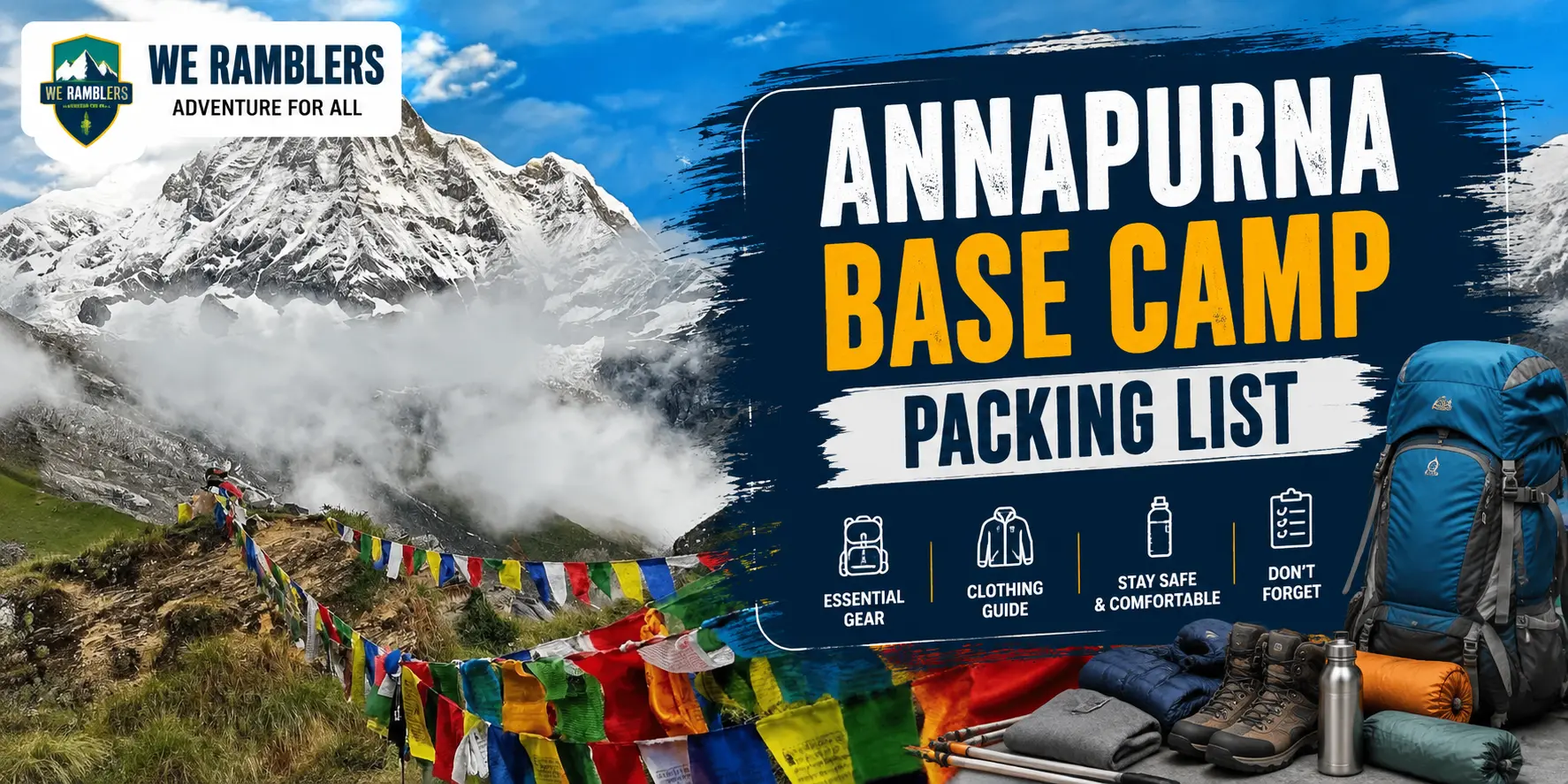
Packing for the Annapurna Base Camp Trek can feel overwhelming, especially with so many generic packing lists floating around online that either miss the point or tell you to carry far more than you need. The truth is, ABC is a moderate altitude trek with tea houses along the entire route, so your packing list should focus on practicality rather than expedition-level gear.
This guide breaks down exactly what you need for the trek, why each item matters, and what you can safely leave at home to keep your backpack light and manageable.
Why Packing Right Matters on the ABC Trek
The Annapurna Base Camp Trek climbs from warm, forested lower villages to a cold, high-altitude base camp at 4,130 meters, all within a matter of days. This means your gear needs to work across a wide temperature range, from mild daytime heat near Ghandruk to freezing nighttime conditions closer to Deurali and the base camp itself.
Since much of the trail involves climbing thousands of stone steps, an overpacked bag can quickly turn an enjoyable trek into an exhausting one. The goal is to pack smart rather than pack heavy, bringing along only what genuinely earns its place in your bag.
Footwear and Trekking Essentials
Your feet will carry you further on this trek than anything else you pack, so this category deserves the most attention.
- A pair of well broken-in, waterproof hiking boots with good ankle support
- Trekking poles to reduce strain on your knees during long descents
- A lightweight pair of crocs or sandals to wear at tea houses in the evening
- Gaiters if you are trekking during the winter months when snow is more likely
- Microspikes for added grip if you are attempting the trek in colder conditions
Breaking in your boots well before the trek is one of the most important things you can do. New boots on a multi-day trek are one of the fastest ways to end up with painful blisters.
Clothing for Changing Temperatures
Layering is the key principle here, since temperatures can shift dramatically within a single day on the ABC route.
- Two lightweight trekking pants that dry quickly
- Three moisture-wicking trekking t-shirts
- Thermal top and bottom for cold mornings and evenings at higher altitude
- A warm insulated jacket to handle the cold once you pass Deurali
- A windcheater to protect against strong mountain winds
- A poncho in case of unexpected rain or light snow
- Four pairs of proper trekking socks to prevent blisters and keep feet dry
- Gloves with an inner lining for cold sections of the trail
You will not need heavy winter gear during the spring and autumn seasons at lower altitudes, but once you climb past Chhomrong, temperatures drop noticeably, especially after sunset.
Backpack and Carrying Gear
- A comfortable trekking bag or duffel for the porter to carry your main luggage
- A smaller daypack or rucksack to carry your daily essentials like water, snacks, and a camera
- Basic dry bags or packing cubes to keep clothing organized and protected from rain
Since porters typically carry around ten kilograms per person, pack your main bag efficiently and keep only the essentials in your daypack for quick access during the day’s walk.
Sun and Skin Protection
Even though ABC does not reach extremely high altitudes, sun exposure at higher elevations can be intense.
- UV-protected sunglasses to shield your eyes from glare, especially near snow patches
- Sunblock rated SPF 50 or higher
- Lip balm with sun protection built in
- A moisturizer to combat dry mountain air
Many first-time trekkers underestimate how strong the sun feels at altitude, even on cooler days, so skin protection should not be skipped.
Health and Hygiene Items
- A basic first aid kit with pain relief tablets, cold medicine, and blister plasters
- Water purification drops or tablets for refilling bottles along the trail
- A quick-drying towel for tea house stops
- Wet wipes or baby wipes, since hot showers are not always available at higher altitudes
- Toilet paper, since it is not always provided at higher tea houses
Carrying your own basic first aid supplies is a smart habit, even though your guide will typically carry a more comprehensive kit for the group.
Lighting and Practical Extras
- A headlamp with spare batteries for early morning starts or late arrivals at tea houses
- Dry fruits and chocolates for a quick energy boost during long trekking days
- A power bank, since charging facilities in tea houses can be limited or come at an extra cost
These small extras often make a bigger difference to comfort than trekkers expect, especially on longer trekking days such as the descent from Annapurna Base Camp to Bamboo.
What You Do Not Need to Pack
Overpacking is one of the most common mistakes beginners make. A few things you can safely leave behind include heavy camping equipment, since the entire route runs through tea houses with proper beds and meals. You also do not need mountaineering-grade gear, ropes, or crampons, as ABC does not involve any technical climbing.
If you are unsure whether an item is necessary, it is worth checking with your trekking company before you fly out, since carrying unnecessary weight up thousands of stone steps is rarely worth it.
Packing Tips From Experienced Trekkers
- Pack in layers rather than bulky single items, so you can adjust quickly to temperature changes
- Roll clothes instead of folding them to save space in your bag
- Keep valuables and medication in your daypack rather than your main trekking bag
- Test all your gear, especially boots and rain protection, before you leave home
- Leave a small amount of extra space in your bag for souvenirs or extra layers picked up along the way
Frequently Asked Questions
Do I need down jackets for the Annapurna Base Camp Trek?
A warm insulated jacket is recommended, especially for nights at higher altitude villages like Deurali and Annapurna Base Camp itself, where temperatures drop noticeably after sunset.
Is it necessary to carry a sleeping bag for ABC?
Most tea houses provide blankets, but many trekkers still prefer carrying a sleeping bag rated for cold temperatures for extra comfort and hygiene, especially during the winter months.
How many pairs of socks should I pack for the trek?
Around four pairs of trekking-specific socks is generally enough, allowing you to rotate pairs and keep at least one dry pair available at all times.
Do I need trekking poles for the Annapurna Base Camp Trek?
Yes, trekking poles are highly recommended since they reduce strain on your knees, particularly during the many stone staircases and the long descent back to Jhinu Danda.
Is a water purifier necessary, or can I just buy bottled water?
Carrying water purification tablets or drops is a more sustainable option and often more reliable than relying on bottled water availability at higher altitude tea houses.
What should I pack differently for a winter ABC trek?
Winter trekkers should add gaiters, microspikes, and heavier thermal layers to their packing list, since snow and icy patches become more common at higher elevations. Our guide on the Three Passes Trek in winter offers additional insight into cold-season trekking preparation in Nepal.
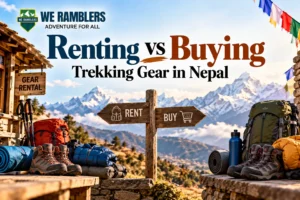
Can I rent trekking gear in Pokhara instead of buying it?
Yes, Pokhara has several gear rental shops where trekkers can rent items like sleeping bags, down jackets, and trekking poles, which is a practical option if you do not want to invest in gear you may use only once.
Final Thoughts
Packing for the Annapurna Base Camp Trek does not need to be complicated once you understand what the trail actually demands. Focus on solid footwear, proper layering, and a few practical extras rather than overloading your bag with unnecessary gear. A well-packed bag makes the thousands of stone steps far easier to manage and lets you focus on enjoying the mountains rather than struggling under excess weight.
If you still have questions about what to pack or want a detailed itinerary before you go, get in touch with our team at We Ramblers. You can also download the complete Annapurna Base Camp itinerary directly from our trek page, or browse our other Annapurna region treks if you are still deciding which route is right for you.