Trekkers planning the Everest Three Passes Trek almost always ask the same question. Which of the three high passes is actually the hardest. Kongma La, Cho La, and Renjo La each test trekkers in different ways, and the honest answer depends on whether you are measuring altitude, technical difficulty, or sheer physical fatigue. This guide breaks down each pass individually and compares them directly so you know exactly what to expect.
Quick Overview of the Three Passes
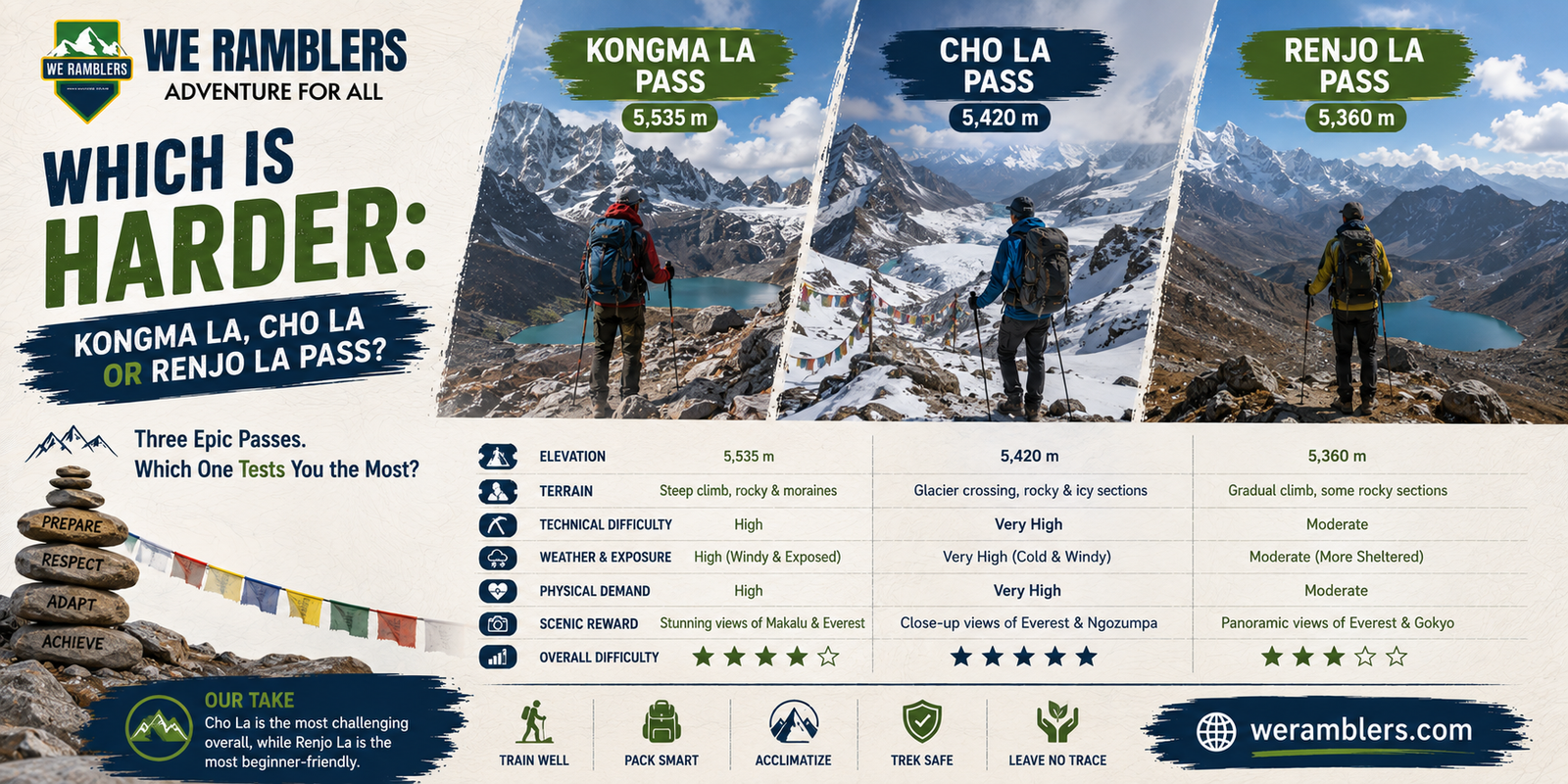
The Three Passes Trek links together three high altitude crossings in the Khumbu region, typically completed over 18 to 21 days. Kongma La sits at approximately 5535 meters, Cho La at approximately 5420 meters, and Renjo La at approximately 5360 meters. All three sit well above 5000 meters, and all three demand proper acclimatization, but the character of each crossing is genuinely different.
Kongma La Pass: The Hardest by Altitude and Endurance
Kongma La is the highest of the three passes and is widely regarded as the most physically demanding. The climb is long and gradual on both sides, turning the crossing into a full day endurance test rather than a short technical push. Unlike Cho La or Renjo La, there are no teahouses along this stretch, so trekkers typically set off early, carry their own food and water, and commit to completing the crossing in a single push.
The trail itself is rocky and loose underfoot, with several false summits that can wear down morale before the true top comes into view. No technical climbing gear is required here, but the combination of altitude, distance, and remoteness makes Kongma La feel like a genuine mental battle for many trekkers, even those who are otherwise fit and well prepared.
Cho La Pass: The Most Technically Demanding
Cho La sits slightly lower than Kongma La but is generally considered the most technically challenging of the three passes. The reason comes down to terrain rather than altitude. Cho La involves crossing a glacier section near the top, which typically requires crampons and careful footwork, along with steep, icy sections on the descent toward Dzongla or the Gokyo side depending on your direction of travel.
Trekking poles and proper footwear make a noticeable difference here, and while the crossing does not demand technical mountaineering experience, it does require more careful, deliberate movement than a standard high altitude trail. Strong winds and cold temperatures near the top add to the challenge, particularly during early morning crossings.
Renjo La Pass: The Most Accessible of the Three
Renjo La is generally regarded as the easiest of the three passes, though easiest is a relative term at over 5000 meters. The trail is longer in places but follows a clearer, more stable path compared to Kongma La’s rocky remoteness or Cho La’s glacier crossing. Renjo La also rewards trekkers with sweeping views over the Gokyo Lakes and surrounding peaks, making it a popular favorite despite being the least intense of the three technically.
That said, Renjo La should not be underestimated. Altitude sickness remains a real risk here just as it does on the other two passes, and the gradual, sustained ascent can produce significant accumulated fatigue, especially since it is often crossed after trekkers have already completed two other passes and spent close to two weeks at elevation.
Direct Comparison: Which Pass Wins in Each Category
Framed simply, each pass takes the top spot in a different category. Kongma La is the hardest in terms of raw altitude and remoteness, since it sits highest and offers no teahouse support along the crossing. Cho La is the hardest in terms of technical demand, due to the glacier crossing and the need for crampons and careful footwork. Renjo La is the easiest in terms of terrain and trail conditions, but it can still feel surprisingly difficult due to accumulated fatigue late in the itinerary.
No single pass is harder across every category, which is exactly why trekkers who complete all three often describe the Three Passes Trek as more demanding as a whole route than any individual crossing would suggest on its own.
Why Direction Matters for Difficulty
The order in which you cross the three passes changes how difficult each one feels. Most guided itineraries run the route counterclockwise, crossing Kongma La first, followed by Cho La, and finishing with Renjo La. This structure allows trekkers to face the most remote and physically demanding pass earlier, before fatigue builds up, while tackling the technical glacier crossing at Cho La once the body has had more time to adjust to altitude.
Running the route clockwise, with Renjo La crossed first, means facing a high pass earlier in the trip before full acclimatization has taken hold, which many guides consider a less favorable approach for most trekkers.
Preparing for All Three Passes
- Build cardiovascular fitness and leg strength for at least 10 to 12 weeks before the trek.
- Schedule proper acclimatization days, particularly around Dingboche and Namche Bazaar before tackling Kongma La.
- Pack crampons and trekking poles for the glacier crossing at Cho La.
- Carry your own food and water for the Kongma La crossing, since no teahouses exist along that stretch.
- Start each pass crossing early in the morning, since wind and weather tend to worsen later in the day.
- Pace yourself carefully on Renjo La, since accumulated fatigue from the earlier passes can make it feel harder than its terrain alone suggests.
Trek the Everest Three Passes With We Ramblers
Crossing all three passes safely comes down to pacing, acclimatization, and having a guide who knows exactly how each crossing behaves in different conditions. Our team at We Ramblers has led trekkers across Kongma La, Cho La, and Renjo La many times and structures every itinerary around proper rest days and a sensible direction of travel.
Reach out through our contact page to start planning your Three Passes Trek, or explore our full range of trekking packages if you are still deciding between routes in the Everest region.
Frequently Asked Questions About Kongma La, Cho La, and Renjo La
Which of the three passes is the hardest overall?
Kongma La is generally considered the hardest overall due to its higher altitude, longer endurance demands, and remote trail with no teahouse support along the way.
Which pass requires technical climbing gear?
Cho La is the most technically demanding pass due to a glacier crossing near the top, and crampons are strongly recommended for both the ascent and descent.
Which pass is considered the easiest?
Renjo La is generally considered the most accessible of the three, thanks to a clearer, more stable trail, though it still requires proper acclimatization and can feel harder due to fatigue accumulated from crossing the other passes first.
In what order should the three passes be crossed?
Most guided itineraries recommend crossing Kongma La first, followed by Cho La, and finishing with Renjo La, since this order allows for progressive acclimatization before the most technical crossing.
Do all three passes require crampons?
Crampons are strongly recommended for Cho La due to the glacier crossing, and they are often recommended for Kongma La’s icy descent as well, while Renjo La generally requires less specialized gear.
How high are Kongma La, Cho La, and Renjo La?
Kongma La sits at approximately 5535 meters, Cho La at approximately 5420 meters, and Renjo La at approximately 5360 meters.