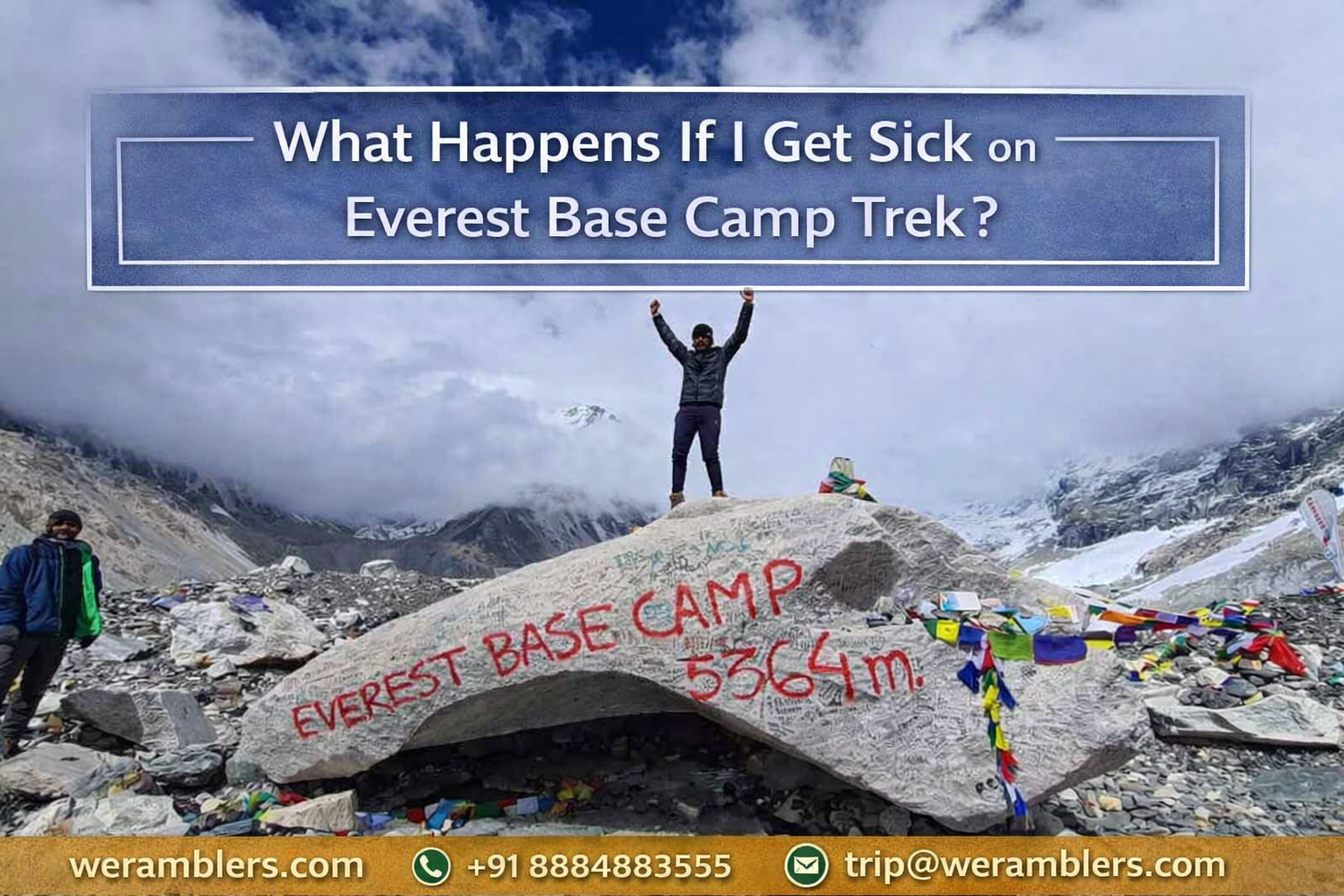
Getting sick at high altitude is one of the biggest worries trekkers have before heading into the Himalayas. A very common and valid question is: what happens if I get sick on Everest Base Camp Trek? The good news is that the Everest Base Camp (EBC) route is well-supported, and clear safety protocols are followed if a trekker becomes unwell.
Illness during the EBC trek is taken seriously, especially because of altitude-related conditions. Whether it’s mild altitude symptoms, a respiratory issue, or something more serious, there are established steps to assess, treat, and manage your condition safely.
Understanding what happens if I get sick on Everest Base Camp Trek helps you trek with confidence, knowing that support systems are in place throughout the journey.
What Happens If I Get Sick on Everest Base Camp Trek?
If you get sick on the Everest Base Camp Trek, the response depends on the severity of your symptoms. Guides are trained to monitor trekkers daily, especially as altitude increases. In most cases, symptoms are mild and manageable. Rest, hydration, and careful observation are often enough. However, if symptoms worsen, immediate action is taken to protect your health.
The key principle followed on the EBC trek is simple: your health always comes before the summit.
Assessment and Treatment on the Trail
When a trekker feels unwell, the first step is assessment.
Mild Symptoms
If you experience symptoms such as headache, nausea, dizziness, fatigue, or loss of appetite, you will usually:
- Stop trekking for the day
- Rest and hydrate
- Be monitored closely by the guide
- Use medication if advised
Many trekkers experience mild altitude-related discomfort that resolves with rest and proper care.
Monitoring for Serious Conditions
Guides are trained to recognize serious altitude illnesses such as:
- Acute Mountain Sickness (AMS)
- High Altitude Pulmonary Edema (HAPE)
- High Altitude Cerebral Edema (HACE)
Early detection is critical, which is why symptoms are never ignored on the EBC trail.
Mandatory Descent If Symptoms Worsen
If symptoms worsen or do not improve with rest, descent is mandatory. Descending to a lower altitude is the most effective and immediate treatment for altitude-related illness.
Symptoms that require immediate descent include:
- Severe or persistent headache
- Confusion or disorientation
- Extreme fatigue
- Breathing difficulties
- Inability to walk steadily
Descending even a few hundred meters can lead to rapid improvement.
Medical Support Along the EBC Trail
The Everest region has medical facilities in key villages such as Namche Bazaar and Pheriche. These clinics are experienced in treating altitude-related conditions and common trekking illnesses.
If needed, trekkers may receive:
- Oxygen support
- Medication
- Medical evaluation by trained professionals
These facilities play a crucial role in stabilizing trekkers before further decisions are made.
Helicopter Evacuation in Severe Cases
If a trekker cannot walk or their condition is critical, a helicopter evacuation may be required. Helicopter rescue is fast and effective but extremely expensive, which is why comprehensive travel insurance is essential for the Everest Base Camp Trek.
Evacuation is used when:
- Immediate descent by foot is not possible
- Symptoms are severe or life-threatening
- Rapid medical intervention is required
Having insurance ensures evacuation decisions are based purely on medical need, not financial concerns.
Itinerary Changes If You Get Sick
Getting sick does not always mean the trek is over, but it can affect your itinerary.
If rest is needed, you may fall behind the main group. In most cases:
- A guide or assistant guide stays with you
- You continue at a slower pace once recovered
- Your itinerary is adjusted for safety
Flexibility is built into well-organized treks to manage these situations.
Common Illnesses on the Everest Base Camp Trek
Not all illnesses are altitude-related. Trekkers may also experience:
- Khumbu cough caused by cold, dry air
- Respiratory infections
- Stomach issues due to food or water sensitivity
These are usually treated with rest, hydration, and medication, and most trekkers recover quickly with proper care.
How We Ramblers Handles Illness on the EBC Trek
At We Ramblers, trekker safety is our top priority. Our guides are trained to monitor health daily and take early action if someone feels unwell.
We follow strict protocols that include:
- Daily health and symptom checks
- Conservative pacing and acclimatization
- Immediate response to warning signs
- Coordination with medical facilities and evacuation services if needed
Our goal is to ensure that every trekker feels supported, safe, and confident throughout the journey.
Everest Base Camp Trek with We Ramblers
Our Everest Base Camp Trek is designed with safety-first planning. While illness is always a possibility at high altitude, proper preparation, experienced guidance, and clear response systems make it manageable.
Trekking with We Ramblers includes:
- Acclimatization-focused itineraries
- Experienced guides trained in altitude illness management
- Emergency support and decision-making
- Flexible itineraries based on health needs
If you are asking what happens if I get sick on Everest Base Camp Trek, the answer is reassuring: you will be monitored, supported, and cared for every step of the way.
Frequently Asked Questions: What Happens If I Get Sick on Everest Base Camp Trek?
Will I be forced to descend if I feel sick?
Yes. If symptoms worsen or do not improve, descent is mandatory for safety.
Are there doctors on the EBC trail?
There are medical clinics in key villages such as Namche Bazaar and Pheriche with experience in altitude illness.
Can I continue the trek after getting sick?
If symptoms resolve and it is safe, you may continue at a slower pace with adjusted plans.
Is helicopter evacuation common?
It is not common, but it is used when necessary for serious medical conditions.
Do guides stay with sick trekkers?
Yes. A guide or assistant guide will stay with you if needed.
Does travel insurance cover illness on EBC?
Comprehensive travel insurance that includes high-altitude trekking and evacuation is essential.