Sunrise & Sunset Photography from Gokyo Ri — Tips for Stunning Everest Photos
The ascent to Gokyo Ri (5,357 m) is one of the most rewarding short climbs in the Everest region. From its summit, trekkers can witness one of the finest mountain panoramas on earth—Everest, Lhotse, Makalu, and Cho Oyu standing together in a single line of giants. But what truly elevates this experience is the ability to capture these views during the magical morning and evening golden hours.
This comprehensive guide provides everything you need to know about Gokyo Ri Sunrise Photography, including the best angles, techniques, equipment advice, timing recommendations, and expert photography tips Everest enthusiasts swear by. Whether you are a professional photographer or an enthusiastic trekker with a smartphone, this guide will help you bring home breathtaking images.
Why Gokyo Ri Is One of the Best Photo Viewpoints in the Himalayas
Before diving into techniques, understanding why Gokyo Ri is exceptional for both sunrise and sunset is essential.
What Makes Gokyo Ri Famous for Photography
- Panoramic view of four 8,000-meter peaks (Everest, Lhotse, Makalu, Cho Oyu)
- Stunning aerial view of the Gokyo Lakes
- Perfect vantage point for the Ngozumpa Glacier, the largest glacier in Nepal
- Ideal lighting conditions during early morning and late evening
- Wide ridgeline summit ideal for setting up tripods and composition
The mountain, lake, and glacier trio make it one of the best Gokyo Ri viewpoint photos destinations in the world.
Gokyo Ri Sunrise Photography — Why Sunrise Is Exceptional
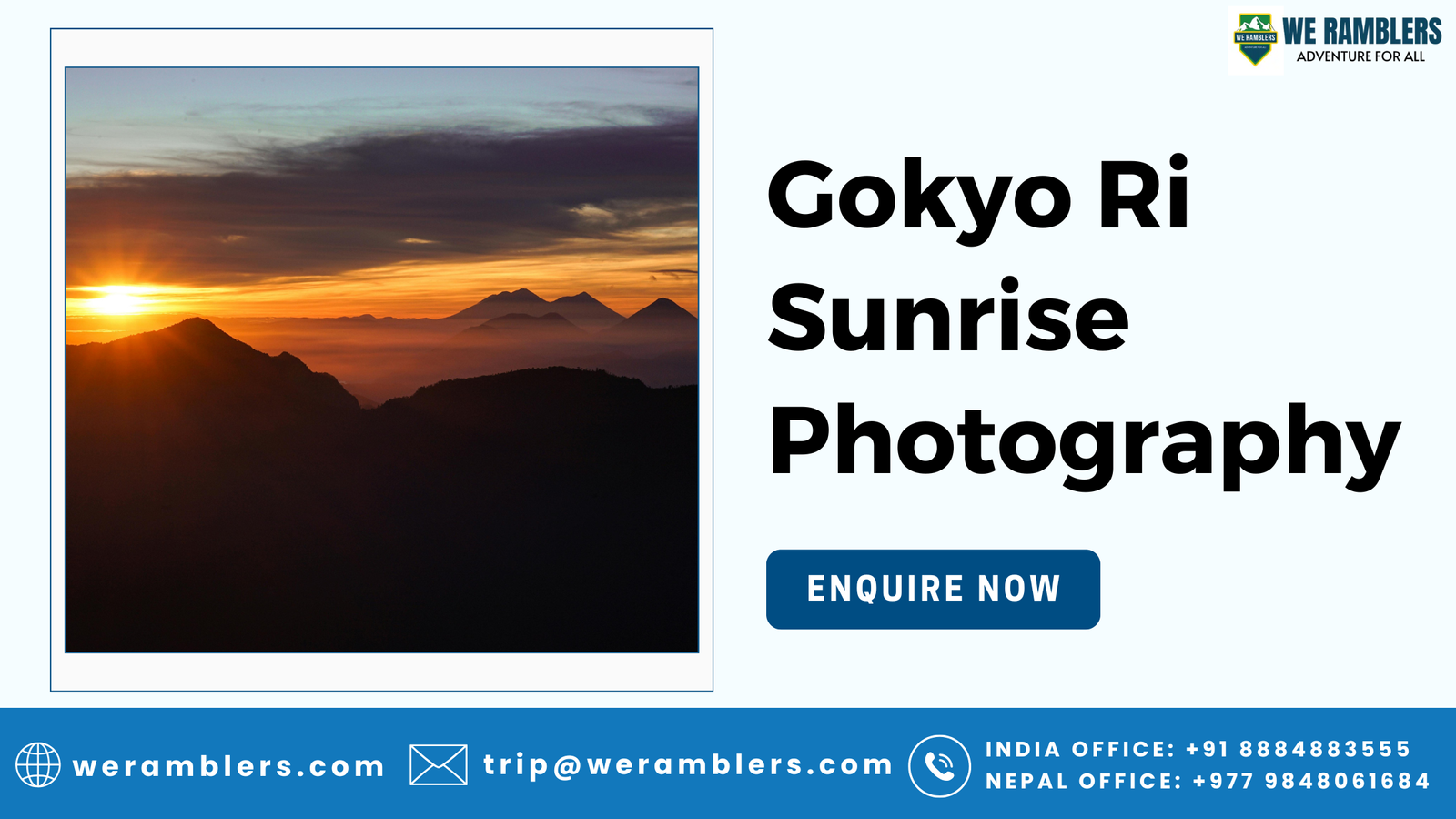
Sunrise from Gokyo Ri is considered the most dramatic moment of the day. The first rays of sunlight hit Everest’s summit with a golden glow while the rest of the Khumbu Valley slowly awakens.
Why Sunrise Works So Well
- Mountains face east, catching early sunlight
- Golden-hour hues illuminate snow and ice
- Clearer skies typical during early morning hours
- Gentle shadows create depth and contrast
- Everest appears sharper with less atmospheric haze
This is why Gokyo Ri Sunrise Photography is the highlight for most trekkers and photographers.
Best Time of Day for Gokyo Ri Photos
Understanding lighting conditions is essential for maximizing your Gokyo Ri viewpoint photos.
Sunrise
- Best lighting of the day
- Strong golden tones
- Minimal wind at the summit
- Crisp atmosphere for clarity
Sunset
- Dramatic colors behind Cho Oyu and the western skyline
- Soft side-light on Everest and Lhotse
- Less crowded compared to sunrise
Midday
- Not ideal for portraits but okay for documenting glacier details
For best time for photos Gokyo, sunrise is the clear winner for Everest shots, while sunset works beautifully for Gokyo Lake reflections and ridgelines.
Timing Your Ascent for Sunrise Photography
To capture sunrise from Gokyo Ri, planning is crucial.
When to Start the Climb
- Leave Gokyo Village 2 to 3 hours before sunrise, depending on fitness
- The climb is steep and at high altitude; go slowly
- Headlamps are necessary
- Dress in warm layers (windchill is harsh at the summit)
Aim to reach the summit 15–20 minutes before first light to prepare your gear and choose your spot.
Best Viewpoints on Gokyo Ri for Photography
There are multiple places on the mountain offering excellent vantage points.
Lower Viewpoint (45 minutes below the summit)
- Great sunrise spot if you cannot reach the top
- Less crowded
- Ideal for lake reflection shots
Main Summit Viewpoint
- Full 360-degree panorama
- Best position for Everest and Makalu
- Wide area for tripods
Right-Side Ridge Platform
- Perfect angle for the Gokyo Lakes
- Better for sunset photography
These locations are essential for capturing diverse and striking Gokyo Ri viewpoint photos.
Camera Settings for Gokyo Ri Sunrise Photography
High-altitude photography requires specific adjustments to handle bright snow, strong UV light, and fast-changing lighting conditions.
Recommended Camera Settings
Aperture
- Landscape: f/7.1 – f/11
- Sunrise silhouettes: f/4 – f/5.6
ISO
- Pre-sunrise: 400–800
- After sunrise: 100–200
Shutter Speed
- Pre-dawn shots: 1/30 – 1/100 (tripod recommended)
- After sunrise: 1/200 – 1/500
Exposure Compensation
+0.3 to +1.0 to counteract snow underexposure
White Balance
Daylight for natural tones
Cloudy for warmer sunrise tones
These settings give you a strong starting point for mastering Gokyo Ri Sunrise Photography.
Composition Techniques for Stunning Everest Photos
Composition can make or break your final images. Use these techniques to improve your Himalayan photography results.
Use Foreground Elements
Rocks, prayer flags, or ridgeline paths create depth.
Include Gokyo Lakes
Their emerald-blue color contrasts beautifully with the white mountains.
Frame Everest Properly
Use the “rule of thirds” to place Everest slightly off-center for a dynamic composition.
Shoot Vertical and Horizontal Versions
Vertical compositions emphasize height, while horizontal frames show the panorama.
Capture the Changing Light
Take multiple shots as sunlight spreads across the peaks.
These practices elevate the quality of Gokyo Ri viewpoint photos significantly.
Equipment Recommendations for High-Altitude Photography
You don’t need professional gear to capture stunning photos, but certain tools help.
Ideal Lenses
- Wide-angle lens (14–24mm or 16–35mm)
- Telephoto lens (70–200mm) for compressing peaks
- Prime lenses for low light if available
Accessories
- Lightweight tripod
- Lens cloths (condensation occurs often)
- Extra batteries (cold drains them quickly)
- Polarizing filter for lakes and glaciers
High-altitude cold reduces battery life, so keep spares close to your body.
Safety Tips for Gokyo Ri Photography
Proper safety ensures you enjoy photography without risk.
Acclimatize Properly
Do not attempt Gokyo Ri immediately after arriving; allow a rest day.
Avoid Slippery Trails
Snow and ice are common in early morning hours.
Wear Warm Clothing
Windchill at the summit can be severe.
Protect Your Gear
Condensation affects sensors and lenses; keep gear insulated.
These precautions help you focus on successful Gokyo Ri Sunrise Photography rather than managing avoidable problems.
Additional Tips for Gokyo Ri Sunset Shots
While sunrise is ideal for Everest, sunset offers stunning colors and tranquil lake reflections.
Best Sunset Techniques
- Shoot toward Cho Oyu for vivid sky colors
- Use long exposure (with tripod) to smooth lake water
- Adjust white balance to warmer settings
- Capture the silhouette of trekkers returning to Gokyo
Sunset provides some of the most atmospheric photography tips Everest photographers love.
Frequently Asked Questions (FAQs): Gokyo Ri Sunrise Photography
1. What time should I start climbing for Gokyo Ri sunrise?
Begin your ascent 2–3 hours before sunrise to ensure you reach the summit in time for Gokyo Ri Sunrise Photography.
2. What is the best time for photos in Gokyo?
Early morning is best for Everest views; sunset is great for Gokyo Lake reflections.
3. Are Gokyo Ri viewpoint photos better at sunrise or sunset?
Sunrise offers direct light on Everest, while sunset provides dramatic colored skies and lake reflections.
4. Do I need a tripod for sunrise photos?
A lightweight tripod is helpful for pre-dawn low-light shots but not mandatory once sunlight strengthens.
5. What camera settings work best for photography tips Everest style shots?
Use f/8–f/11, ISO 100–400, and +0.3 to +1 exposure compensation for snowy peaks.
Trek Gokyo Ri and the Everest Region with We Ramblers
Capturing world-class sunrise and sunset photos from Gokyo Ri requires not only skill but also safe planning and expert guidance. We Ramblers offers high-quality trekking itineraries that maximize your chances of experiencing—and photographing—the best of the Everest region.
Why trek with We Ramblers:
- Experienced local guides who know the best photography angles
- Acclimatization-focused itineraries for safe summit mornings
- Small group sizes for personal flexibility
- Reliable logistics from Kathmandu to Gokyo
- Transparent pricing with no hidden costs
Start your photographic Himalayan journey with We Ramblers and experience Gokyo Ri the right way.