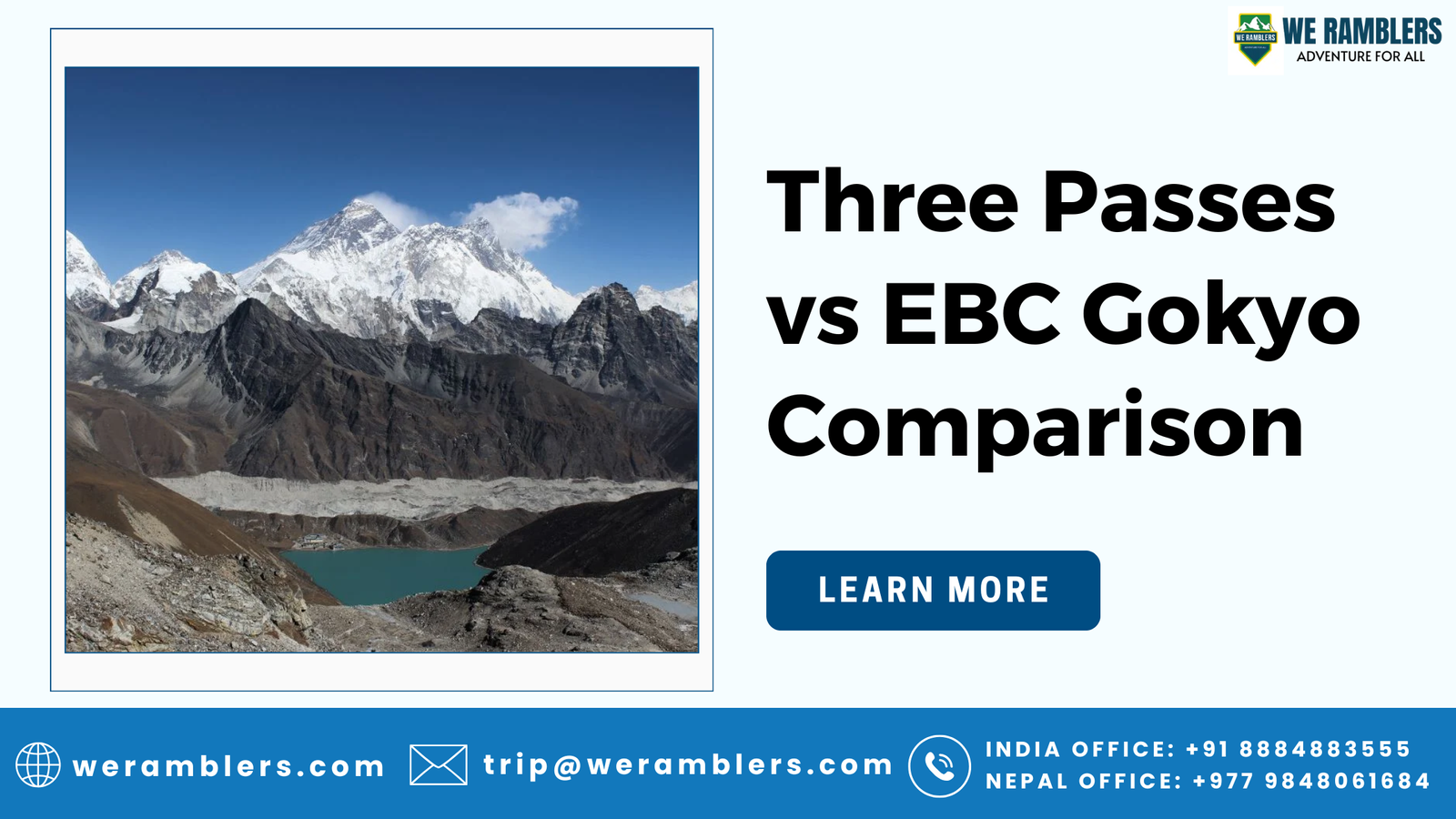
Route Alternatives & Comparisons: Gokyo + 3 Passes vs EBC Loop
The Everest region of Nepal offers some of the most spectacular trekking routes on the planet. Among these, the classic Everest Base Camp (EBC) loop, the Gokyo Valley route, and the challenging Three Passes Trek stand out as the most iconic journeys. Each trail provides something unique, from the turquoise lakes of Gokyo to the majestic glaciers of Khumbu, from high-altitude alpine passes to historic Sherpa villages like Namche and Tengboche.
If you’re trying to choose the best trek for your upcoming adventure, this detailed Three Passes vs EBC Gokyo Comparison guide will help you understand the similarities, differences, route features, difficulty levels, altitude profiles, and overall trekking experience.
Whether you’re an experienced Himalayan trekker or planning your first big expedition, understanding the Gokyo vs EBC debate and the pros/cons of the Three Passes alternate routes ensures you select the perfect journey.
Overview of the Three Trek Variants
1. Everest Base Camp (EBC) Classic Route
The most famous trekking trail in Nepal. It takes you through Sherpa villages, suspension bridges, monasteries, and eventually to the world-renowned Everest Base Camp (5,364 m) and Kala Patthar (5,545 m).
2. Gokyo Valley Route
This stunning alternate route leads you to the pristine Gokyo Lakes and the incredible viewpoint of Gokyo Ri (5,357 m), offering dramatic panoramas of Everest, Cho Oyu, and the Ngozumpa Glacier — the longest glacier in Nepal.
3. Everest Three Passes Route
This is the most challenging yet most rewarding route. It includes crossing all three high passes:
- Kongma La (5,535 m)
- Cho La (5,420 m)
- Renjo La (5,360 m)
These passes connect the EBC trail with Gokyo Valley, offering a circular expedition where trekkers experience all major Everest highlights.
Understanding the unique features of each route is essential for a complete Three Passes vs EBC Gokyo Comparison.
Three Passes vs EBC Gokyo Comparison: What Sets These Routes Apart?
Below is a full breakdown of what makes these routes different in terms of difficulty, scenery, acclimatization, route flow, culture, and trekking experience.
1. Route Difficulty: Which Trek Is Harder?
If difficulty is your deciding factor, the Three Passes trek is undoubtedly the most demanding.
Three Passes
- Requires advanced endurance
- Long trekking hours (7–9 hours per day)
- Steep, rocky ascents and descents
- High altitude exposure continuously
The crossings of Kongma La, Cho La, and Renjo La are physically taxing and require stable weather windows.
Gokyo + EBC Loop
Moderate-challenging. The ascent to Gokyo Ri and Cho La Pass can be steep but manageable for experienced trekkers.
Classic EBC Route
The “simplest” of the three — still challenging at high altitude but without technical elements.
Winner (Hardest Route): Three Passes Trek
A key part of the Three Passes vs EBC Gokyo Comparison is acknowledging the difficulty gap.
2. Scenic Variety: Lakes, Glaciers & High Passes
Three Passes
Provides the widest variety:
- Crystal blue Gokyo Lakes
- Ngozumpa Glacier
- Amphitheater views from Renjo La
- Alpine ridges
- The dramatic Chhukung Valley
- Panoramic 360° Himalayan views
It’s the most complete visual experience.
Gokyo Route
Famous for magical lake views and phenomenal sunrise shots from Gokyo Ri.
EBC Classic
Offers iconic views of Everest but fewer lakes and glacier lakes when compared to Gokyo.
Winner (Most Scenic): Three Passes Trek
3. Acclimatization & Altitude Considerations
Altitude affects everyone differently. Your choice of route should consider acclimatization days and altitude exposure.
Three Passes
Highest overall altitude exposure. The passes are above 5,300 m, increasing AMS risk. You need good acclimatization.
Gokyo + EBC
Smooth acclimatization progression — Gokyo Ri offers an excellent acclimatization climb.
EBC Classic
Most structured and beginner-friendly acclimatization plan.
For anyone comparing acclimatization needs, the Three Passes vs EBC Gokyo Comparison clearly shows Three Passes requires the most preparation.
4. Trekking Duration & Route Flow
Three Passes Route Duration
18–21 days
A full circuit without backtracking.
Gokyo + EBC Loop Duration
13–15 days
Includes Cho La Pass to reach EBC.
EBC Classic Trek Duration
10–12 days
Shortest and most direct.
5. Traffic & Trail Crowds
Crowd levels are a major deciding factor for trekkers.
Three Passes
Least crowded because of difficulty. Offers solitude and raw Himalayan wilderness.
Gokyo Route
Moderate traffic. Much less crowded than the EBC classic trail.
EBC Loop
Most crowded — especially during peak seasons.
Winner (Most Peaceful Trail): Three Passes or Gokyo Route
6. Cultural Experience
All routes include Sherpa culture, monasteries, stupas, and Mani walls.
Best cultural immersion:
- Namche Bazaar
- Khumjung
- Tengboche Monastery
All three treks offer strong cultural exposure, though Gokyo Valley often provides calmer village interactions due to fewer trekkers.
Kongma La, Cho La & Renjo La — Pass-by-Pass Comparison
To enhance your Three Passes vs EBC Gokyo Comparison, let’s examine the three passes individually.
Kongma La Pass (5,535 m)
- Highest and hardest pass
- Steep, long ascent
- No tea houses on the crossing day
- Rugged alpine terrain
Best for experienced trekkers with strong acclimatization.
Cho La Pass (5,420 m)
- Connects EBC trail with Gokyo Valley
- Glacier crossing (depending on season)
- Icy, rocky terrain
- Slippery in winter
This is the main link between Gokyo and EBC in the Three Passes alternate routes.
Renjo La Pass (5,360 m)
- Most beautiful pass
- Clear views of Everest, Gokyo Lakes & Makalu
- Less technical
- Stunning sunrise point
If you are doing a Gokyo vs EBC comparison, Renjo La is the best highlight of the Gokyo variant.
Which Route Should You Choose?
Choose Three Passes Trek if:
- You want a full Himalayan challenge
- You’re experienced and physically fit
- You want maximum scenery and solitude
- You want to complete the ultimate Everest loop
Choose Gokyo + EBC if:
- You want great variety without extreme difficulty
- You want the best panoramic viewpoints
- You want to avoid crowds
- You want the perfect balance of lakes + Everest
Choose Classic EBC if:
- You’re a beginner
- You have limited time
- You want a straightforward trail
Your choice should depend on time, fitness level, acclimatization history, and trekking preferences.
FAQs on Three Passes vs EBC Gokyo Comparison
1. Which is harder: Three Passes or Gokyo + EBC?
The Three Passes Trek is significantly harder due to high altitude and long crossing days. This is the key difference in the Three Passes vs EBC Gokyo Comparison.
2. Is the Gokyo route better than the EBC route?
The Gokyo route is quieter and more scenic, offering lakes and panoramic views. For trekkers comparing Gokyo vs EBC, Gokyo offers more diverse scenery.
3. Do you need technical skills for the Three Passes alternate routes?
No technical climbing skills are required, but good fitness and prior high-altitude experience help immensely.
4. Which pass is the most difficult: Kongma La, Cho La, or Renjo La?
Kongma La is the hardest, Cho La can be icy, and Renjo La is the most scenic and moderately challenging. This trio defines the Kongma La Cho La Renjo La comparison.
5. Which trek offers the best Himalayan views?
The Three Passes trek offers the widest scenic diversity, making it the best option for panoramic Himalayan photography.
Plan Your Perfect Everest Region Trek with We Ramblers
Choosing the right Everest region route is crucial, and having expert guidance makes the experience even better.
At We Ramblers, we offer professionally guided treks across the Everest, Annapurna, Langtang, Mustang, and Manaslu regions. Our team ensures safe acclimatization, expert local navigation, small group experiences, and high-quality logistics.
Why trek with us?
- ✔ Experienced local guides
- ✔ Acclimatization-focused itineraries
- ✔ Safe, reliable, and comfortable logistics
- ✔ Flexible route choices: EBC, Gokyo, Three Passes & more
- ✔ Personalized trekking support
Book your Everest adventure with We Ramblers today and explore the Himalayas with confidence, comfort, and expert guidance.