
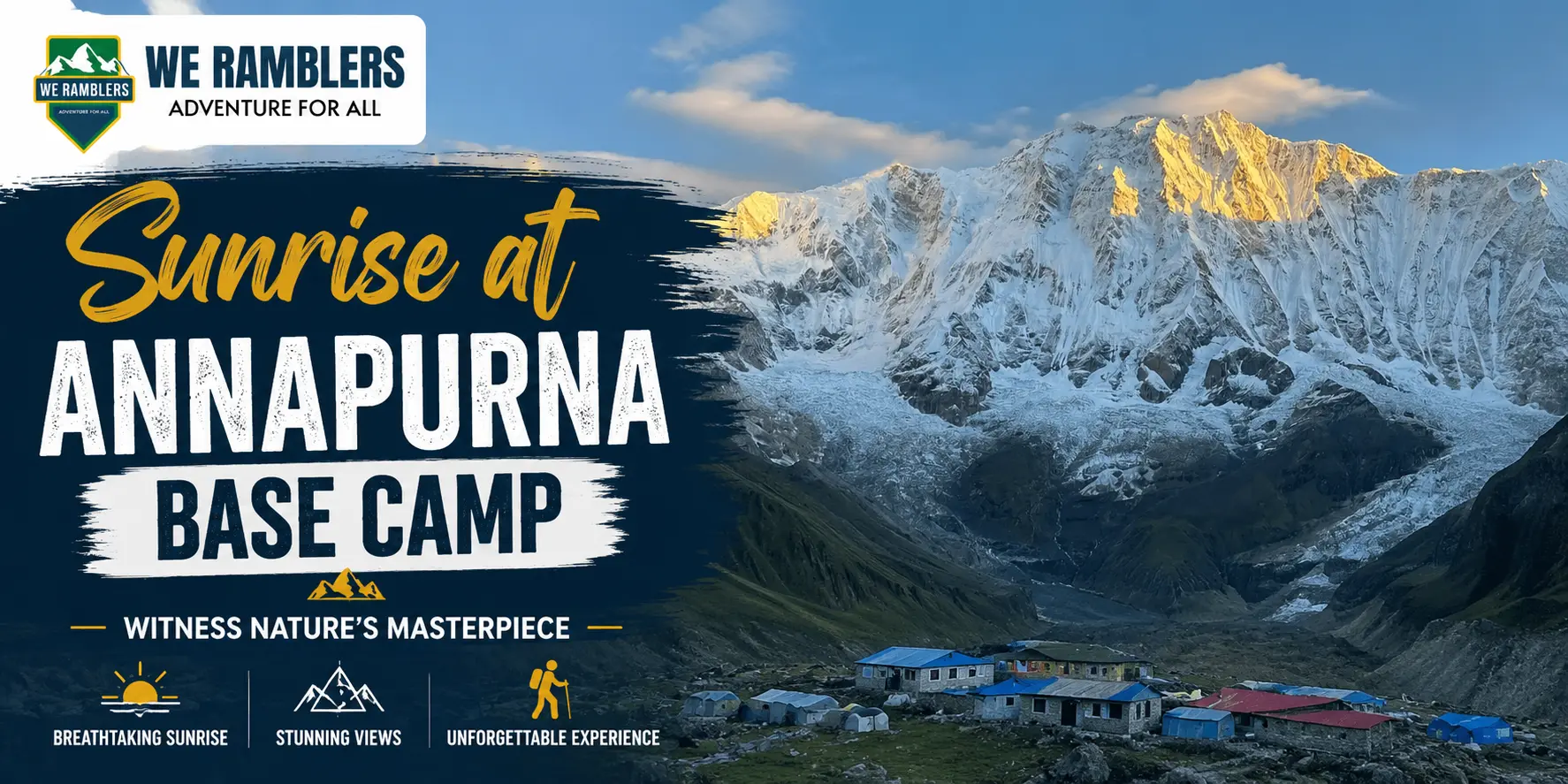
There is a reason so many trekkers set an alarm for well before dawn on their final night at Annapurna Base Camp. Watching the sunrise from ABC, surrounded by some of the tallest peaks in the Annapurna range, is often described as the single most memorable moment of the entire Annapurna Base Camp Trek. The light, the silence, and the sheer scale of the mountains coming alive at first light make it an experience worth planning for.
This guide covers exactly what to expect when watching sunrise at Annapurna Base Camp, along with practical photography tips to help you capture the moment properly instead of fumbling with your camera in the cold.
Why Sunrise at ABC Is Such a Big Deal
Annapurna Base Camp sits at 4,130 meters, surrounded almost entirely by a ring of towering peaks including Annapurna I, Annapurna III, Annapurna South, Machhapuchhare, Hiunchuli, Gangapurna, and Tarke Khang. This natural amphitheater is what makes the sunrise here so different from watching a sunrise anywhere else. Instead of watching the sun rise over a flat horizon, you watch it slowly illuminate an entire circle of snow-capped summits, one after another, as the light shifts from soft pink to golden orange.
Because the base camp is enclosed by mountains on nearly every side, the sunrise unfolds gradually rather than all at once. The first light usually catches the highest peaks first, painting them in warm colors while the base camp itself and the surrounding glacier remain in shadow a little longer. This delay between the mountains lighting up and the valley floor catching the same light is part of what makes the whole experience feel so dramatic.
What to Expect on Sunrise Morning
Most trekkers wake up well before sunrise, often while it is still completely dark and bitterly cold outside their tea house room. Since ABC sits at a high altitude, mornings here are consistently cold regardless of the season, so stepping outside before the sun is up requires proper preparation.
The sky typically begins to shift color gradually, moving through shades of deep blue, then soft pink, before the first rays hit the highest summits. Machhapuchhare, with its distinctive fishtail peak, is often one of the most photographed mountains during this moment, since its unique shape catches the early light in a particularly striking way.
As the sun continues to rise, the light moves down the mountain faces, eventually reaching the base camp area itself. This is usually when temperatures start to feel slightly more bearable, though it still remains cold enough that most trekkers keep their jackets on throughout the entire viewing experience.
Best Time of Year to See a Clear Sunrise
Weather plays a major role in how visible the sunrise actually is, so timing your trek well matters. The spring months of April and May, along with the autumn months of October and November, generally offer the clearest skies and the best visibility for sunrise views. During these seasons, cloud cover tends to be minimal in the early morning hours, giving trekkers a much higher chance of an unobstructed view of the surrounding peaks.
Trekking during the monsoon season increases the likelihood of cloud cover blocking the sunrise entirely, while winter months can offer clear skies but require trekkers to handle significantly colder morning temperatures at the viewpoint.
How to Prepare for the Sunrise Viewing
- Layer up properly, since temperatures at ABC before sunrise often drop well below freezing
- Wear a warm hat, gloves, and thermal layers in addition to your regular trekking jacket
- Bring a headlamp, since you will likely be walking to your viewing spot in the dark
- Carry a hot drink or thermos if your tea house allows it, to help you stay warm while waiting
- Wake up with enough time to find a good spot before the light show actually begins
Most tea houses at Annapurna Base Camp are positioned with reasonably good views, but stepping just a short distance outside often opens up a wider, unobstructed panorama of the surrounding peaks.
How to Photograph Sunrise at Annapurna Base Camp
Capturing a good sunrise photo at ABC is less about having expensive gear and more about preparation and timing.
Get There Early
Arrive at your chosen viewing spot at least fifteen to twenty minutes before the sky starts changing color. The pre-dawn light itself often produces some of the most beautiful and underrated shots, with soft blue tones across the snow before the sun even appears.
Use a Tripod if You Can
Low light conditions before sunrise mean slower shutter speeds are often necessary. A lightweight travel tripod helps avoid blurry shots, especially if your hands are cold and slightly shaky, which is common at this altitude.
Protect Your Camera Battery
Cold temperatures drain camera batteries much faster than usual. Keep spare batteries in an inner jacket pocket close to your body to keep them warm, and swap them out as needed during the shoot.
Frame the Peaks, Not Just the Sun
Rather than photographing the sun directly, focus on capturing the way light spreads across peaks like Machhapuchhare and Annapurna South. The changing colors on the snow often make for a far more compelling photo than the sun itself.
Shoot in Manual Mode if Possible
Automatic settings can struggle with the extreme contrast between bright snow and darker shadow areas during sunrise. Shooting in manual mode, or at least adjusting exposure compensation, gives you more control over how the final image turns out.
Do Not Forget the Foreground
Including elements like prayer flags, the ABC signboard, or fellow trekkers in your shots adds scale and context, making the mountains appear even more massive by comparison.
Capture the Moment Before and After Too
Some of the best shots come a few minutes before the sun actually appears, or shortly after, when the light is softer and less harsh than during peak sunrise itself.
Where to Stand for the Best View
Since Annapurna Base Camp is surrounded by peaks on multiple sides, the exact spot you choose can slightly change your view. Many trekkers find that standing near the famous ABC signboard offers a good balance of open sky and mountain backdrop, making it a popular and practical choice for both viewing and photography. Walking a short distance beyond the main tea house cluster can also open up a slightly wider, less obstructed panorama if you prefer more space for your shot.
Frequently Asked Questions
What time should I wake up to see sunrise at Annapurna Base Camp?
Most trekkers wake up well before dawn, typically allowing at least thirty minutes to layer up, walk to a viewing spot, and settle in before the sky begins to change color.
Is it very cold watching the sunrise at ABC?
Yes, temperatures at 4,130 meters are consistently cold before sunrise, so warm layers, gloves, and a hat are essential regardless of the season you are trekking in.
Which mountain looks best during sunrise at Annapurna Base Camp?
Machhapuchhare, known for its distinctive fishtail shape, is one of the most photographed peaks during sunrise due to how strikingly it catches the early morning light.
Do I need special camera gear to photograph the sunrise?
No special gear is required, though a tripod and spare batteries help significantly, since low light and cold temperatures can affect both image stability and battery performance.
What is the best season for a clear sunrise view at ABC?
Spring and autumn generally offer the clearest skies and best sunrise visibility, while monsoon season increases the risk of cloud cover blocking the view.
Can I see the sunrise from my tea house, or do I need to walk somewhere?
Many tea houses offer a reasonable view, but walking a short distance to a more open area, such as near the ABC signboard, typically provides a wider and more unobstructed panorama.
Is the sunrise at Annapurna Base Camp better than at Poon Hill?
Both offer distinct experiences. Poon Hill provides a wide panoramic view from a dedicated viewpoint, while ABC offers a closer, more immersive sunrise surrounded directly by the Annapurna peaks themselves.
Final Thoughts
Watching the sunrise at Annapurna Base Camp is one of those experiences that photographs never quite do justice to, though it is still worth trying to capture properly. The combination of freezing temperatures, complete stillness, and the surrounding ring of Himalayan giants slowly catching the morning light creates a moment that stays with trekkers long after they leave the mountains behind.
If you want to experience this sunrise for yourself, explore the Annapurna Base Camp Trek package with We Ramblers, or get in touch with our team to plan your trip around the clearest seasons for mountain visibility.