What is it about a single pass in the course of a three-day trek that makes all the difference in determining how the pilgrims label their trek — as a successful experience or a tough battle?
The answer is always the same: Dolma La Pass Kailash. Individuals who have finished the Kailash Parikrama will tell you that no matter how easy the journey may be, the Dolma La pass is still the hardest aspect of the trek. Everything about the journey can be planned in advance, but Dolma La cannot. Its nature does not allow you to make any arrangements depending on how physically fit you are or how many previous hikes you have done.
This blog tries to answer many questions. It offers all the essential information on the location of the pass, what makes it so hard, what happens to one’s body and mind during the crossing, and some realistic tips about preparation—because hope cannot help anyone in this case.
All About Dolma La Pass Altitude and Location
The Dolma La Pass is located within the Purang County of Tibet, in the Ngari Prefecture, and is found at the northern side of Mt. Kailash. Its altitude is about 5,630m (18,471 feet) high, where oxygen availability has decreased to half of what it is at sea level.
The Dolma La Pass Altitude explains clearly the difference felt throughout the day while parikrama. It means that walking uphill at such altitude requires short breaths, greater heart rate when a person is at rest, and slower speed regardless of one’s will. While the Dolma La Pass Height might not be that impressive in absolute terms of mountaineering, it is still interesting to know that even flat ground can be quite tough in such an altitude.
Why Dolma La Pass is the Highest Point of the Kailash Kora
The Kailash Parikrama, known in Tibetan Buddhism as Kora, is a circuit of about 52 kilometers that is usually done in three days, with every point along the way lying below Dolma La, the highest point Kailash Kora, which is what makes the second day of the journey so different.
The Dolma La Pass Trek from Dirapuk to the Summit
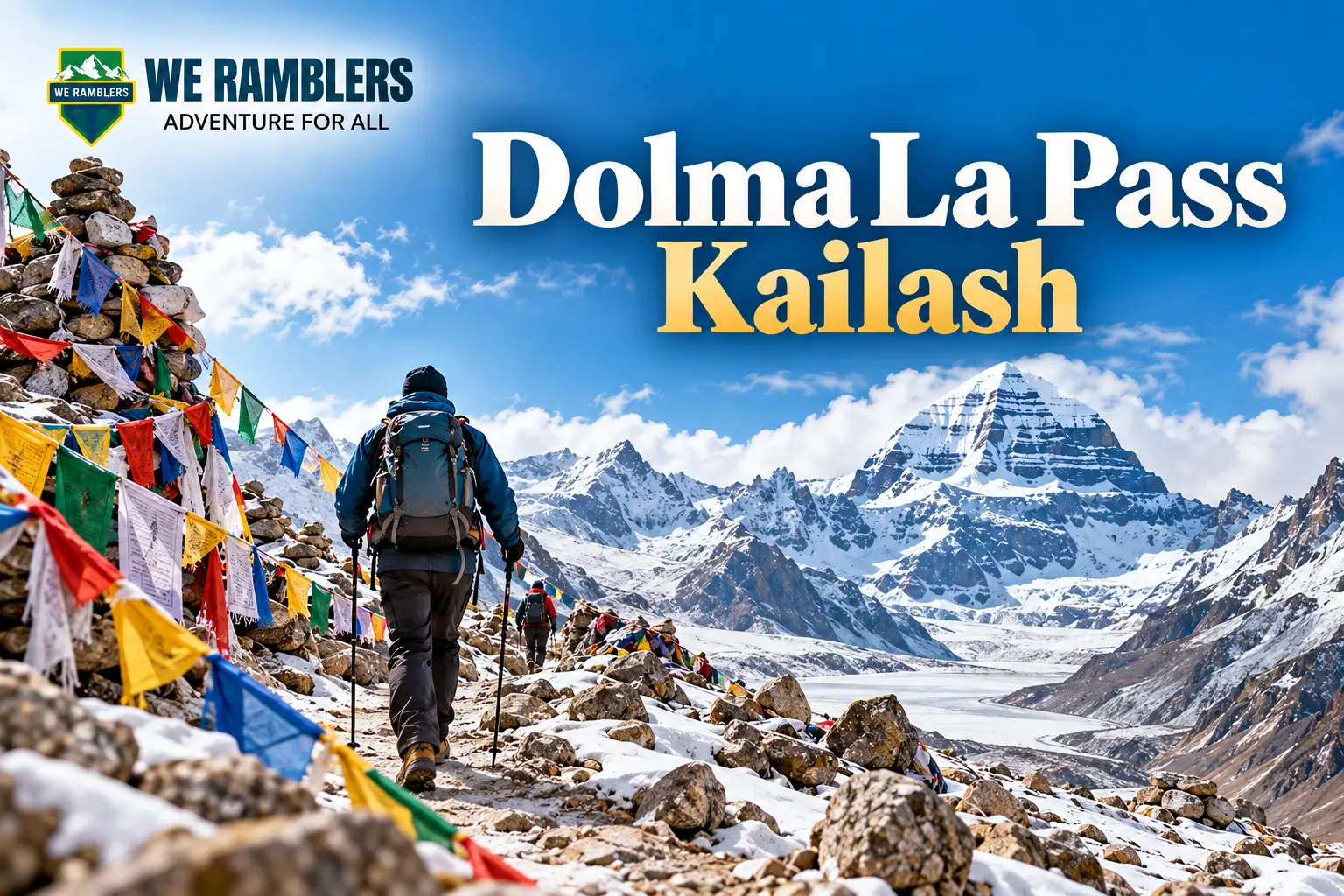
The Dolma La Pass trek is usually started in the early morning, typically between 3-4 am, from Dirapuk (sometimes transcribed as Deraphuk) at an altitude of about 4900-5000 meters above sea level. From Dirapuk, it takes about 3-5 hours to trek the 9km climb to the top of the pass, depending on the trekkers’ speed, weather, and altitude adjusted capability of the body. The trail begins in a smooth valley, with a gentle inclination before it turns steep, rocky, and with very little flat parts to take proper rest. Local people refer to this part of the trek as “the hell slopes,” which describes the severity of the climb quite well.
All About the Dolma La Pass Difficulty
The tough part associated with climbing the Dolma La Pass is not due to technical climbing gear usage or anything of that sort. The challenge involved has more to do with the thin air, steep gradient uphill, cold, and unpredictable weather.
Risks Associated with Dolma La Pass Altitude Sickness
Dolma La Pass Altitude Sickness is one of the biggest safety concerns. With the pass’s summit situated at approximately 5,630 meters, this is particularly pertinent for anyone who has not acclimatized properly or been too ambitious in their schedule, as Acute Mountain Sickness can set in very quickly.
Some of the most important symptoms include headaches, vomiting, and irregular breathing that won’t stabilize even with rest. The usual recommendations in such cases are simple: if any symptoms develop and do not go away, you should descend from the place of danger. No pilgrimage is worth ignoring this important rule, as skilled tour leaders can see when something is wrong and it is necessary to turn back rather than continue pushing forward.
Terrain, Weather and the Descent
In addition to the height, the ground is loose, rocky, and steep, making it challenging to navigate. Weather at such heights can change with very little warning. Strong winds or sudden drops in temperature are not uncommon, even in apparently clear conditions. Many climbers are surprised to find that the downward journey is much more difficult than the journey to the top. The gravel and extended downward slope can cause significant stress on the knees in the later part of the day when people are already tired.
The Dolma La Pass Significance from a Spiritual Angle
Despite its challenging nature, Dolma La Pass represents much more than an endpoint in terms of altitude and ruggedness. The meaning of Dolma La Pass is key to understanding why different faiths send their followers to it instead of viewing it merely as an obstacle to be overcome.
Buddhist Beliefs Associated With Dolma La Pass
In Tibetan Buddhism, Dolma La was named after Dolma, or Tara, the goddess of compassion and guard. By crossing the pass, one pursues spiritual awakening, which is the very essence of the Kora.
Hindu Beliefs Associated with the Pass
The Hindu tradition associates the pass with the goddess Parvati. Crossing it symbolizes the shedding of whatever burdens, sins and sorrows a person had been carrying throughout the journey. Different religions have their own interpretations of this phenomenon, but the principle is the same; it is not an ordinary crossing that a person does physically.
Gauri Kund and the View from Dolma La Pass
Beyond the route lies Gauri Kund Dolma La Pass, and the travelers who have passed through always speak in the same breath about Gauri Kund Dolma La Pass. This small but sacred lake is linked with Parvati according to Hindu beliefs. Moreover, coming just after completing the toughest trek of the day, visiting the lake makes this part of the trek extra significant. During a clear day, the combination of the prayer flags, the lake below, and the first look at the eastern side of Kailash makes it very memorable.
Dolma La Pass and the Rest of the Kailash Parikrama
Getting to know how Dolma La Pass fits in the context of Dolma La Pass Kailash Parikrama helps us to understand how challenging the second day of the trek really is. On the first day, you will have an easy stroll from Darchen to Dirapuk with no difficulties, as the day will be comparatively flat and not too hard for inexperienced travelers. However, during the second day, you will again have to climb and cross Dolma La. On the third day of the Dolma La Pass trek, you will experience an easier task, as you will need to go down to Zuthulphuk and back to Darchen. But even though this day is easier than the second day, it still may take a long time to travel. All the above-mentioned illustrates why so much preparation advice dealing with parikrama has been committed specifically to the second day.
How to Prepare for Dolma La Pass Crossing
Preparation for this one day becomes of utmost importance seemingly even more than at any other period in the Kailash area.
Acclimatization Before the Crossing
An acclimatization scheme before arriving at Dirapuk, usually during the way through Lhasa or Taklakot, helps the body cope with the last steep ascent tremendously. The most common mistake of trekkers at the pass is rushing the process and thus ruining the chances for success.
Things to Bring on the Crossing Day
A quality down jacket, clothing layers, which can be put on/taken off, trekking poles for managing the steep descent, as well as water and edible snacks for a long hike, are more important than any special equipment for this matter. As the hike starts in the dark, a reliable headlamp is also necessary for the first couple of hours of the hike.
Final Thoughts
With its lack of technical difficulty, Dolma La Pass does not require any climbing abilities; however, it’s still where a perfect mix of experience, perseverance, and regard for the altitude is needed more than anywhere else along the Kailash route. Understanding what that day actually means, both physically and spiritually, before you end up at the foot of those dreadful slopes at night makes a difference to how the crossing is experienced.
If you would like to go on a Kailash Manasarovar trek and are looking to find a team that has lead trekkers during similar crossings, get in touch with We Ramblers to discuss your plans and preparation.
Frequently Asked Questions
What is the Oxygen Level at Dolma La Pass Kailash?
At around 5,630 meters, the amount of oxygen present at Dolma La Pass is just about half of that at sea level. This is what makes even the shortest of climbs feel so much harder than at lower elevations and is also the main reason why acclimatization is vital before trying to cross.
Is Dolma La Pass Kailash Harder than Everest?
Not the way the majority of people view it. Climbing Everest requires real technical climbing skills, ropes, crampons, ice falls, and years of preparation, while Kailash Parikrama, which includes Dolma La Pass, involves no technical climbing, yet it requires you to walk at an altitude of over 5600m along a short but challenging trail. Therefore, Mount Everest is more challenging regarding the technical climbing but Dolma La Pass may not be any easier in terms of physical effort because a climber gets to climb to such a high place almost in an instant.
What is Dolma La Pass Kailash?
Dolma La Pass is the highest point of the Kailash Parikrama at about 5,630 meters. Located on the northern side of Mount Kailash in Tibet, it is seen not only as the toughest but also the most auspicious part of this trek.
Which Pass is used for Kailash Mansarovar?
Dolma La Pass is the key pass crossed during Kailash Parikrama, the trek around Mount Kailash. It is reached on the second day of this three day trek, having begun at Dirapuk.