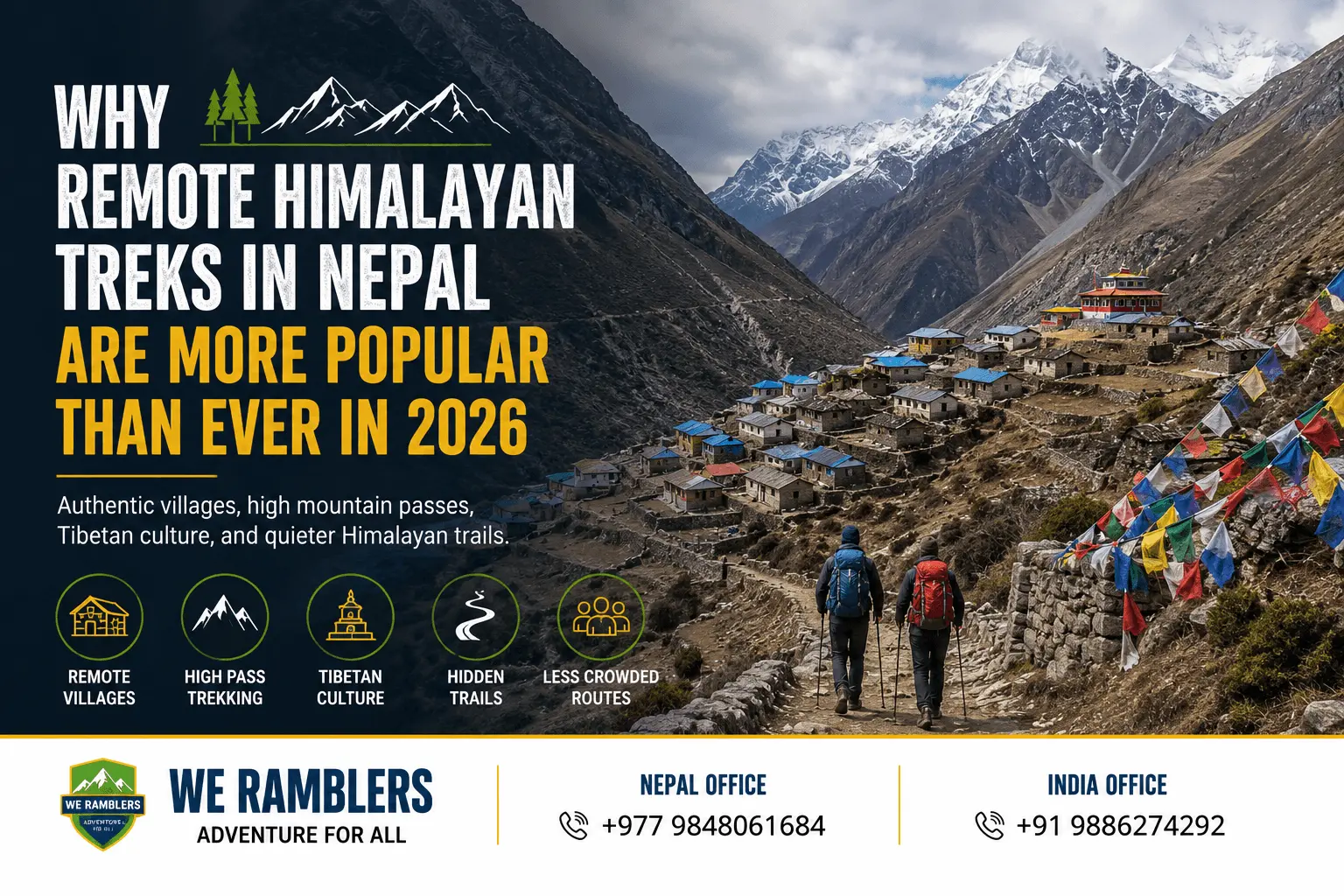
Nepal trekking tourism is changing in 2026. Many trekkers now prefer remote Himalayan trekking routes instead of crowded Everest Base Camp and Annapurna trails. Adventure travellers want quieter mountain experiences, authentic village culture, and less commercial tourism. Remote trekking regions in Nepal now attract experienced hikers, solo trekkers, photographers, and cultural travellers from Europe, Australia, the United States, and Southeast Asia.
According to Nepal Tourism Board reports, trekking arrivals increased after 2023, while interest in offbeat trekking routes also grew rapidly. Search demand for terms like “remote Nepal treks,” “hidden Himalayan trails,” and “restricted area trekking Nepal” increased across travel platforms and Google Trends.
Remote Himalayan trekking offers:
- fewer crowds
- untouched landscapes
- stronger local interaction
- high mountain adventure
- cultural immersion
- wilderness experience
These trekking routes create deeper travel experiences compared to commercial trekking circuits.
Why Remote Himalayan Treks in Nepal Are Replacing Crowded Trekking Routes
Popular trekking routes in Nepal still attract thousands of visitors every year. Everest Base Camp receives over 40,000 trekkers annually during strong tourism years. Annapurna Circuit and Annapurna Base Camp also remain heavily visited.
Many trekkers now avoid overcrowded trekking trails because:
- teahouses become congested
- trails feel commercialised
- trekking traffic increases
- noise reduces mountain experience
- local authenticity decreases
Remote Himalayan trekking routes offer slower and quieter travel experiences.
Comparison Between Popular and Remote Nepal Treks
| Trekking Factor | Popular Trekking Routes | Remote Himalayan Treks |
| Crowd Level | High | Low |
| Cultural Authenticity | Moderate | Strong |
| Trail Commercialisation | High | Minimal |
| Wilderness Experience | Limited | Extensive |
| Accommodation Quality | Comfortable | Basic but authentic |
| Adventure Level | Moderate | High |
| Permit Restrictions | Few | Often required |
Trekkers now value experience quality more than famous destination names.
Remote Himalayan Trekking Routes in Nepal Offer Strong Wilderness Experiences
Remote Himalayan regions contain some of Nepal’s most isolated mountain landscapes. These areas include deep valleys, glacial rivers, alpine forests, yak pastures, and snow-covered mountain passes.
Popular remote trekking regions include:
- Upper Dolpo
- Nar Phu Valley
- Kanchenjunga Base Camp
- Upper Mustang
- Manaslu Circuit
- Makalu region
- Tsum Valley
These trekking routes provide stronger wilderness exposure because modern infrastructure remains limited.
Trekkers experience:
- fewer vehicles
- fewer buildings
- natural silence
- untouched ecosystems
- traditional mountain lifestyles
Many remote trekking routes also pass through conservation areas that protect Himalayan wildlife.
Wildlife found in remote Nepal trekking regions includes:
- snow leopard
- Himalayan blue sheep
- musk deer
- Himalayan monal
- Tibetan wolf
Biodiversity increases the adventure value of remote Himalayan trekking.
High Mountain Pass Trekking in Nepal Attracts Adventure Travellers
High mountain passes are one of the biggest reasons why remote Himalayan trekking is becoming more popular. Many remote treks include passes above 5,000 meters. These crossings test endurance, acclimatisation, and mental strength.
Popular high passes include:
| High Pass | Elevation |
| Larkya La Pass | 5,106 m |
| Kang La Pass | 5,320 m |
| Mesokanto La Pass | 5,099 m |
| Amphu Laptsa Pass | 5,845 m |
Trekkers choose these routes because they provide:
- panoramic Himalayan views
- stronger physical challenge
- glacier crossings
- remote camping experiences
- technical trekking sections
Adventure travellers often describe high mountain passes as the highlight of their Nepal trekking journey.
Tibetan Buddhist Culture Makes Remote Nepal Treks More Meaningful
Remote Himalayan villages preserve traditional Tibetan Buddhist culture more strongly than commercial trekking regions.
Trekkers regularly encounter:
- ancient monasteries
- mani walls
- prayer wheels
- Buddhist stupas
- yak caravans
- traditional stone villages
Many villages still follow centuries-old Himalayan traditions. Regions near the Tibetan border maintain unique cultural identities because geographic isolation reduced outside influence for decades. Trekkers often stay inside local teahouses operated by mountain families. This creates direct interaction with local communities.
Cultural experiences during remote Himalayan trekking include:
- monastery visits
- Buddhist festivals
- local food traditions
- yak farming culture
- mountain trading history
These cultural interactions increase emotional connection with the trekking experience.
Restricted Area Trekking in Nepal Protects Local Culture and Nature
Several remote trekking areas in Nepal require special trekking permits.
Restricted trekking regions include:
- Upper Mustang
- Upper Dolpo
- Nar Phu Valley
- Manaslu region
- Tsum Valley
The Nepal government introduced restricted area permits to:
- protect local traditions
- control tourism impact
- preserve fragile ecosystems
- manage border security
- reduce over-tourism
Restricted permits also naturally reduce trekking crowds.
Nepal Restricted Area Permit Costs
| Trekking Region | Approximate Permit Cost |
| Upper Mustang | USD 500 for 10 days |
| Upper Dolpo | USD 500 for 10 days |
| Manaslu Restricted Area | USD 100 to USD 150 |
| Nar Phu Valley | USD 100 |
Permit prices vary by season and duration. Because visitor numbers remain controlled, these trekking regions maintain stronger authenticity compared to heavily commercialised trails.
Remote Himalayan Trekking Difficulty Requires Strong Physical Preparation
Remote trekking in Nepal demands physical endurance and proper preparation. Trekkers usually walk between 6 and 9 hours daily at high altitude.
Major trekking challenges include:
- altitude sickness risk
- steep ascents
- rough terrain
- cold temperatures
- limited medical access
- unstable mountain weather
Altitude sickness becomes common above 3,000 meters.
Trekkers reduce altitude risk by:
- ascending slowly
- drinking more water
- taking acclimatisation days
- avoiding alcohol
- maintaining energy intake
Essential Remote Trekking Gear
| Gear Category | Important Items |
| Clothing | down jacket, thermal layers, waterproof shell |
| Footwear | trekking boots, wool socks |
| Safety | first aid kit, headlamp, water purifier |
| Sleeping | sleeping bag rated below -10°C |
| Navigation | trekking map, GPS device |
Preparation directly affects trekking safety and success.
Best Seasons for Remote Himalayan Trekking in Nepal
Spring and autumn remain the best trekking seasons in Nepal.
Spring Trekking Season in Nepal (March to May)
Spring offers:
- blooming rhododendron forests
- moderate temperatures
- stable weather
- clear mountain visibility
Average daytime temperatures range between 10°C and 20°C in mid-hill regions.
Autumn Trekking Season in Nepal (September to November)
Autumn provides:
- dry weather
- low rainfall
- excellent mountain visibility
- safer high-pass crossings
Autumn is Nepal’s busiest trekking season because post-monsoon skies remain very clear.
Winter and Monsoon Trekking Conditions
Winter trekking creates:
- heavy snowfall
- frozen passes
- extreme cold
Monsoon trekking creates:
- slippery trails
- landslide risk
- poor visibility
- leech problems in lower regions
Season selection affects trekking safety, scenery, and overall experience quality.
Sustainable Adventure Travel Trends Are Increasing Remote Nepal Trekking
Global travel behaviour changed after the pandemic years. Modern travellers now prefer meaningful and sustainable travel experiences.
Adventure tourism reports show increasing demand for:
- eco-tourism
- slow travel
- cultural immersion
- nature-based tourism
- low-density destinations
Remote Himalayan trekking matches these travel trends because it supports:
- local teahouse economies
- mountain communities
- cultural preservation
- conservation tourism
Trekkers increasingly choose experiences that create local economic benefit instead of mass tourism pressure. This trend will likely continue throughout 2026 and beyond.
Why Remote Himalayan Trekking in Nepal Will Continue Growing
Remote Himalayan trekking combines adventure, culture, nature, and physical achievement in one journey.
Trekkers now value:
- authentic experiences
- personal challenge
- cultural depth
- wilderness exploration
- low-tourism destinations
Nepal’s remote mountain regions provide all of these experiences together. Improved global awareness, social media exposure, and changing travel preferences will continue increasing demand for offbeat Himalayan trekking routes. For trekkers who want more than crowded tourist trails, remote Nepal trekking delivers a stronger connection with the Himalayas, local communities, and mountain wilderness.