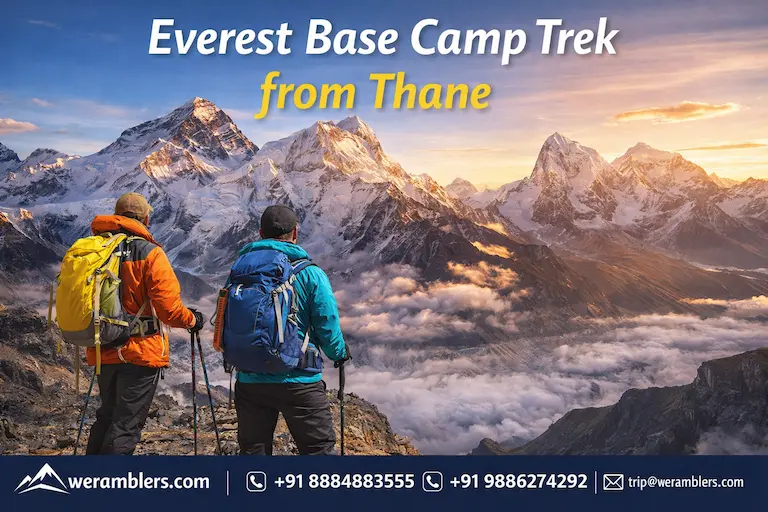
Thane is one of Maharashtra’s fastest-growing cities, home to hundreds of thousands of people who love the outdoors and have a serious hunger for adventure. The Everest Base Camp Trek from Thane with We Ramblers is a fully organized, 14-day guided experience that takes you from the streets of Thamel all the way to 5,645 metres on Kala Patthar, with Everest dominating the sky in front of you.
The Everest Base Camp Trek is more achievable than most people think. Kathmandu is a direct 2 hour 30 minute flight from Mumbai, and Thane sits just 17 to 20 kilometres from Chhatrapati Shivaji Maharaj International Airport. Once you land in Kathmandu, We Ramblers takes over everything.
Reach us on our India office: +91 9886274292 | Mail us at: trip@weramblers.com
What Makes the EBC Trek from Thane so Special for Trekkers
Maharashtra has a deeply rooted trekking culture. From the Sahyadri forts to the ghats of Konkan, people in Thane and across the Mumbai Metropolitan Region grow up hiking. But the Himalayas are a completely different world. Everest Base Camp sits at 5,364 metres in Nepal’s Khumbu Valley, roughly 2,900 metres higher than anything you will find in Maharashtra.
The trail to EBC takes you through the spiritual heartland of the Sherpa community. You walk past ancient monasteries draped in prayer flags, cross hanging bridges swinging over roaring glacial rivers, sleep in cosy teahouses run by local Sherpa families, and slowly climb through one of the most dramatic landscapes on earth. The Khumbu region is home to four of the world’s fourteen eight-thousanders: Everest (8,848 m), Lhotse (8,516 m), Makalu (8,463 m), and Cho Oyu (8,188 m). Standing at Everest Base Camp knowing those peaks surround you, and then summiting Kala Patthar at sunrise to see Everest fully unveiled, is an experience that genuinely does not compare to anything else.
For trekkers from Thane, the added advantage is that India and Nepal share a visa-free border relationship. There are no visa fees, no paperwork delays, and no foreign currency complications for Indian passport holders. Nepal is practically an extension of India’s trekking landscape, just much, much higher.
How to Reach Kathmandu for the Everest Base Camp Trek from Thane
Getting to Kathmandu from Thane is straightforward once you know your options.
By Flight (Recommended)
The fastest and most practical route is by air. Thane is roughly 17 km from Chhatrapati Shivaji Maharaj International Airport (BOM) in Mumbai. Direct flights from Mumbai to Tribhuvan International Airport (KTM) in Kathmandu take approximately 2 hours 30 minutes. Airlines like IndiGo, Air India, and Nepal Airlines operate this route regularly, and fares start from around INR 6,000 to 9,000 one way if booked in advance. This is by far the fastest and most comfortable way to get from Thane to Kathmandu.
You can take a cab or the Mumbai Metro from Thane to the airport, which is a short and familiar journey for most Thane residents. Allow yourself at least 2 to 3 hours before your flight for check-in, security, and boarding at BOM.
Via Train + Bus (Budget Route)
If you prefer overland travel, take a train from Thane Station to Gorakhpur (roughly 22 to 26 hours). From Gorakhpur, take a shared taxi or bus to the Sonauli border crossing in Uttar Pradesh, which takes another 3 hours. At Sonauli, cross into Nepal and board a bus or jeep to Kathmandu, an additional 7 to 8 hours. The entire overland journey is around 33 to 38 hours but costs significantly less than flying. Indian citizens do not need a visa for Nepal and the border crossing at Sonauli is one of the most frequented Indo-Nepal entry points.
Via Mumbai to Varanasi + Onward
A third option is flying from Mumbai to Varanasi (1 hour), and then taking a bus or cab to the Sonauli border crossing and entering Nepal overland. This middle-ground option breaks the journey nicely if you want a day in Varanasi before your trek.
We recommend arriving in Kathmandu at least a day before the group trek briefing to rest, settle in, and adjust to the 1,400 m altitude of Kathmandu before the trek begins.
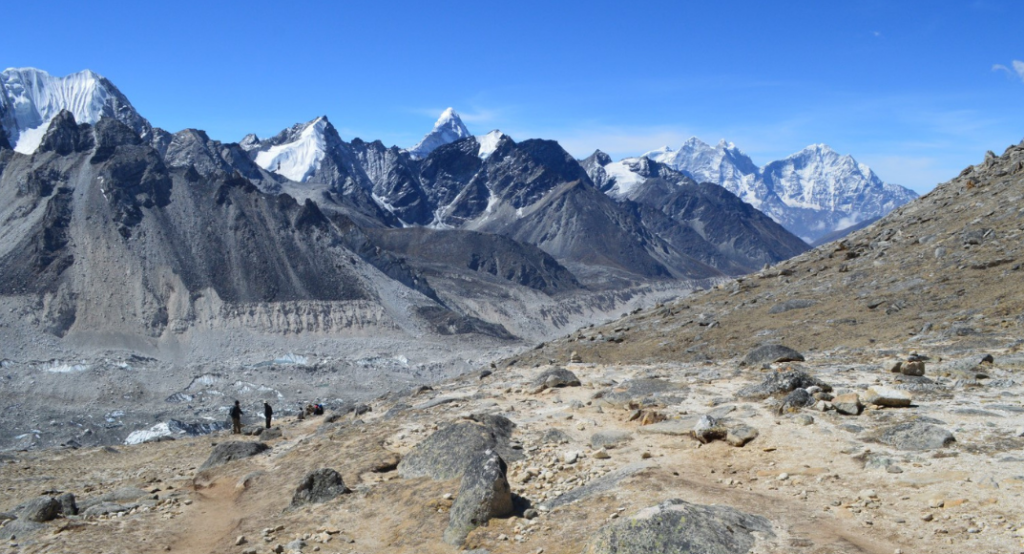
EBC Trek from Thane: Full 14-Day Itinerary
We Ramblers runs a structured 14-day EBC itinerary from Thane built around proper acclimatisation. This is not a rushed trip. Every stage is designed to give your body enough time to adapt to altitude while keeping the journey engaging and memorable.
Day 1: Arrive in Kathmandu (1,400 m)
Your first day in Nepal is about arrival, orientation, and team briefing. We Ramblers will have a representative waiting for you at Tribhuvan International Airport to transfer you to your hotel in Thamel, Kathmandu’s bustling trekker hub. A group briefing is scheduled at 4 PM where your guide introduces themselves, walks you through the trek, explains safety protocols, permit requirements, and answers any last-minute questions. You will also meet your fellow trekkers here, often a mix of people from different Indian cities, which makes for a great group dynamic. If Lukla flights are operating from Ramechhap airport (common during spring peak season), expect an early 2 AM start the following morning.
Day 2: Fly to Lukla, Trek to Phakding (2,652 m)
The Kathmandu to Lukla flight is one of the most talked-about mountain flights in the world. In 35 minutes, the small twin-otter aircraft carries you from Kathmandu’s valley at 1,400 m to Tenzing-Hillary Airport at Lukla at 2,860 m, flying between snow peaks the entire way. After landing, meet the full We Ramblers field team including your porters, who will carry most of your gear throughout the trek. The walk from Lukla to Phakding (7.8 km, about 3 hours) is mostly downhill and easy, passing Sherpa villages, chortens, and prayer wheels. You cross your first swaying suspension bridge and walk alongside the Dudhkoshi River before settling into your first teahouse in Phakding.
Day 3: Phakding to Namche Bazaar (3,440 m)
This is one of the most talked-about days of the lower trail and also one of the longest at 10.7 km and 6 to 7 hours of walking. You follow the Dudhkoshi River upstream, passing through the village of Benkar where you get your first glimpse of Thamserku’s snowy peak, and then reach Monjo, the entry checkpoint for Sagarmatha National Park. Permits are verified here.
After Monjo, the trail crosses the river and reaches Jorsale for lunch. The climb from Jorsale to Namche is steep and sustained but rewards you with the crossing of the famous double-deck Hillary Suspension Bridge, the longest and highest in the zone. Near the top of the climb, just before Namche, you catch your first proper sighting of Mount Everest. Namche Bazaar at 3,440 m is the “Gateway to Everest,” a horseshoe-shaped town packed with bakeries, gear shops, restaurants, and a warm buzz.
Day 4: Acclimatisation Day – Namche to Khumjung Village (3,790 m)
The golden rule of high-altitude trekking is “climb high, sleep low,” and today is the first of two scheduled acclimatisation days. You start late and hike up to the Namche Museum, where a large courtyard with a Tenzing Norgay statue and sweeping views of Everest, Lhotse, Ama Dablam, and Kusum Kanguru awaits.
From there, the trail climbs to the abandoned Syangboche airstrip and continues to the famous Everest View Hotel at 3,880 m, widely considered one of the best Everest viewpoints in the region. You then descend through open meadows to Khumjung, a quiet and traditional Sherpa village where you spend the night. This acclimatisation walk gives your red blood cells time to multiply and your lungs time to adapt before the bigger climbs ahead.
Day 5: Khumjung to Tengboche (3,867 m)
From Khumjung, the trail descends through pine and rhododendron forest before climbing steadily to Tengboche Ridge, which holds one of Nepal’s most iconic views: the Ama Dablam peak rising like a spire against a blue sky with Everest and Lhotse framing the horizon beyond. Tengboche Monastery, the largest in the Khumbu region, sits right on this ridge and on arrival feels like you have walked into another world entirely. The monastery is active and monks can often be seen going about their daily routines. If you time your arrival for the late afternoon, you may be able to attend an evening puja ceremony.
Day 6: Tengboche to Dingboche (4,260 m)
You descend from Tengboche into the Imja Khola river valley and pass through Pangboche, the last proper village in the Everest zone. Beyond Pangboche, the settlements that serve trekkers are not classified as villages under Nepali law. The trail opens up into the wide, boulder-strewn Imja valley with barley terraces giving way to alpine scrub as you climb to Dingboche, often called the “summer valley.” The views of Island Peak (6,189 m) from Dingboche are particularly striking.
Day 7: Acclimatisation Day – Dingboche (4,260 m)
Your second rest and acclimatisation day. You spend another night in Dingboche but spend the day hiking up to the Nagarzhang ridge above the village, which sits at around 5,000 m. The panoramic views from here include Makalu, Lhotse, Ama Dablam, Island Peak, and the Imja Glacier. This hike is one of the hidden highlights of the entire Everest Base Camp Trek from Thane, offering altitude exposure and views that rivals anything on the main trail. Oxygen at this level is noticeably thinner and this day is critical for safety before you push into the 5,000 m zone.
Day 8: Dingboche to Lobuche (4,940 m)
One of the more demanding days on the trek, both physically and emotionally. The 12 km trail climbs steadily from Dingboche, passing through Thukla and ascending the Thukla Pass where you will encounter a field of stone memorials dedicated to climbers who lost their lives on Everest and other Himalayan peaks. The scale of these memorials, and reading the names inscribed on them, brings a quiet gravity to the trek that stays with you.
After the pass, the trail runs along the edge of the Khumbu Glacier moraine with Nuptse, Pumori, and Lobuche Peak towering overhead. Lobuche at 4,940 m is a small, cold settlement of basic teahouses. Sleep here can be difficult for many trekkers as the altitude begins to feel real.
Day 9: Lobuche to Gorakshep (5,180 m) and Everest Base Camp (5,364 m)
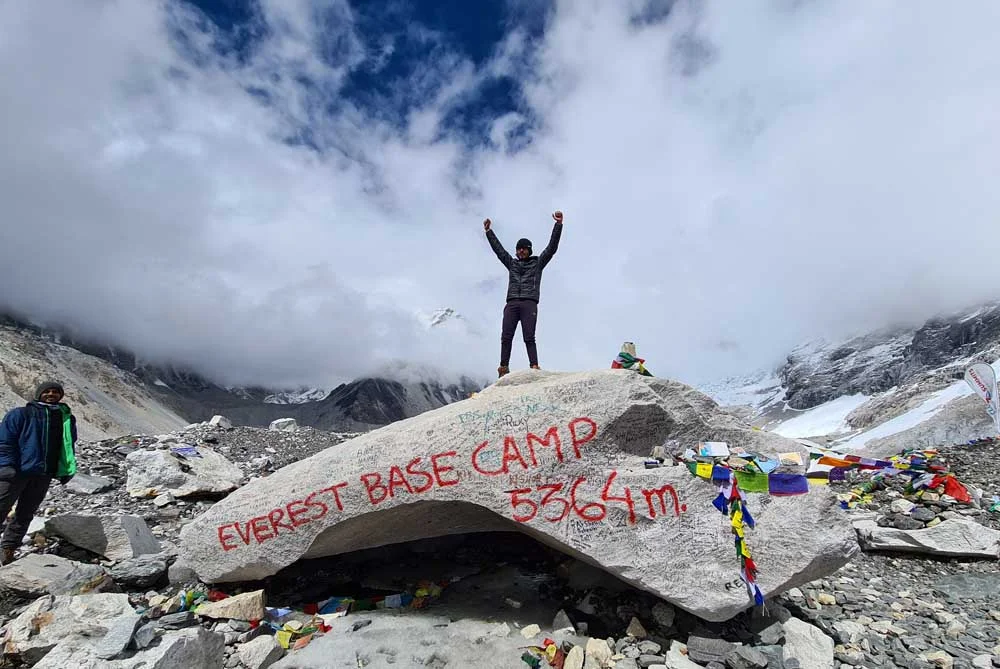
The day every Thane trekker has been working towards. You set off early from Lobuche and cross the glacial moraine terrain to reach Gorakshep, a small frozen settlement that served as the original 1953 base camp of the Hillary-Norgay expedition. After dropping bags and having lunch, you push the final 3.8 km to Everest Base Camp itself. The path weaves through the chaos of the Khumbu Glacier, over rocks and ice pinnacles, past crevasses and shifting ice walls.
Everest Base Camp at 5,364 m is marked by prayer flags, and in spring season, you may find active expedition teams with their tents and supplies laid out in full. You cannot see Everest’s actual summit from here, just the towering Khumbu Icefall and the West Ridge, but standing on the glacier at the foot of the world’s highest mountain is deeply, genuinely moving. Return to Gorakshep for the night.
Day 10: Kala Patthar (5,645 m) and Descent to Pheriche (4,240 m)
This is the sunrise morning. You wake at 4 AM and begin climbing Kala Patthar in the dark, headlamps bobbing in a thin, freezing air. As the sky begins to lighten, Everest appears in silhouette. And then the sun hits. The summit pyramid turns gold. Nuptse, Changtse, Lhotse, Pumori, and the full Khumbu skyline light up around you in a 360-degree panorama that no photograph can fully hold. Standing at 5,645 m, this is the highest point of the Everest Base Camp Trek from Thane, and the moment most trekkers say they will carry for the rest of their lives. After sunrise, you descend all the way to Pheriche at 4,240 m. It is a long day, but descending to lower altitude feels like breathing again.
Day 11: Pheriche to Namche Bazaar (3,440 m)
A satisfying 11 to 12 km descent back through the Khumbu Valley, retracing terrain you remember from the ascent but now seeing it with different eyes. You pass back through Tengboche’s forest trail and along the Dudh Koshi river. By the time you walk into Namche Bazaar, it feels like a big city after the high altitude settlements. A warm meal, a good bakery, and a proper cup of coffee all feel like genuine rewards.
Day 12: Namche Bazaar to Lukla (2,860 m)
The final trekking day. 18 km back to Lukla along the river trail through Sherpa villages and pine forests. It is bittersweet: your legs are strong, the trail is familiar, and the mountains are still visible behind you as you descend. You arrive in Lukla tired but changed. The evening in Lukla is for celebration, stories, and sleep.
Day 13: Fly Lukla to Kathmandu
The mountain flight back to Kathmandu. You transfer to your hotel in Thamel, and the day is yours for a farewell dinner, last-minute shopping at the gear markets of Kathmandu, and one final evening in Nepal before flying home.
Day 14: Depart Kathmandu
We Ramblers transfers you to Tribhuvan International Airport. From Kathmandu, you fly back to Mumbai, the closest major airport for Thane residents, with a total air journey of around 2 hours 30 minutes. You are home in Thane the same day you leave Kathmandu.
Reach us on our India office: +91 9886274292 | Mail us at: trip@weramblers.com
Everest Base Camp Trek Cost from Thane
We Ramblers prices the Everest Base Camp Trek at INR 60,000 per person for Indian nationals. For international trekkers, the equivalent is USD 999.
This package price includes teahouse accommodation throughout the trek, all meals during trekking days (breakfast, lunch, and dinner), a licensed experienced guide and porter, the domestic flights from Kathmandu to Lukla and back, all mandatory permits (Sagarmatha National Park permit and Khumbu Pasang Lhamu Rural Municipality permit), and all transfers within Kathmandu.
What is not included in the base price: your travel from Thane to Kathmandu (the Mumbai to Kathmandu flight), travel insurance, personal trekking gear, tips for guides and porters, hot showers or wifi charges at teahouses, and any personal purchases on the trail.
For trekkers from Thane, the additional cost to factor in is the Mumbai to Kathmandu return flight, which typically runs INR 10,000 to 16,000 return when booked in advance. Budget INR 70,000 to 80,000 all-in as a realistic total for most Thane-based trekkers, excluding gear.
Best Time to Do the Everest Base Camp Trekking Tour from Thane
There are two seasons that work best for the EBC Trek, and both offer spectacular conditions.
Spring: March to May
Spring is the most popular trekking window globally, and for good reason. The weather is stable, visibility is excellent, and the lower altitude sections of the trail are covered in blooming rhododendrons. Temperatures during the day are comfortable, though nights at high altitude remain cold. April and May are also the primary Everest summit season, which means you may encounter active expedition teams and a genuinely electric atmosphere at Base Camp.
Autumn: September to November
Post-monsoon skies in Nepal are some of the sharpest and clearest of the year. The air is washed clean by the summer rains and mountain views are at their crisp best. October is consistently regarded as the single best month for Himalayan trekking, combining stable weather, comfortable temperatures, and exceptional visibility. Trails are busier in autumn, but the overall atmosphere is festive.
We Ramblers has fixed departure dates through both seasons. Spring 2026 departures start from March 7 and run through early June. Autumn departures begin in September and continue through late December, including a Christmas departure.
The monsoon period of June to August is not recommended for the EBC trail due to heavy rain, leeches at lower altitude, and poor mountain visibility. Deep winter (January and February) is possible but extremely cold above 4,000 m and flights to Lukla can be disrupted for days at a time.
EBC Trek from Thane Difficulty
The Everest Base Camp Trek is rated moderate to challenging. You do not need technical mountaineering skills or prior high-altitude experience, but you do need to be physically prepared.
For trekkers from Thane, the main challenge is the absence of hills or significant elevation gain in daily life. Thane and Mumbai are essentially flat cities. This means you need to actively train before the trek rather than rely on general fitness.
Here is a practical preparation plan for Thane-based trekkers:
12 weeks before the trek: Start running or brisk walking for 45 to 60 minutes at least 4 days per week. Use staircases aggressively. Climb the residential building stairs in your complex every day with a loaded backpack. If you have access to a gym, focus on leg strength (squats, lunges, step-ups) and cardiovascular capacity.
8 weeks out: Start doing weekend hikes to places like Tikona Fort, Rajmachi, Torna, or Kalsubai in the Sahyadri range near Pune and Nashik. These trails build trail-specific strength and teach your feet and knees how to handle uneven terrain under load.
4 weeks out: Increase hike duration and elevation. Your weekend outings should now be 6 to 8 hour hikes with a full backpack. Reduce alcohol consumption, improve your sleep, and stay very well hydrated daily.
Altitude sickness is the factor that stops most trekkers, regardless of fitness level. The two acclimatisation days built into the We Ramblers itinerary (one in Namche, one in Dingboche) are specifically designed to reduce this risk. Headache, mild nausea, and fatigue are all normal at altitude. The guide will monitor your condition and make decisions about descent if necessary.
Never push through serious altitude sickness symptoms. Descent is always the right call and the trail will wait for another season.
Permits Needed for the Everest Base Camp Trek from Thane
Two permits are mandatory and both are included in the We Ramblers package price:
The Sagarmatha National Park Entry Permit is the gateway permit for the UNESCO World Heritage Site. Indian and SAARC nationals pay a concessional rate compared to other international trekkers. The Khumbu Pasang Lhamu Rural Municipality Permit is a local government entry fee checked at multiple points along the trail.
From January 1, 2026, Nepal also requires all international visitors to register through the FNMIS (Foreign National Management Information System) under Nepal’s Department of Immigration. We Ramblers handles this registration on your behalf as part of the package.
Important: Drones require a separate flying permit. They will be confiscated at the Sagarmatha National Park checkpoint in Monjo if you carry one without documentation.
What to Pack for the EBC Trek from Thane
Packing right is as important as training. Here is what every trekker from Thane should carry:
Clothing: A moisture-wicking base layer, a thick fleece or down mid-layer, and a waterproof windproof outer shell. Temperatures at Gorakshep and Base Camp drop to -10°C or lower at night. A warm down jacket is non-negotiable above Namche.
Footwear: Well-broken-in waterproof trekking boots with ankle support. This is the single most important gear item. New boots on the trail will destroy your feet within three days. Buy them at least 6 to 8 weeks before departure and break them in properly.
Essential gear: Trekking poles, a daypack (25 to 30 litres), a sleeping bag rated to -10°C or lower, a headlamp with fresh batteries, a high SPF sunscreen and lip balm (UV radiation is intense at altitude), good quality UV-protective sunglasses, a water bottle or hydration system, and a power bank.
Medical kit: Diamox (acetazolamide) for altitude sickness prevention can be prescribed by a doctor before you leave India. Carry basic pain relief, blister plasters, a rehydration sachet pack, and any personal medication. We Ramblers guides carry supplemental oxygen and emergency medical supplies.
You can buy or rent additional gear in Thamel, Kathmandu, at very reasonable prices if you land and realise you are missing something.
Why Trekkers Choose We Ramblers for EBC Trekking from Thane
We Ramblers operates with offices in both Nepal and India. For trekkers from Thane and the Mumbai metropolitan area, this is a significant advantage. Communication happens in your time zone. Questions get answered promptly. Logistics around Indian departure cities, including flight advice, border crossing guidance, and departure day coordination, are handled by people who understand the Indian travel context.
Here is what makes We Ramblers the right choice for the Everest Base Camp Trek from Thane:
- Fixed group departures throughout 2026 mean you can plan your leaves, flights, and preparation calendar months in advance.
- Certified, experienced guides who are trained in wilderness first aid accompany every group.
- Group sizes are capped at 16, keeping the experience personal and the trail safety manageable.
- The INR 60,000 price point for Indian nationals is genuinely competitive. International operators running the same trail charge three to five times more for equivalent services.
We Ramblers has successfully organized treks for participants from across India, including Mumbai, Delhi, Bengaluru, Pune, Hyderabad, Jaipur, Ahmedabad, Chennai, and Kanpur. They understand what Indian trekkers need: clear communication before departure, familiar food preferences accommodated wherever possible, strong guide-to-trekker ratios, and a safety-first approach to altitude management.
Important 2026 Trekking Update: Ramechhap Flights
In 2026, during the spring peak season (typically March through May), flights to Lukla frequently operate from Manthali Airport in Ramechhap rather than Kathmandu. This is due to air traffic congestion at Tribhuvan International Airport. If your departure falls during this period, you will leave Kathmandu hotel at approximately 2 AM for a 4-hour drive to Ramechhap, followed by a 20-minute flight to Lukla. We Ramblers will inform all trekkers about this logistics change well in advance. Autumn departures generally operate directly from Kathmandu, making early morning drives unnecessary.
Frequently Asked Questions About Everest Base Camp Trek from Thane
Do I need a visa to enter Nepal from India?
No. Indian citizens can enter Nepal without a visa. A valid Indian passport is recommended for the internal Lukla flight, though a voter ID or Aadhar card is technically acceptable at the Nepal border. For the domestic Lukla flight, an Indian passport is the most hassle-free option.
Is the EBC Trek from Thane suitable for someone who has only trekked in the Sahyadris?
Yes, with proper preparation. Sahyadri hiking builds a good foundation. The main difference is altitude, not trail technicality. If you have done multi-day treks like Harishchandragad or Kalsubai with a loaded backpack, you are on the right track. Add 10 to 12 weeks of structured cardiovascular training and stair climbing before EBC.
What is the maximum altitude on the Everest Base Camp trek from Thane?
Kala Patthar at 5,645 m is the highest point. Everest Base Camp itself is at 5,364 m.
Is solo trekking allowed in Nepal in 2026?
As of 2026, Nepal has reinforced rules requiring all trekkers in restricted and national park areas to be accompanied by a registered guide. Solo independent trekking without a guide is no longer permitted in the Everest region. Booking with We Ramblers fully covers this requirement.
Can I charge my devices on the EBC trail from Thane?
Yes. Most teahouses along the EBC route offer charging, sometimes for a fee of NPR 100 to 300 per charge. Wifi is available at most teahouses up to Gorakshep, though connection quality becomes inconsistent above Dingboche. Carry a power bank as a backup.
What food is available on the EBC Trekking Tour from Thane?
Teahouse menus are surprisingly varied. Dal bhat, noodles, pasta, pancakes, porridge, eggs, soups, and hot drinks are all available throughout the trail. We Ramblers’ package includes meals, so you will not be paying separately for main meals during the trek. Many trekkers from Maharashtra find dal bhat a genuinely comforting staple at altitude.
Other Treks for Thane Trekkers Who Want to Start Smaller
If the Everest Base Camp Trek from Thane feels like a big leap for your first Himalayan trip, We Ramblers offers several excellent alternatives that build confidence at altitude before you tackle EBC:
- The Annapurna Base Camp Trek reaches 4,130 m and offers stunning close-up views of the Annapurna massif. It is shorter, lower, and widely regarded as one of the most scenic trails in Nepal. A great first Himalayan trek for trekkers from Thane and Mumbai.
- The Langtang Valley Trek is a culturally rich, less crowded option near the Tibet border. Maximum altitude is around 4,984 m at Kyanjin Ri and it is much quieter than the EBC trail.
- The Mardi Himal Trek is a shorter, off-beat trail in the Annapurna region that offers jaw-dropping views of Machapuchare and reaches a high camp at 4,500 m. Ideal for a first Himalayan experience from Thane.
Once you have done one of these, the EBC Trek from Thane will feel like the natural next step.
Book Your Everest Base Camp Trek from Thane with We Ramblers
Spring 2026 trek slots with We Ramblers are actively filling up, with departures running from March 7 all the way through early June. Autumn departures from September through December are also open for booking. If you are in Thane and this is the year you stop scrolling through EBC photos and actually go, now is the time to register.
Reach us on our India office: +91 9886274292 | Mail us at: trip@weramblers.com
Mumbai airport is 20 minutes from Thane. Kathmandu is 2.5 hours from Mumbai. Everest Base Camp is 14 days from Kathmandu. The mathematics of this dream are simpler than you think.