Photography Guide: How to Capture Annapurna Views from Khopra Ridge
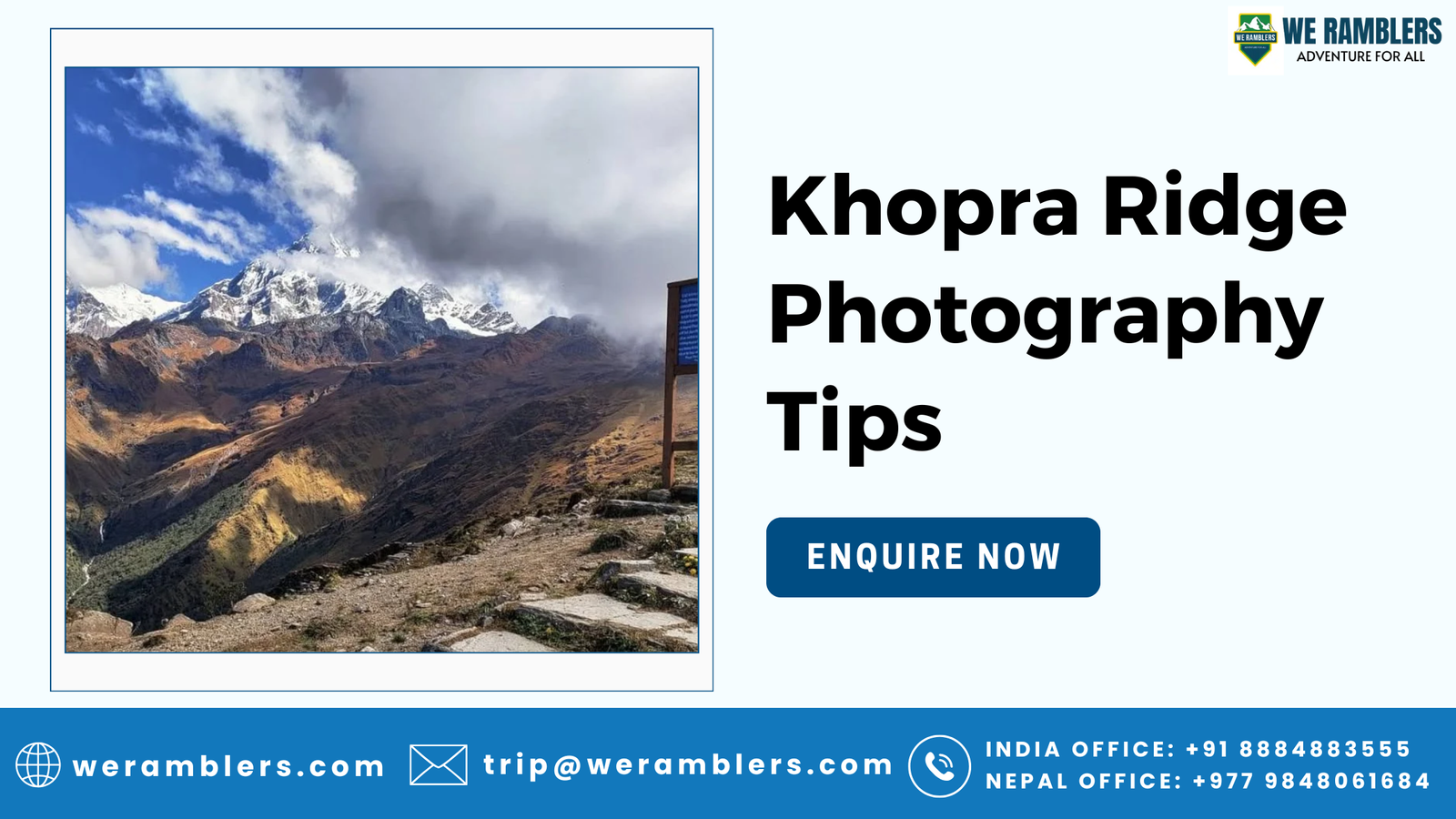
The Khopra Ridge Trek is one of the most rewarding photographic journeys in the Annapurna region. Situated above the traditional Ghorepani–Poon Hill trail but far less crowded, Khopra Ridge (also known as Khopra Danda) offers sweeping vistas of the Annapurna and Dhaulagiri ranges, access to the mystical Khayer Lake, and dramatic sunrise and sunset vantage points.
For photographers seeking sharper angles, quieter trails, and panoramic Himalayan frames, Khopra Ridge is a dream location. This guide provides comprehensive Khopra Ridge Photography Tips, including the best photo spots, ideal camera settings, sunrise and sunset strategies, and expert insights for capturing the ridge’s natural beauty.
Why Khopra Ridge is a Photographer’s Dream
Khopra Ridge lies off the main Annapurna trekking corridor, offering a peaceful atmosphere and expansive alpine views. Unlike Poon Hill—which is famous but often crowded—the Khopra trail provides a more intimate environment where photographers have unobstructed vantage points and more time to shoot without disturbance.
Highlights include:
- Annapurna South dominating the skyline
- Dhaulagiri rising dramatically across the valley
- Nilgiri, Machhapuchhre, and Fang appearing close and crisp during sunrise
- Khayer Lake, a sacred high-altitude lake framed by rugged cliffs
These naturally cinematic landscapes make Khopra Ridge an ideal location for applying advanced Khopra Ridge Photography Tips.
Best Photography Locations on Khopra Ridge
Khopra Danda Ridgeline
Khopra Danda itself offers the widest unobstructed views of Annapurna South and Dhaulagiri.
Why It’s Photogenic
- Long, sweeping 180° panoramic ridge views
- Perfect angles for sunrise and sunset
- Ideal foreground options (stone huts, ridgelines, grazing animals)
Tips
- Arrive before dawn for the sunrise colour shift
- Use wider focal lengths (14–24mm, 16–35mm)
- Incorporate leading lines using the ridge path
This is the central location for many core Khopra Ridge Photography.
Khayer Lake (Khayer Tal)
Khayer Lake lies at around 4,700 m and requires a day hike from Khopra Danda. It is one of the most compelling sites for Khayer Lake photos.
Why It’s Photogenic
- Deep blue glacial waters
- Jagged mountain walls reflecting on the lake
- Snow patches offering strong contrast
Tips
- Shoot midday for bright water reflection
- Bring a polarizing filter to reduce glare
- Use a tripod to stabilize shots in windy conditions
Lower Khopra Ridge Trail
The descending trail toward Swanta or Dobato offers unique compositions.
Why It’s Photogenic
- Layered hill silhouettes
- Rhododendron forests (spring season)
- Clear sightlines toward Dhaulagiri
Tips
- Shoot during golden hour or misty mornings
- Use longer focal lengths (70–200mm) for compressed landscapes
Poon Hill vs Khopra Photos: Which is Better?
Many trekkers compare Poon Hill vs Khopra photos when planning their journey.
Poon Hill:
- Closer to Ghorepani
- Busy sunrise viewpoint
- Great angles for Annapurna South and Machhapuchhre
Khopra Ridge:
- Fewer crowds
- Higher vantage point
- More dramatic and intimate compositions
- Better for sunrise silhouettes and cloud inversion shots
For professional or enthusiast photographers, Khopra Ridge offers superior photographic opportunities due to its elevation and solitude.
Sunrise and Sunset Photography on Khopra Ridge
Sunrise Khopra Ridge
Sunrise at Khopra Ridge is its signature experience.
What Makes Sunrise Special
- Golden light hitting Annapurna South
- Colour gradients shifting from violet to orange
- Cloud inversion layers floating in the valley
Best Time
- Arrive 45 minutes before sunrise
- Winter and autumn offer the clearest sky conditions
Techniques
- Shoot in manual mode
- Use aperture f/8 to f/11 for sharp landscapes
- Slight exposure compensation (+0.3 to +1.0) for snow
Including sunrise in your Khopra Ridge Photography Tips dramatically elevates your final portfolio.
Sunset at Khopra Ridge
Sunsets are equally spectacular, though less photographed than sunrise.
Features
- Deep orange sky behind Dhaulagiri
- Silhouetted mountain ridges
- Soft side-lighting on Annapurna South
Tips
- Use a graduated ND filter
- Adjust white balance to cloudy or warm-tone settings
- Frame silhouettes of trekkers or huts to add scale
Camera Settings for Khopra Ridge Photography
Photographing at high altitude requires technique adjustments. Below are optimized settings for different scenarios.
Landscape Settings for Annapurna and Dhaulagiri
Aperture
f/7.1 – f/11 for depth and clarity
ISO
100–400 for daylight
800–1600 for low-light sunrise
Shutter Speed
1/125 – 1/500 to avoid handshake
Tips
- Use manual focus or magnified live view for sharp peaks
- Slightly overexpose snow to prevent dull whites
Portrait + Landscape Combination
Aperture
f/2.8 – f/4 if including trekkers in frame
Shutter
1/250 or faster for movement
Tips
- Add a human figure for scale
- Use the ridge path as a leading line
Khayer Lake Photography Settings
Polarizing Filter
Crucial for glare reduction
Aperture
f/8 for balanced sharpness
Shutter
1/100 – 1/200 depending on light
Low-Light Photography on Khopra Ridge
ISO
1600–3200
Shutter
10–20 seconds for night sky
Notes
- A lightweight tripod is essential
- Use manual focus set to infinity
Composition Tips for Khopra Ridge Photos
Use Foreground Elements
Stone walls, huts, prayer flags, or fellow trekkers enhance depth.
Capture Cloud Inversions
Wait for valley clouds during early morning transitions.
Frame with the Ridge Path
The natural curves make ideal leading lines.
Shoot Vertical and Horizontal Versions
Vertical compositions work well for peaks like Annapurna South.
Leverage Seasonal Elements
Spring blooms and autumn clarity offer distinct moods for your Khopra Ridge Photography Tips.
Safety Considerations for Photographers
Photographing in high-altitude landscapes requires awareness and preparation.
Weather Awareness
Keep electronics insulated during cold mornings.
Battery Life
Bring 2–3 spare batteries; cold drains them quickly.
Footing Stability
Do not step too close to ridge edges for the perfect shot.
Altitude
Prioritize acclimatization over photography detours.
These safety habits should always accompany your Khopra Ridge Photography Tips.
Frequently Asked Questions (FAQs): Khopra Ridge Photography Tips
1. What are the essential Khopra Ridge Photography Tips for beginners?
Use manual settings, arrive early for sunrise, apply +0.3 exposure compensation for snow, and include foreground elements for depth.
2. Where can I take the best Khayer Lake photos?
The lakeside viewpoint and elevated ridge just above the lake offer exceptional reflections and dramatic compositions.
3. What are the best photo spots at Khopra Danda?
The ridge viewpoint near the lodge, the sunrise vantage point toward Annapurna South, and the western slope overlooking Dhaulagiri.
4. Is sunrise Khopra Ridge better than Poon Hill?
Yes, Khopra Ridge is higher, less crowded, and offers more dramatic lighting. Many photographers prefer it over Poon Hill.
5. Which lens is best for photographing Khopra Ridge?
A wide-angle lens (14–24mm) for landscapes and a telephoto lens (70–200mm) for compressing mountain layers.
Trek Khopra Ridge with We Ramblers
Capturing the Annapurna range at its best requires being at the right place at the right time—and with expert guidance. We Ramblers provides well-planned Khopra Ridge and Khayer Lake itineraries that prioritize sunrise and viewpoint access.
Why trek with We Ramblers:
- Knowledgeable local guides who understand the best angles and timings
- Safe acclimatization and comfortable lodge arrangements
- Flexible schedules for photographers
- Small groups for more personalized shooting opportunities
- Fully managed logistics from Kathmandu to Pokhara
To explore Khopra Ridge with expert support, book your trek with We Ramblers and elevate your Himalayan photography experience.