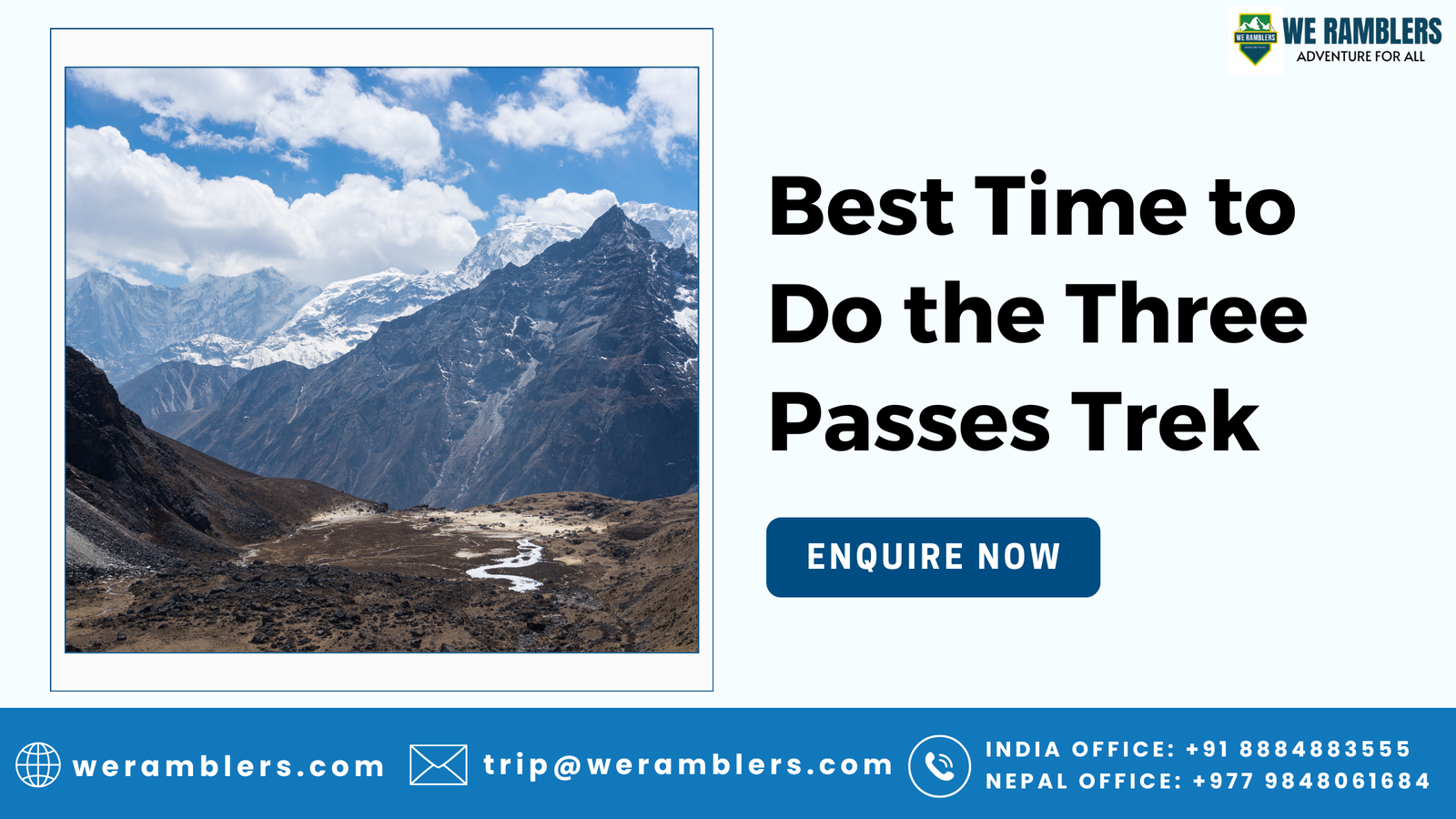
Best Time to Do the Three Passes Trek (Season Guide)
The Everest Three Passes Trek is one of Nepal’s most challenging and rewarding high-altitude adventures. Covering three major Himalayan passes — Kongma La (5,535 m), Cho La (5,420 m), and Renjo La (5,360 m) — this trek offers unmatched panoramic views, rugged alpine landscapes, glacier crossings, and a complete circuit around the Everest region.
Because of its difficulty, elevation, and exposure to weather, selecting the Three Passes Trek best time is crucial. The season you choose will dramatically affect visibility, temperature, trail safety, snow conditions, and your overall trekking experience.
This guide provides a full breakdown of weather patterns, seasonal pros and cons, and expert insights on when to trek Three Passes, helping you confidently plan your Himalayan journey.
Understanding The Three Passes Trek Climate
The Everest region sits deep within the high Himalayas, where weather is unpredictable and rapidly changing. The Three Passes Trek spans elevations from Lukla (2,860 m) to over 5,500 meters, exposing trekkers to extreme temperature drops, snow, wind, and strong UV radiation.
To determine the Three Passes Trek best time, it’s essential to understand:
- Spring and autumn are the main trekking seasons
- Winter brings heavy snow and extreme cold
- Monsoon causes rain and poor visibility
- Altitude strongly influences temperature and trail conditions
Each pass becomes significantly harder in snow, making seasonal selection a critical safety decision.
Season-by-Season Breakdown: Best Time to Do the Three Passes Trek
Below is a detailed look at every trekking season in the Everest region and how they impact the Three Passes experience.
Spring Season (March to May)
Spring is one of the most popular and reliable trekking windows in Nepal.
Weather and Trail Conditions
- Stable weather across most days
- Warmer temperatures at mid-altitudes
- Dry trails suitable for long trekking days
- Snow on high passes melts gradually through April and May
Views and Photography
- Clear morning skies
- Beautiful rhododendron forests in lower areas
- Excellent visibility from Gokyo Ri, Kala Patthar, and the passes
Pros of Spring
- Predictable weather
- Long daylight hours
- Comfortable temperatures
- Good for acclimatization
Cons of Spring
- Early March may still have snow on Kongma La and Cho La
- May can get hazy in afternoons
Verdict
Spring is one of the absolute best season Three Passes Trek options, especially in April. Many consider spring the most balanced season for scenery, comfort, and safety.
Autumn Season (September to November)
Autumn is widely regarded as the Three Passes Trek best time due to its crystal-clear weather and stable high-altitude conditions.
Weather and Trail Conditions
- Dry, stable, predictable weather
- Excellent trail condition
- Cold but manageable temperatures
Views and Photography
- Sharp mountain clarity
- Deep blue skies
- Clean air after monsoon
Pros of Autumn
- Best visibility of the year
- Lower snowfall risk
- Perfect conditions for crossing all three passes
Cons of Autumn
- October is the busiest month
- Nights are colder than in spring
Verdict
If your priority is the safest and most scenic conditions, autumn is the best time to trek Three Passes — especially October and early November.
Winter Season (December to February)
Winter transforms the Everest region into a spectacular but harsh environment.
Weather and Trail Conditions
- Heavy snowfall on all three passes
- High risk of trail closures
- Extremely cold nights
- Glacier sections become icy and dangerous
Pros of Winter
- Stunning winter landscapes
- Very few trekkers
Cons of Winter
- High altitude exposure extremely risky
- Passes often unsafe or impassable
- Many lodges close at higher altitudes
Verdict
Winter is not recommended unless you have advanced mountaineering experience and a professional guide. It is not a safe Three Passes Trek best time for most trekkers.
Monsoon Season (June to August)
Monsoon brings warm temperatures but very unstable weather.
Weather and Trail Conditions
- Heavy rainfall in lower sections
- Cloud cover blocks mountain views
- Landslide risks
- Leech-infested trails in the lower forested areas
- Slippery, muddy terrain
Pros of Monsoon
- Few trekkers
- Lush green landscapes
Cons of Monsoon
- Zero visibility on the passes
- High flight cancellation rates
- Unsafe snow and ice conditions
Verdict
Monsoon is the least favorable season for Three Passes due to dangerous trail conditions and unpredictable weather.
Month-by-Month Guide: When to Trek Three Passes
March
Beginning of trekking season; snow on passes still possible.
April
One of the best season Three Passes Trek months. Warm days, clear views.
May
Good trekking conditions, though afternoon haze increases.
June to August
Monsoon season; not recommended.
September
Start of autumn; trails dry, views improving.
October
Peak Three Passes Trek best time. Best visibility and stable conditions.
November
Cold but excellent clarity; great for trekkers who prefer fewer crowds.
December
Early winter trekking possible; late December becomes risky.
Spring vs Autumn: Which Is the Best Time for the Three Passes Trek?
Both spring and autumn offer excellent trekking conditions, but differences may help you choose your ideal season.
Spring Advantages
- Warmer temperatures
- Blooming forests in lower regions
- Longer daylight hours
- Slightly fewer trekkers than autumn
Autumn Advantages
- Best visibility of the entire year
- Very stable high-altitude weather
- Minimal snowfall risk
- Crisp, sharp landscapes ideal for photography
Final Verdict
For the combination of scenery, safety, and stability, autumn is the overall Three Passes Trek best time, but spring is equally excellent for trekkers who prefer warmer weather.
Why Choosing the Right Season Matters
Understanding the trekking season Everest region patterns directly impacts:
Safety
Snow and ice on Cho La and Kongma La can make the trek dangerous.
Acclimatization
Cold conditions increase fatigue, making acclimatization slower.
Photography
Clear skies in autumn and spring provide the best Himalayan panoramas.
Trail Comfort
Dry trails make high-altitude trekking easier and safer.
Selecting the correct best season Three Passes Trek ensures a smoother and safer journey.
Frequently Asked Questions (FAQs): Best Time to Do the Three Passes Trek
1. What is the Three Passes Trek best time for most trekkers?
The Three Passes Trek best time is October and November in autumn, and April in spring, due to ideal visibility and stable weather.
2. What is the best season Three Passes Trek for photography?
Autumn offers the clearest skies, sharpest Himalayan views, and the best lighting conditions.
3. When to trek Three Passes if I want fewer crowds?
March, late November, and early December offer fewer trekkers while maintaining good weather windows.
4. Can I do the Three Passes Trek in winter?
It is not recommended because heavy snowfall often blocks Kongma La, Cho La, and Renjo La.
5. Is the Three Passes Trek safe during monsoon?
No. Trails become slippery, visibility is poor, and weather is highly unpredictable.
Trek the Three Passes with We Ramblers
Choosing the right season is only the beginning. The Three Passes is a demanding high-altitude trek that requires expert planning, proper pacing, and experienced guidance.
We Ramblers offers:
- Certified local guides with high-altitude expertise
- Safety-focused Three Passes itineraries
- Small group departures for personalized care
- Reliable logistics, permits, and acclimatization planning
- Transparent pricing with no hidden costs
Whether you trek in spring or autumn, We Ramblers ensures a safe, memorable, and expertly managed Everest region experience.
Plan your Three Passes adventure with We Ramblers and trek the Himalayas with confidence.